


No Condonation of 215-Day Delay In Commercial Appeals Without Sufficient Cause: Tripura HC
 Copy Link
 Share
 Save
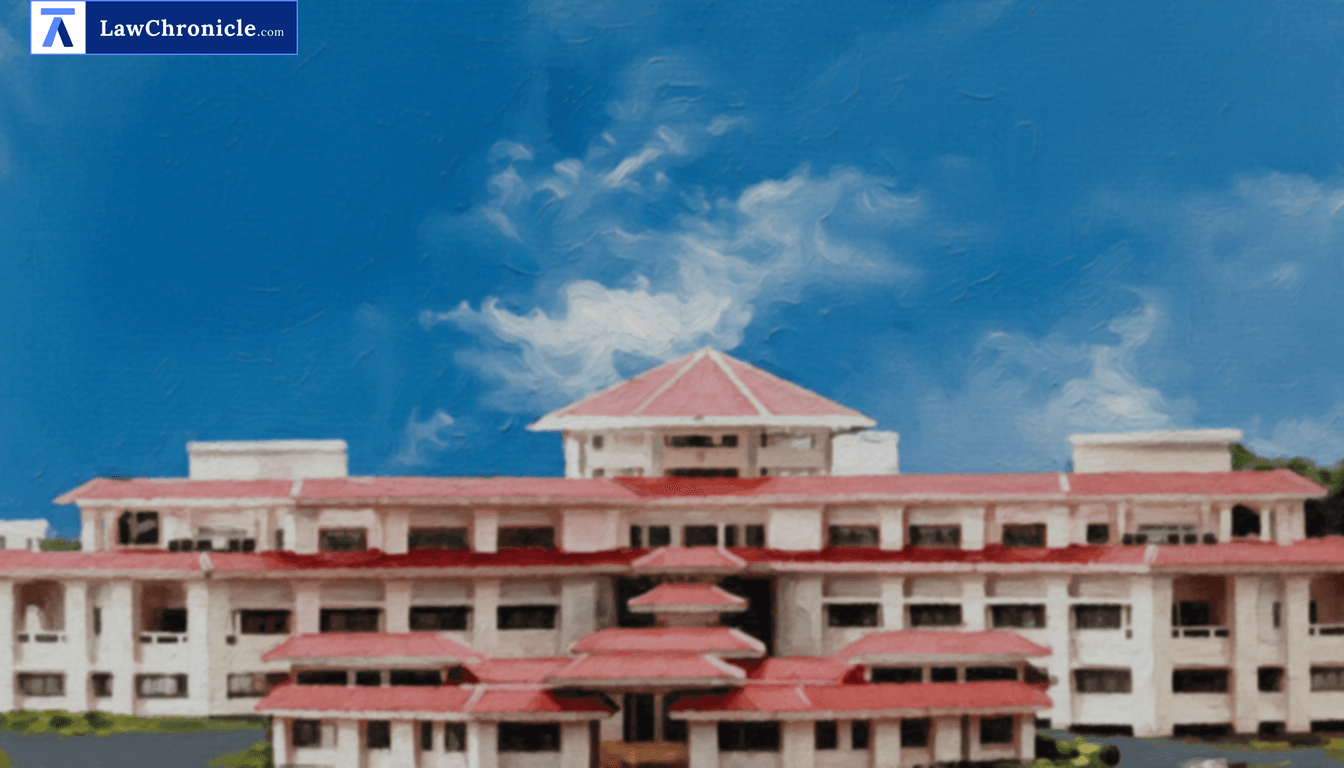
The High Court of Tripura has slammed the door on corporate negligence, ruling that the medical illness of a single director cannot shield a company from the stringent limitation periods prescribed for commercial disputes. In a significant clarification of appellate timelines, the court held that the 60-day window for filing commercial appeals is a rule of speed that cannot be bypassed through stale claims of administrative inaction.
A Division Bench comprising Chief Justice M.S. Ramachandra Rao and Justice Biswajit Palit presided over the matter. The bench was hearing a challenge against a judgment passed by the District Judge, North Tripura, acting as a designated Commercial Court under the Commercial Courts Act, 2015.
Strict Adherence to Commercial Timelines
The applicant company sought to condone a delay of 215 days in filing an appeal against a Section 34 order. The primary contention was the illness of the Director, who was based in Prayagraj. However, the Court was unimpressed by this justification, noting that a registered company under the Companies Act, 2013 possesses multiple personnel and cannot halt its legal obligations due to the indisposition of one individual.
Referring to the legal framework, the Court noted that while Section 5 of the Limitation Act, 1963 allows for condonation, it must be read in the context of the Commercial Courts Act, 2015 and the Arbitration and Conciliation Act, 1996. The Court relied on the principle established in State of Maharashtra Vs. Bose Brothers Engineers & Contractors Private Limited, which emphasizes that speedy disposal is the core objective of commercial litigation.
Judicial Rationale on 'Sufficient Cause'
The Court emphasized that the discretion to condone delay beyond the 60-day period provided in Section 13(1-A) of the Commercial Courts Act, 2015 is an exception, not a rule. The bench observed that the applicant took nearly a month even to apply for a certified copy after the judgment was pronounced and then waited several more months to file the appeal.
The Court, in its reasoning, observed: "The expression 'sufficient cause' in Section 5 of the Limitation Act, 1963 is not elastic enough to cover long delays beyond the period provided by the appeal provision itself, and that the expression sufficient cause is not itself a loose panacea for the ill of pressing negligent and stale claims."
The Court has following directions:
"The reasons assigned by the applicant do not amount to ‘sufficient cause’ under Section 5 of the Limitation Act, 1963. Therefore, we do not find any merit in this application and the same is accordingly dismissed. Consequently, the appeal is also dismissed."
Key Takeaways:
Corporate Accountability Over Individual Illness
Corporate entities cannot cite the health of a single director as a valid reason for missing statutory deadlines when other officers are available to take legal steps.
Tightened Scrutiny for Commercial Appeals
Delays exceeding 60 days in commercial matters will only be condoned in exceptional cases where the party acted with utmost bona fides and without negligence.
End of Elasticity for Stale Claims
Section 5 of the Limitation Act, 1963 will not be used as a 'panacea' to revive claims where there has been clear inaction or lack of diligence in seeking certified copies or engaging counsel.
Ratio Decidendi:
In the context of the Commercial Courts Act, 2015, the expression 'sufficient cause' under Section 5 of the Limitation Act, 1963 cannot be expanded to cover substantial delays caused by negligence or internal corporate inaction. The statutory objective of speedy disposal necessitates that delays beyond the prescribed 60-day period for appeals under Section 37 of the Arbitration and Conciliation Act, 1996 be condoned only as a rare exception, not as a general rule.
Background:
The dispute originated from a judgment delivered on February 11, 2025, by the District Judge of North Tripura. The applicant, a company registered under the Companies Act, 2013, applied for a certified copy on March 5, 2025, and received it on March 12, 2025. Despite receiving the copy, the appeal was only filed on December 19, 2025 a total delay of 215 days. The applicant argued that the Director was suffering from jaundice, diabetes, and gall bladder stones, and resided 1700 kms away in Uttar Pradesh. The State of Tripura opposed the condonation, citing the strict timelines of commercial laws. The High Court, applying the standards set by the Supreme Court in State of Maharashtra Vs. Bose Brothers Engineers & Contractors Private Limited, found the delay to be a result of negligence rather than a bona fide inability to act.
Case Details:
Case No.: IA No. 01 of 2025 in/and Arb. A. No. 01 of 2026
NeutralCitation: 2026:THC:857-DB
Case Title: SICO Environmental Ltd. v. The State of Tripura
Appearances:
For the Petitioner(s): Mr. Puneet Baduria, Advocate; Mr. Anjan Kanti Pal, Advocate
For the Respondent(s): Mr. P Gautam, Sr. Govt. Advocate
Source: 2026 CaseBase(TRI) 14
Similar Articles
 Breaking News


