


Court cannot pass Interim Orders Pending CPC Section 92 Leave Application against Public Trust: SC
 Copy Link
 Share
 Save
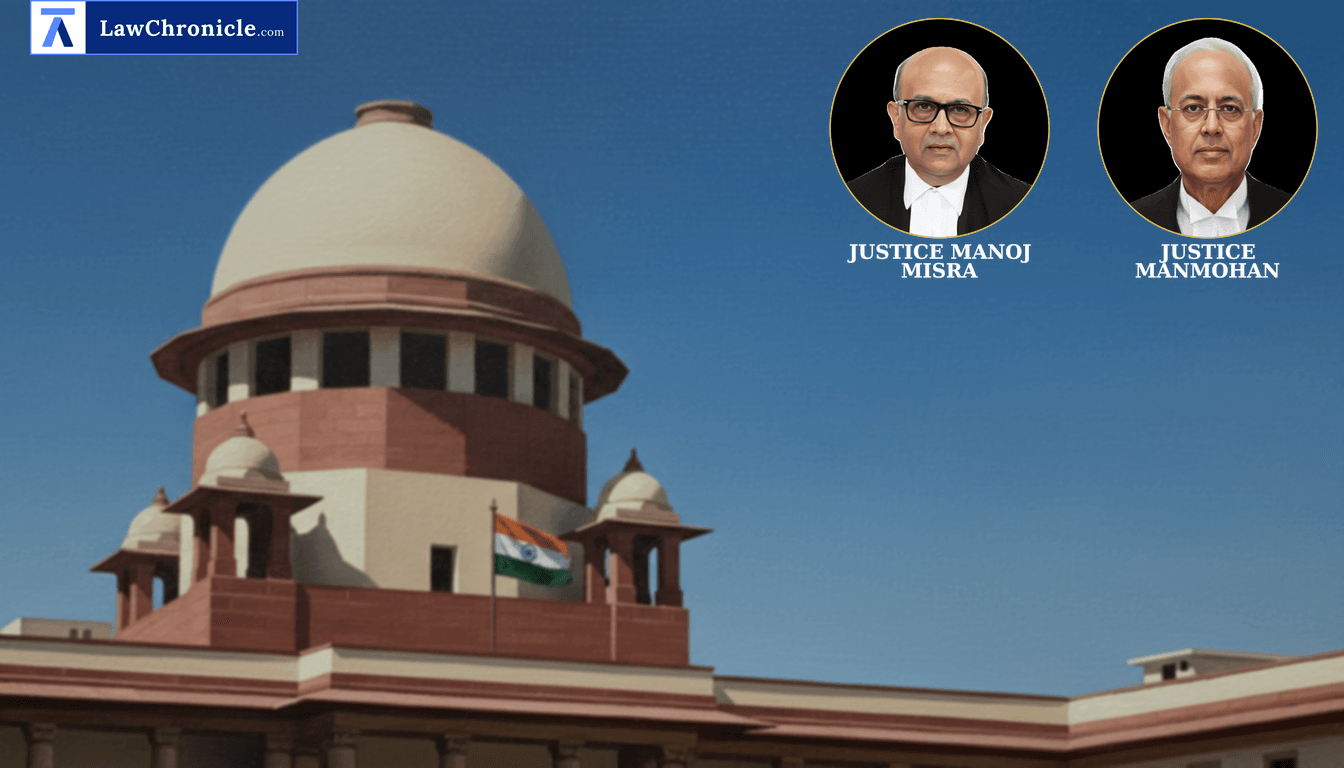
The Supreme Court has held that Civil Courts cannot issue protective or preservatory interim orders while an application seeking leave to institute a suit against a public trust remains pending under Section 92 of the Code of Civil Procedure, 1908. Clarifying that grant of leave operates as an essential mandatory condition precedent, the Supreme Court ruled that no underlying suit exists prior to leave within which interlocutory or supplemental powers can be validly exercised.
Delivering the judgment, a Bench comprising Justice Manoj Misra and Justice Manmohan resolved a split among various High Courts regarding whether courts retain inherent or supplemental protective jurisdiction at the pre-leave stage. Addressing the procedural mechanism, the Apex Court held that while prior notice to proposed defendants is ordinarily desirable, courts retain the discretion to dispense with notice and grant leave ex-parte in cases of compelling urgency to enable immediate interim relief.
Key Takeaways
-
Mandatory Pre-Condition:
Obtaining leave under Section 92 of the Code of Civil Procedure, 1908 is a non-derogable condition precedent; until granted, no civil suit comes into existence.
-
No Pre-Leave Interim Relief:
Civil courts possess no jurisdiction to pass interim orders, including the appointment of a receiver, while a leave application is pending.
-
Urgency Exception for Ex-Parte Leave:
Where urgent interim measures are required to protect trust property, courts may grant leave ex-parte without prior notice to proposed defendants.
-
Inherent Powers Restricted:
Supplemental powers under Section 94 and inherent powers under Section 151 of the Code of Civil Procedure, 1908 cannot be invoked to bypass the statutory threshold of leave.
Section 92 Leave Application
The Supreme Court affirmed that Section 92 serves a dual purpose as both a protective shield against vexatious litigation for public trusts and a remedial sword for beneficiaries. The Bench observed that “...an application under Order XL Rule 1(a) would not be maintainable as a supplemental proceeding prior to the grant of leave, which constitutes the ‘threshold requirement’ leading to the institution of the Suit.” Addressing the interaction between statutory procedure and urgency, the Supreme Court further noted that "...where facts disclose compelling urgency, issuance of notice prior to grant of leave is not indispensable. Nonetheless, Courts must exercise utmost care, caution and circumspection in granting leave ex parte."
Resolving the reference, the Apex Court ruled that "a Civil Court, seized of a plaint under Section 92 of the Code together with an application seeking leave to institute the suit, is not empowered to pass protective or preservatory interim orders pending disposal of the leave application. However, for compelling reasons to be recorded in writing like where facts disclose the necessity of urgent relief, notice prior to the grant of leave may be dispensed with."
Ratio
A suit under Section 92 of the Code of Civil Procedure, 1908 is instituted only upon the grant of leave by the court. In the absence of leave, there is no pending suit or proceeding before the court, excluding the jurisdiction to pass supplemental or interlocutory orders under Section 94, Order XL, or Section 151 of the Code of Civil Procedure, 1908 prior to the disposal of the leave application.
Background
The dispute originated from an order passed by the Principal District and Sessions Judge, Mandya, under Order XL Rule 1(a) of the Code of Civil Procedure, 1908, appointing an ad-hoc committee of existing trustees to manage Respondent No. 1, People's Education Trust, pending the decision on an application for leave under Section 92. The High Court of Karnataka set aside the Trial Court's interim order, holding that a suit under Section 92 remains stillborn until leave is granted, leaving the court denuded of jurisdiction to grant interim relief.
The Supreme Court examined divergent views taken by High Courts. Courts including the Allahabad High Court in Muhammad Ali Khan vs. Ahmad Ali Khan & Ors. and Sri Vir Digambar Jain Dharmashala and Sri Mahavir Jain Dharmarth Aushadhalai (Trust) & Anr. vs. Pramod Kumar Jain, the Bombay High Court in Bai Sakri vs. Bai Dhani, the Kerala High Court in Sulaiman vs. Chunakara S.M. Jama Ath, and the Madras High Court in N. Anandan vs. Ayyanna Gounder & Ors. and R. Shanmugam & Ors. vs. M. Ganesa Mudaliar & Ors. had recognised protective jurisdiction pending leave. Conversely, the Orissa High Court in Kintali China Jaganadham & Ors. vs. K. Laxmi Naidu & Ors. and the Karnataka High Court in Shree Beereshwara Swamy Devaru Temple vs. G.N. Sathya held that such jurisdiction was excluded.
The Appellants argued that courts retain inherent powers under Section 151 and Section 94 read with Order XL Rule 1 of the Code of Civil Procedure, 1908 to appoint a receiver to prevent waste of trust property, relying on precedents such as Ram Khelawan vs. Smt. Sudama Devi, Manohar Lal Chopra vs. Rai Bahadur Rao Raja Seth Hiralal ( "1962 Supp (1) SCR 450": 1961 CaseBase(SC) 179), T. Krishnaswamy Chetty vs. C. Thangavelu Chetty & Ors. ( "AIR 1955 Mad 430": 1954 CaseBase(MAD) 267), and State of Andhra Pradesh vs. Manjeti Laxmi Kantha Rao (Dead) by LRs. & Ors. ( "(2000) 3 SCC 689": 2000 CaseBase(SC) 525). They asserted that procedural rules under Section 141 of the Code of Civil Procedure, 1908 treat a leave application as a substantive proceeding. Conversely, the Respondents contended that Section 92 requires leave as a condition precedent, relying on decisions such as Gopal Dei & Anr. vs. Kanno Dei & Ors., Vareed Jacob vs. Sosamma Geevarghese and Ors. ( "(2004) 6 SCC 378": 2004 CaseBase(SC) 410), Ashok Kumar Gupta Vs. Sitalaxmi Sahuwala Medical Trust ( "(2020) 4 SCC 321": 2020 CaseBase(SC) 1360), Operation Asha vs. Shelly Batra and Ors. ( "(2026) 1 SCC 569": 2025 CaseBase(SC) 868), Gour Mohun Das Baishnav v Sajedur Raja Ghowdhuri, Vidyodaya Trust vs. Mohan Prasad R and Ors. ( "(2008) 4 SCC 115": 2008 CaseBase(SC) 245), R.M. Naryana Chettiar vs. N. Lakshmanan Chettiar ( "(1991) 1 SCC 48": 1990 CaseBase(SC) 642), Bachacha vs. Lakhpati Devi ( "AIR 1972 All 513": 1972 CaseBase(ALL) 188), and Thresia vs. Xavier to demonstrate that supplemental powers presuppose a validly instituted suit.
Upon examining the statutory scheme, the Supreme Court held that Section 92 is a special provision governing public charities where leave is mandatory prior to the institution of a suit. The Apex Court concluded that supplemental proceedings under Section 94 or Order XL presuppose a validly pending suit, and Section 141 cannot override substantive statutory safeguards. Reaffirming that inherent powers under Section 151 cannot override express statutory bars, the Supreme Court dismissed the appeals.
Case Details:
Case No.: Civil Appeal Nos. of 2026 (Arising out of SLP (C) Nos. 25577-25579 of 2025)
Neutral Citation: 2026 INSC 1010
Case Title: S. Panchalingu & Ors. v. People’s Education Trust (R) & Others etc.
Source: 2026 CaseBase(SC) 7014
Similar Articles
 Breaking News


