


No Legal Bar for Simultaneous Criminal and Disciplinary Proceedings: Madras HC Reminds
 Copy Link
 Share
 Save
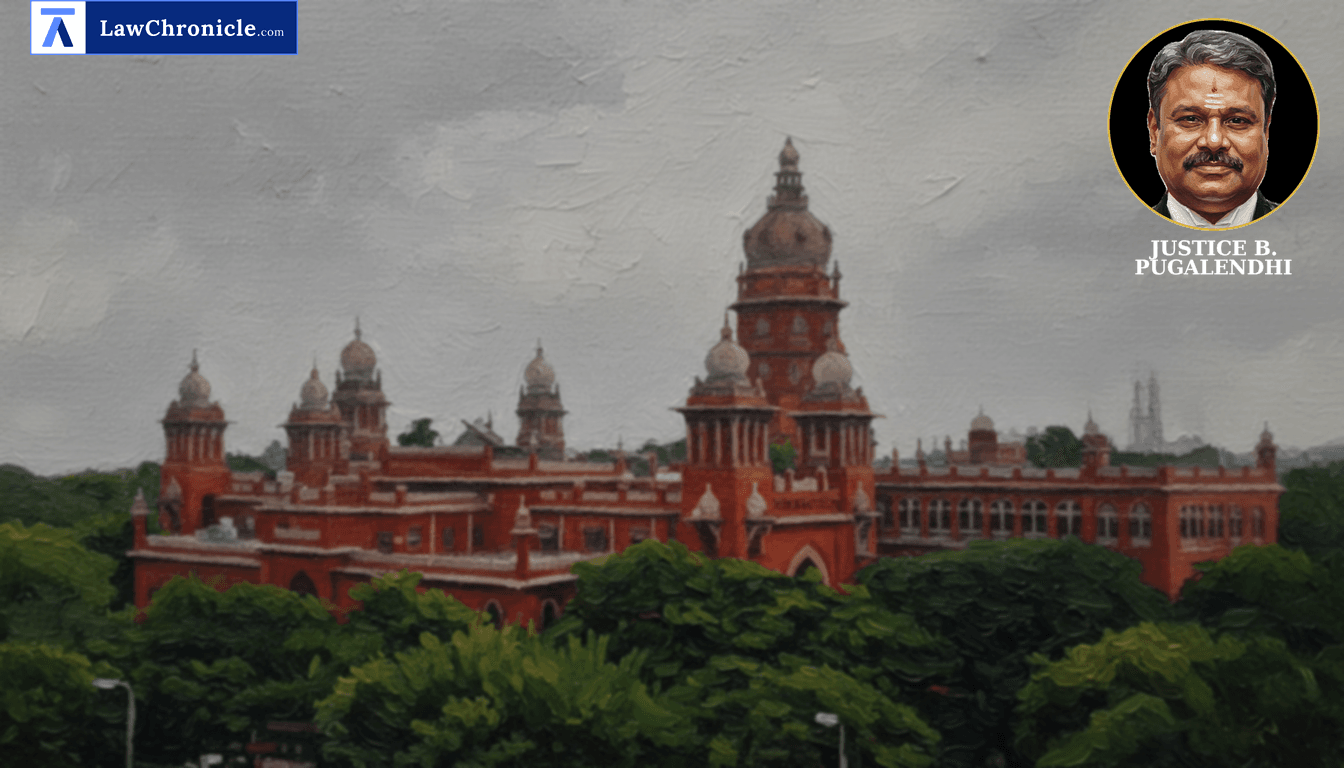
The Madras High Court has delivered a scathing critique of administrative delays, ruling that the pendency of a criminal corruption case is no legal bar to conducting simultaneous disciplinary proceedings against government servants. The Bench rebuked the practice of keeping delinquent officials under prolonged suspension while paying subsistence allowance for years without extracting work, calling for statutory amendments to ensure integrity in public service.
In a batch of writ petitions heard by Justice B. Pugalendhi, the Court addressed the grievances of several government servants, including police and revenue officials, who challenged their suspension orders or the rejection of their revocation requests following arrests by the Vigilance Department in corruption trap cases.
Key Takeaways
Simultaneous Criminal and Disciplinary Proceedings
Simultaneous departmental action and criminal trial are permissible as they serve distinct purposes of maintaining service discipline and societal law enforcement.
Integrity is a Continuing Obligation
Strict standards for character and antecedents required at the time of entry into service under Tamil Nadu Government Servants (Conditions of Service) Act, 2016 must continue with equal force throughout an official's tenure.
End to Paid Idleness
Paying subsistence allowance for years without conducting an inquiry serves only the interests of the guilty and drains the public exchequer.
Statutory Backing for Deadlines
Instructions for simultaneous proceedings issued since 1973 are often ignored, necessitating their incorporation into the Tamil Nadu Civil Service (Discipline and Appeal) Rules.
Legal Purity and Administrative Discipline
The Madras High Court emphasized that the object of service rules is to maintain a 'clean record' and purity of administration. Referring to Manikandan and Others v. Chairman, Tamil Nadu Uniformed Services Recruitment Board, the Bench noted that the classification between those involved in criminal cases and those with clean records is reasonable and necessary for disciplined forces. The Bench further noted that under Delhi Administration v. Sushil Kumar, the actual result of a trial is secondary to the determination of a candidate's conduct and character for state employment.
The Madras High Court batted for simultaneous criminal and disciplinary proceedings while observing that “Entry into service cannot dilute the obligation to maintain integrity; rather, that obligation continues with the same force throughout the period of service. ... It is not also in the interest of administration that persons accused of serious misdemeanour should be continued in office indefinitely, i.e., for long periods awaiting the result of criminal proceedings. It is not in the interest of administration. It only serves the interest of the guilty and dishonest.”
Ratio
There is no legal bar for simultaneous criminal and disciplinary proceedings, especially in cases involving corruption. The standard of proof in a departmental inquiry (preponderance of probability) is different from a criminal trial (beyond reasonable doubt), and the administration must act promptly to preserve institutional purity regardless of the criminal case's outcome.
Background
The petitioners, facing charges under the Prevention of Corruption Act, 1988, were placed under suspension per Rule 17(2)(e) of the Tamil Nadu Civil Service (Discipline and Appeal) Rules. One petitioner, a Sub-Inspector, remained suspended for a decade before disciplinary action resulted in removal. Others, including Village Administrative Officers, sought to quash their suspensions citing prolonged delays.
The State, represented by the Additional Advocate General, argued that complicated questions of law and fact, as per Capt. M.Paul Anthony v. Bharat Gold Mines Ltd. and Kusheshwar Dubey v. M/s Bharat Coking Coal Ltd. & Others, warranted staying departmental actions. However, the Madras High Court rejected this, citing Jang Bahadur Singh v. Baij Nath Tiwari ( "(1969) 1 SCR 134": 1968 CaseBase(SC) 152), State of Rajasthan v. B.K.Meena, and A.P. SRTC v. Mohd. Yousuf Miya ( "(1997) 2 SCC 699": 1996 CaseBase(SC) 234), which establish that high officials or those in public office often drag criminal cases endlessly, making simultaneous inquiries essential. The Madras High Court ultimately disposed of the petitions with strict timelines for inquiry completion, noting that Constitution of India empowers the court to issue such mandates.
Case Details:
Case No.: WP(MD)Nos.23098, 24494, 24554, 25656 of 2026
Neutral Citation: 2026:MHC:4076
Case Title: P.Sunitha Ahilin Mabel vs. The Director General of Police & Others
Appearances:
For the Petitioner(s): Mr.S.Balaji, Mr.RV.Rajkumar, Mr.S.Ramasamy, Mr.S.Samuel James Devasagayam (Advocates)
For the Respondent(s): Mr.B.Saravanan (Additional Advocate General), Mr.C.Jeganathan (Special Government Pleader), Mrs.W.Pamelin (Additional Government Pleader)
Source: 2026 CaseBase(MAD) 25395
Similar Articles

 Breaking News


