

No Need For Custodial Interrogation: SC Grants Bail To Pawan Khera
 Copy Link
 Share
Share Save
Save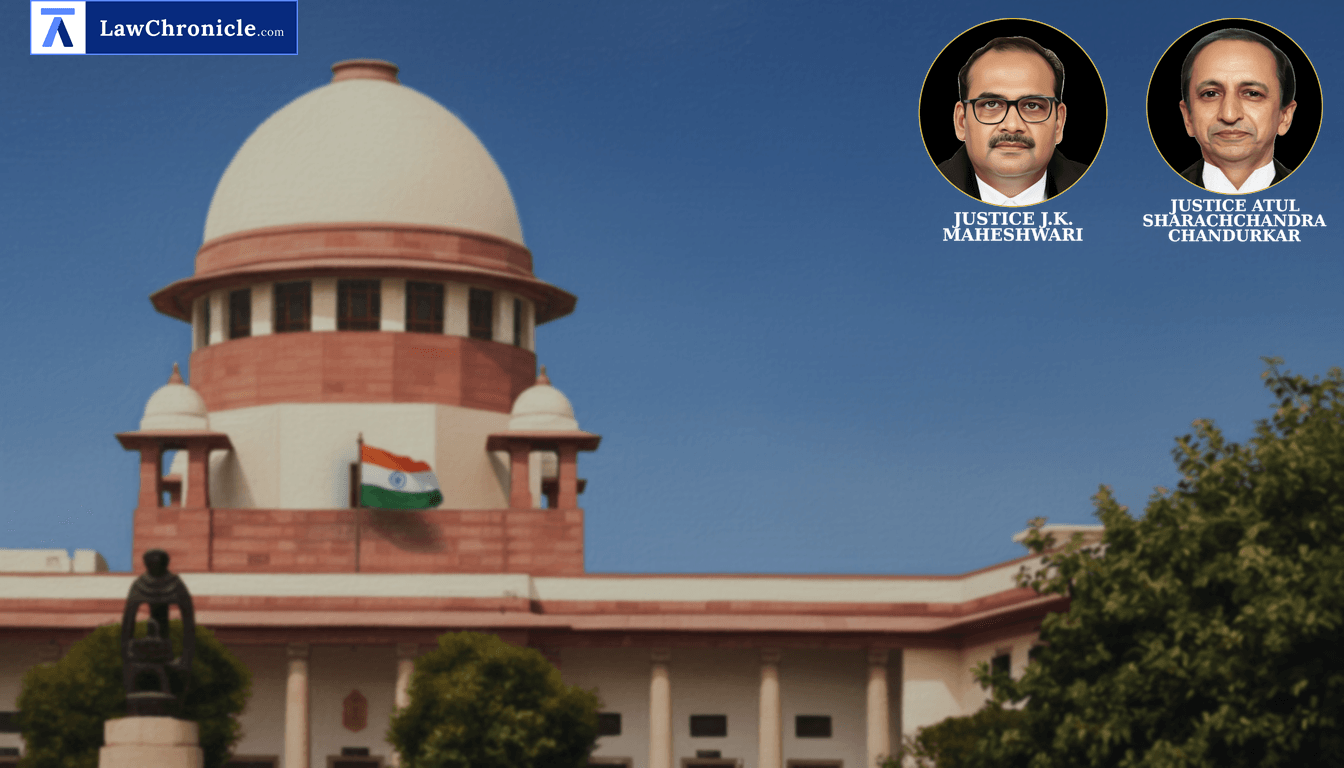
The Supreme Court of India granted bail to Congress Leader Pawan Khera, setting aside the Gauhati High Court’s order refusing anticipatory bail. Relying on Article 21, the Court held that custodial interrogation was not necessary and directed Khera to cooperate with the investigation, appear when required, and not leave India. It clarified that its observations were confined to the bail stage and did not reflect on the merits of the case.
A bench of Justice J.K. Maheshwari and Justice Atul S. Chandurkar heard an appeal against the Gauhati High Court order dated 24.04.2026 which had refused anticipatory bail to an appellant who was made an accused in Crime Branch P.S. Case No. 04/2026 under Sections 175, 3(5), 3(6), 318, 336(4), 337, 338, 340, 341(1), 351(1), 352, 353, 356, and 61(2) of the Bharatiya Nyaya Sanhita, 2023 and arising from press conferences where certain documents were exhibited and alleged to be forged. The Court heard detailed submissions on whether custodial interrogation was necessary in a case hinging on documentary material and political context, and whether the High Court had erred in refusing anticipatory bail.
The Court allowed the appeal and directed that the appellant be released on anticipatory bail in the event of arrest subject to conditions including cooperation with investigation, appearance as required, a prohibition on influencing or tampering with evidence, and leave of the trial court before leaving the country. The Court recorded that the Gauhati High Court had improperly shifted the burden to the accused and had relied on observations not supported by charge-sheeted offences. The Court, in its reasoning, observed: "Having regard to the aforesaid considerations, we are of the opinion that while adjudicating an application for anticipatory bail, a careful balance must be struck between the State’s interest in ensuring a fair investigation and the individual’s fundamental right to personal liberty under Article 21 of the Constitution of India, 1950, in light of the principles enunciated in Shri Gurbaksh Singh Sibbia and Others v. State of Punjab ( "(1980) 2 SCC 565": 1980 CaseBase(SC) 263). In this context, the criminal process must be applied with objectivity and circumspection so as to ensure that individual liberty is not imperiled by proceedings that may be coloured by political rivalry. We are further of the opinion that the allegations and counter-allegations, as apparent in the present case, prima facie, appear to be politically motivated and seemingly influenced by such rivalry, rather than disclosing a situation warranting custodial interrogation, and the veracity of the allegations can be tested at trial. The right to personal liberty is a cherished fundamental right, and any deprivation thereof must be justified on a higher threshold, particularly where the surrounding circumstances may indicate the presence of political overtones."
Background
The dispute arose from two press conferences on 05.04.2026 where the appellant displayed documents including purported foreign passports and corporate records, and the complainant lodged an FIR on 06.04.2026 alleging fabrication and forgery. Searches were conducted, a request for a non-bailable warrant was rejected by a Magistrate, and the appellant obtained transit anticipatory bail from the Telangana High Court before the matter was litigated in Assam where anticipatory bail was refused, giving rise to this appeal. The Solicitor General argued that preliminary investigation found the exhibited documents to be forged and relied on Maruti Nivrutti Navale v. State of Maharashtra ( "(2012) 9 SCC 235": 2012 CaseBase(SC) 542) to contend that custodial interrogation was necessary to recover and test fabricated documents. The appellant relied on Shri Gurbaksh Singh Sibbia and Others v. State of Punjab ( "(1980) 2 SCC 565": 1980 CaseBase(SC) 263) and Pradip N. Sharma v. State of Gujarat and Another ( "2025 SCC OnLine 457": 2025 CaseBase(SC) 87) to argue that, where allegations primarily depended on documentary evidence, custodial interrogation was not essential and anticipatory bail could be granted if flight risk and tampering concerns were managed. The Court noted earlier authority that "A person seeking anticipatory bail is still a free man entitled to the presumption of innocence." The Court also took note of the State's reliance on the power of arrest under Section 35 of the Bharatiya Nagarik Suraksha Sanhita, 2023 and of the wider context of assembly elections then underway in Assam.
The Court examined the nature and seriousness of the charges, the political context, the preliminary investigative findings on forgery, and the competing precedents. It held that the Gauhati High Court's order had not correctly appreciated all material and had impermissibly shifted the onus onto the accused, and that the case prima facie showed political overtones permitting the grant of anticipatory bail on conditions rather than custodial interrogation. The appeal was allowed with the directions recorded by the Court and the clear statement that the observations made for bail purposes would not influence merits of the criminal trial. Interim directions were confined to the terms of bail and cooperation with investigation.
Case Details:
NeutralCitation: 2026 INSC 437
Case Title: Pawan Khera v. State of Assam
Appearances:
For the Petitioner(s): Dr. Abhishek Manu Singhvi, learned Senior Counsel
For the Respondent(s): Mr. Tushar Mehta, Solicitor General
Source: 2026 CaseBase(SC) 376
 Breaking News