


No Right To Appeal Since Urban Land Ceiling Act Repealed: Allahabad HC
 Copy Link
 Share
 Save
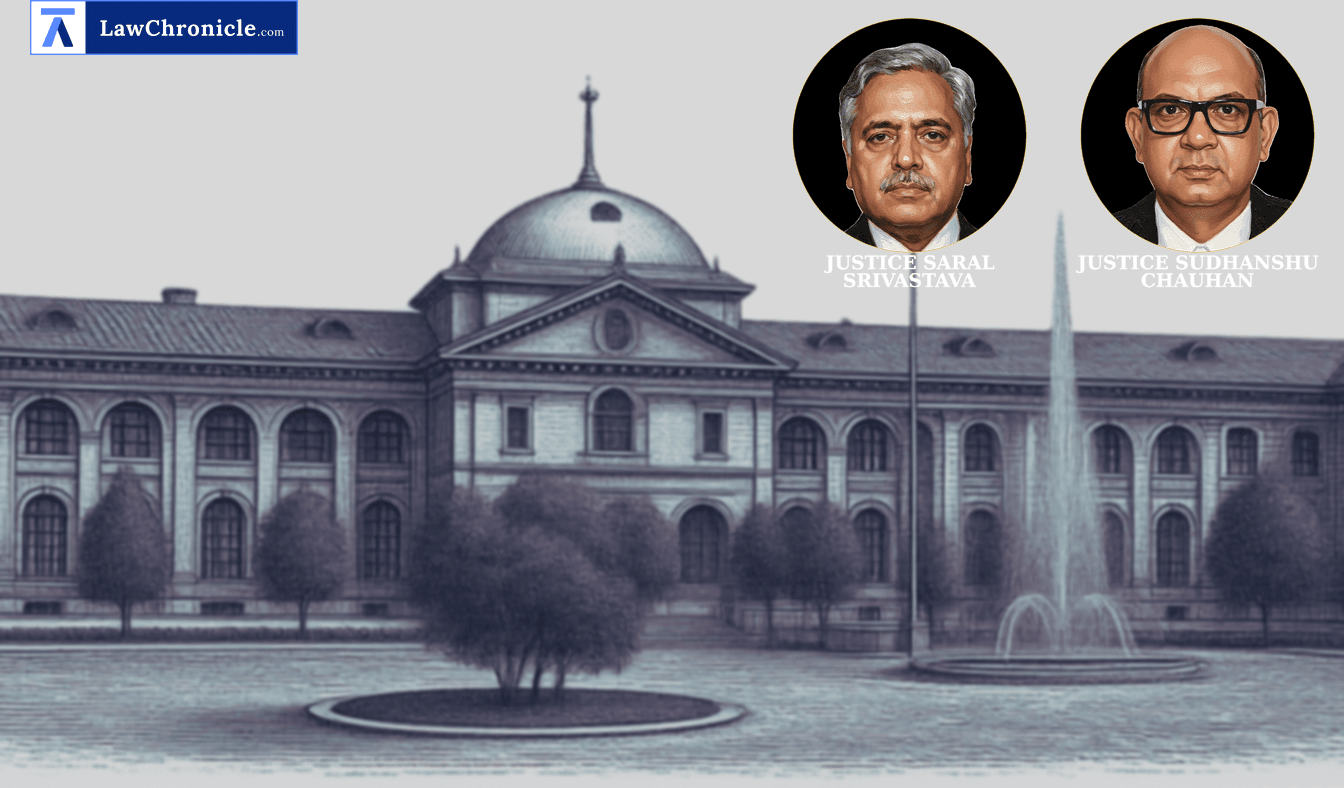
In a decisive blow to attempts at reopening decades-old land disputes, the Allahabad High Court has ruled that the right to file an appeal under Section 33 of the Urban Land (Ceiling and Regulation) Act, 1976 stands completely extinguished following the enforcement of the Urban Land (Ceiling and Regulation) Repeal Act, 1999. The Bench held that the 1999 Repeal Act, by virtue of Section 4, indicates a clear legislative intent to abate all pending proceedings, thereby barring any fresh appellate challenges to surplus land declarations made under the defunct regime.
A bench comprising Justice Saral Srivastava and Justice Sudhanshu Chauhan adjudicated upon a cluster of writ petitions filed by the Kanpur Development Authority. The petitions challenged orders passed by the District Judge, Kanpur, who had entertained and abated appeals filed by private respondents long after the Urban Land (Ceiling and Regulation) Act, 1976 was removed from the statute books. The Allahabad High Court addressed whether the substantive right to appeal is preserved under the General Clauses Act, 1897 despite an express repeal.
Key Takeaways
Complete Obliteration of Appellate Remedy
The enforcement of the Urban Land (Ceiling and Regulation) Repeal Act, 1999 resulted in the complete removal of the 1976 Act from the corpus juris, meaning no new appeals can be instituted under a non-existent law.
Primacy of Special Repeal Provisions
Section 4 of the Urban Land (Ceiling and Regulation) Repeal Act, 1999 expresses a "different intention" that overrides the general savings protections usually offered by Section 6 of the General Clauses Act, 1897.
Possession as the Decisive Factor
Proceedings only survive for the limited purpose of compensation (Sections 11-14) if the State has already taken physical possession; otherwise, the land is restored to the owner and proceedings abate.
Death of Stale Claims by Acquiescence
Successors of landholders cannot challenge 20-year-old proceedings if the original owner failed to object during their lifetime, as such delay constitutes a waiver of rights.
Court's Rationale on Statutory Abatement
The Allahabad High Court observed that the Urban Land (Ceiling and Regulation) Repeal Act, 1999 was enacted specifically because the Urban Land (Ceiling and Regulation) Act, 1976 had failed to achieve its social objectives and had instead become a source of corruption and stagnant housing. The Bench noted that the legislature intended to bring finality to all litigation unless it fell under specific exceptions related to compensation where possession was already transferred to the State.
The Allahabad High Court reasoned to observe that "The intention of the legislature is clear that all proceedings before any court, tribunal or other authorities under the Act, 1976 shall abate... It can be very well concluded that under the provisions of Section 4 of the Repeal Act, 1999, the proceedings of appeal under Section 33 of the Act, 1976 shall stand abated and cannot continue further, and also with the enforcement of the Repeal Act, 1999 by virtue of Section 2 thereof of the Act, 1976 stands repealed, which includes the provisions of Section 33."
Regarding the contention that the right to appeal is a vested substantive right, the Allahabad High Court relied on Garika Pati Veeraya v. N. Sabbiah Choudhary and others to clarify that while such a right is generally preserved, it can be taken away by a subsequent enactment through express provision or necessary intendment. The Bench found such intendment clearly present in Section 4 of the Repeal Act.
Impact of Delay and Acquiescence
Highlighting the extraordinary delay in the cases at hand, ranging from 18 to 27 years, the Bench remarked that the original landholders had effectively abandoned their rights by not challenging the surplus declarations during their lifetime. Referring to State of Assam v. Bhaskar Jyoti Saram and others ( "2015 (5) SCC 321": 2014 CaseBase(SC) 767), the Court reiterated that if an owner does not grievance against dispossession within a reasonable time, the act of taking possession acquires legitimacy by sheer lapse of time.
Ratio
After the enforcement of the Urban Land (Ceiling and Regulation) Repeal Act, 1999, the Urban Land (Ceiling and Regulation) Act, 1976 stands obliterated from the record except for specific savings under Section 3. Consequently, the right to file or continue an appeal under Section 33 of the 1976 Act is not saved by Section 6 of the General Clauses Act, 1897 because the Repeal Act expresses a contrary legislative intent to abate all such proceedings. Furthermore, a challenge to ceiling proceedings raised after decades of silence is barred by the doctrine of acquiescence.
Background
The dispute involved three separate instances where the Kanpur Development Authority had taken possession of surplus vacant land in the early 1990s and late 1980s following orders under Section 8(4) of the Urban Land (Ceiling and Regulation) Act, 1976. The private respondents, who were successors to the original tenure holders, filed appeals before the District Judge between 2009 and 2013, decades after the 1999 Repeal Act came into force. The District Judge had entertained these appeals and ultimately declared them abated on the grounds that the records did not support the actual transfer of land to the State.
The Allahabad High Court found that the District Judge had acted without jurisdiction. It noted that the lower court ignored the precedent in State of U.P. and another v. Jagdish Chandra, which explicitly held that appeals under Section 33 are not maintainable post-repeal. The Bench further distinguished the respondent's reliance on State of U.P and another v. Balbir Singh and others, noting that judicial review under Article 226 of the Constitution of India remains unaffected by the repeal, but statutory appeals under the defunct Act do not.
Case Details:
Case No.: WRIT - C No. - 35471 of 2025
Case Title: Kanpur Development Authority Versus Hakkim Singh and 4 others
Appearances:
For the Petitioner(s): Shri M.C. Chaturvedi, Senior Counsel; Abhinava Krishna Srivastava, Advocate
For the Respondent(s): Shri Ashok Srivastava, Advocate; Digvijay Kumar Mishra, Advocate; Shreya Gupta, Advocate; C.S.C.
Source: 2026 CaseBase(ALL) 1355
Similar Articles
 Breaking News


