


No Scope for Re-Agitation of already settled Retrospective Promotion Dispute: Tripura HC
 Copy Link
 Share
 Save

The High Court of Tripura has slammed the brakes on a long-standing promotion dispute, ruling that a petitioner cannot invoke the court's jurisdiction to re-agitate issues already settled in previous rounds of litigation. The court held that in the absence of a specific judicial direction for retrospective effect, a Review Departmental Promotion Committee (DPC) is not obligated to grant seniority from a backdated period when juniors were promoted.
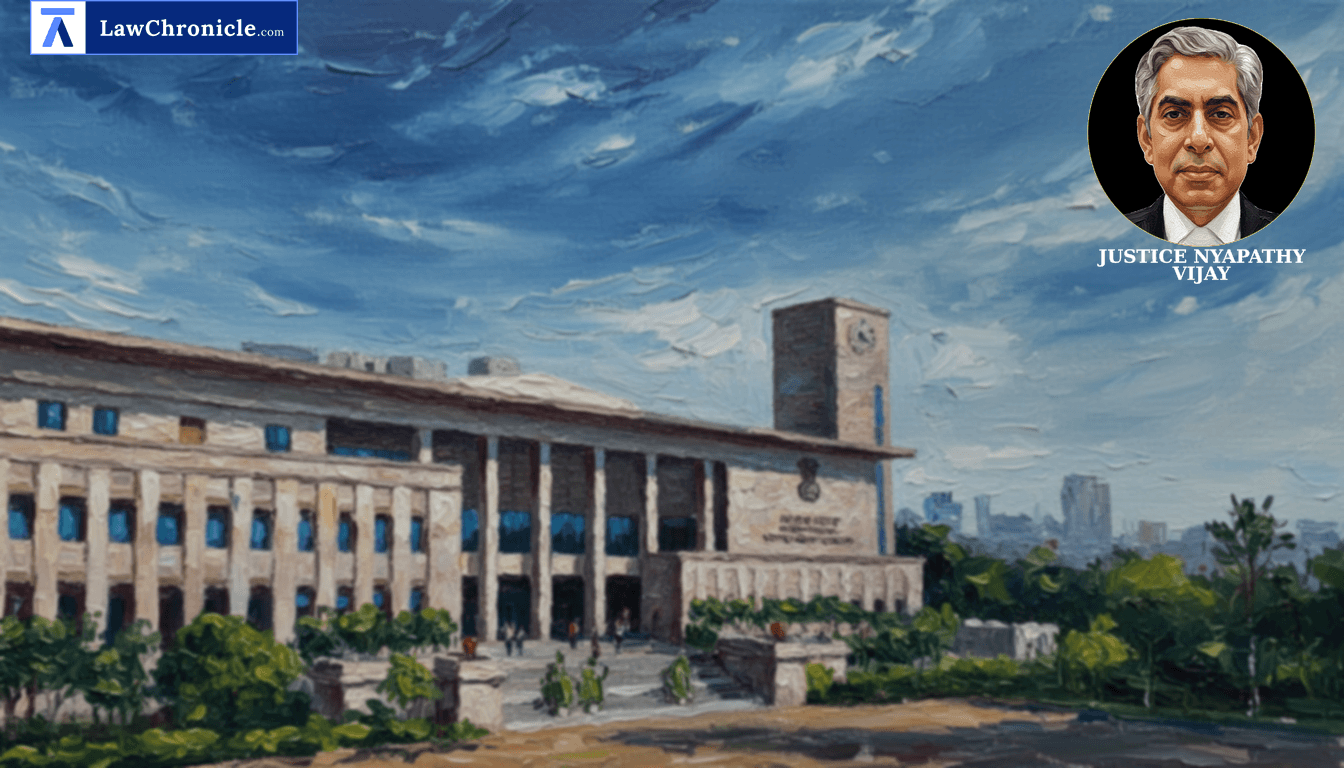
Justice Biswajit Palit presided over the matter, which involved a senior official seeking promotion to the post of Handloom Development Officer with effect from 2021. The petitioner contended that he was unfairly superseded by his juniors due to uncommunicated adverse remarks in his Annual Confidential Reports (ACRs), and sought to set aside a notification that granted him promotion only prospectively through a supernumerary post.
Key Takeaways
Finality of Litigation Upheld
Prevents litigants from re-opening settled issues through multiple writ petitions once a core decision has attained finality.No Automatic Retrospective Promotion
Clarifies that retrospective promotion is not a matter of right and cannot be claimed unless explicitly directed by the court or supported by clear vacancies.Validity of Supernumerary Posts
Affirms that creating a supernumerary post to accommodate a senior officer overlooked for promotion is a valid equitable measure by the state.Review DPC Limitations
Determines that a Review DPC must act strictly within the parameters of the judicial order that mandated its constitution.Court Observations and Directions
The court emphasized that the issue had already been scrutinized up to the Supreme Court and that the original order directing the Review DPC did not mandate retrospective benefits. The Court, in its reasoning, observed: "In the said order, nowhere the co-ordinate Bench of this Court gave any specific direction regarding consideration of promotion of the petitioner to the post of Handloom Officer giving retrospective effect. So, beyond the order dated 27.09.2023, there is no scope on the part of this Court, at this stage, to interpret the language used in the said order in other manner."
The Court has following directions:
"In the result, I find no merit in the writ petition and accordingly, the same is dismissed/rejected. The petitioner is not entitled to any relief in this writ petition in view of the observation made by the co-ordinate Bench of this Court in WP(C) No.164 of 2023 dated 27.09.2023. Accordingly, the writ petition filed by the petitioner stands disposed of. Pending application(s), if any, also stands disposed of."
Ratio
Where a judicial order directing the constitution of a Review DPC does not explicitly command the grant of retrospective promotion, the administrative authority is not bound to grant seniority from the date of the junior's promotion, especially in the absence of available vacancies. Furthermore, the principles of res judicata and finality of litigation bar a party from seeking additional reliefs that were either not granted or not sought in the initial round of successful litigation.
Background
The petitioner, an Inspector (Handloom) appointed in 1989, was at the top of the seniority list but was bypassed for promotion in 2021 in favor of four juniors. This supersession was attributed to adverse ACRs for 2017-18 and 2018-19, which were never communicated to him. He successfully challenged this in a previous writ petition, where the court directed a Review DPC to reconsider his case without the adverse remarks. While the Review DPC found him fit, it recommended his promotion via a supernumerary post due to a lack of regular vacancies.
The petitioner thereafter engaged in multiple legal battles, including a contempt petition and an appeal, arguing that he should be placed in a regular post by reverting his juniors. The state countered by citing the Tripura SC & ST Reservation Rules, 1992 and the Contempt of Courts Act, 1971, arguing that the petitioner was attempting to abuse the process of law by re-litigating settled matters. The High Court, relying on the principles of Constitution of India, concluded that since the initial writ order did not specify retrospective promotion, the petitioner could not demand it in a subsequent proceeding, especially after his SLP was dismissed by the Supreme Court.
Case Details:
Case No.: WP(C) No.62 of 2026
Neutral Citation: 2026:THC:1231
Case Title: Shri Narayan Chakraborty v. State of Tripura & Others
Appearances:
For the Petitioner(s): Mr. Tapas Datta Majumder, Sr. Adv.; Ms. Budhinika Kaipeng, Adv.; Ms. Shipthang Rani Kaipeng, Adv.
For the Respondent(s): Mr. Mangal Debbarma, Addl. GA; Mr. Kundan Pandey, Adv.
Source: 2026 CaseBase(TRI) 511
Similar Articles


 Breaking News


