No Vested Right to Automatic MBBS Seat Enhancement; Statutory Compliance Is Mandatory: Chhattisgarh HC
 Copy Link
 Share
Share Save
Save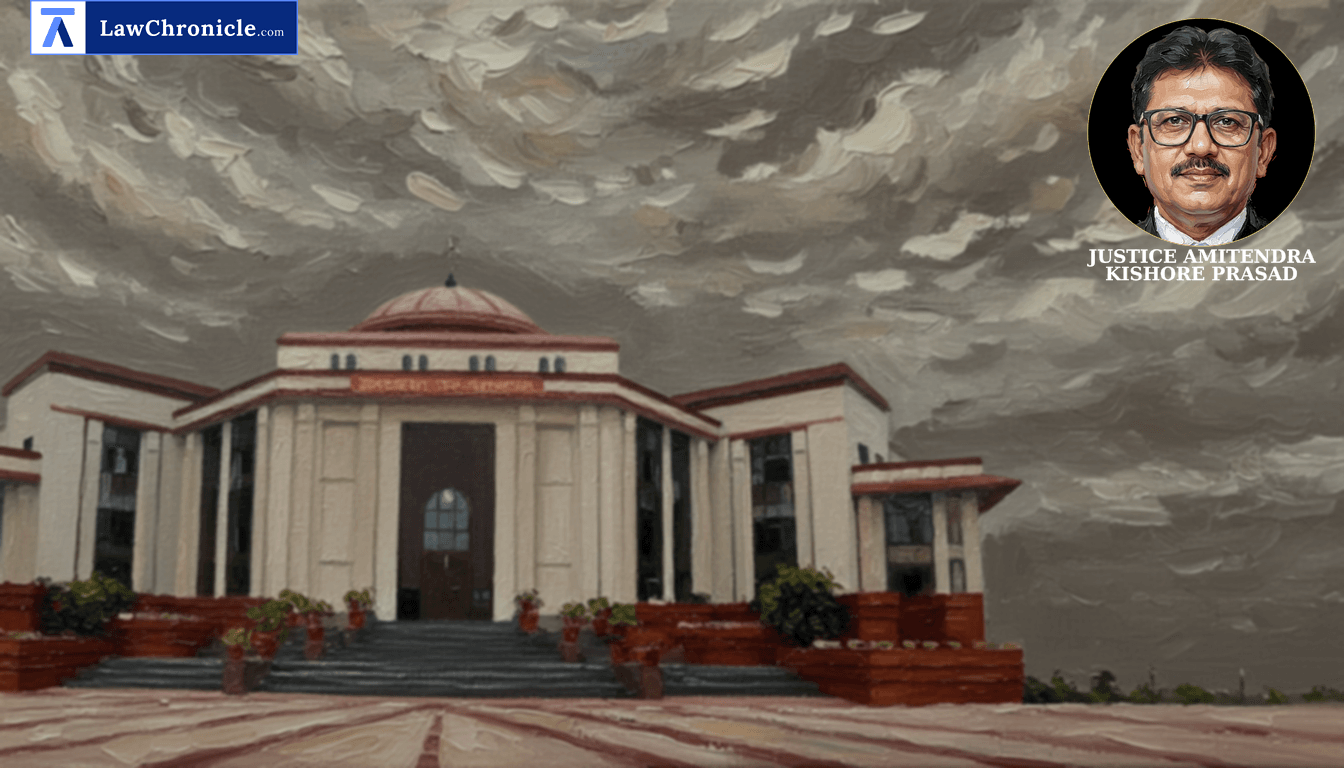
The Chhattisgarh High Court has slammed the door on medical institutions claiming a fundamental right to automatic seat enhancement, ruling that strict adherence to faculty strength and infrastructure norms under regulatory frameworks is non-negotiable. This judgment reaffirms that the State and National Medical Commission are not bound to accommodate 'work-in-progress' status or procedural lapses when the quality of medical education is at stake.
A single-judge bench of Justice Amitendra Kishore Prasad heard the writ petition filed under Article 226 of the Constitution of India. The Court was tasked with determining whether the State's decision to partially disallow a private medical college's request for seat enhancement, due to faculty shortages and application defects, was arbitrary or violative of natural justice.
The Mandate of Statutory Compliance in Medical Education
The Court dismissed the petitioner’s challenge against the Essentiality Certificate and Consent of Affiliation that restricted their MBBS intake to 150 seats instead of the 250 applied for. The Court emphasized that standards in medical education cannot be compromised for private institutional interests. It was noted that the petitioner had applied for an increase of 150 seats in a single application, which directly contravened the Establishment of New Medical Institutions, Starting of New Medical Courses, Increase of Seats for Existing Courses and Assessment and Rating Regulations, 2023 and the National Medical Commission Act, 2019 that limit such applications to a maximum of 100 seats at a time.
Shortage of Teaching Faculty as a Fundamental Deficiency
A critical factor in the Court's decision was the persistent deficiency in teaching faculty, which was found to be approximately 22% during both initial and re-inspections. The Court held that such a deficiency is substantive and cannot be treated as a minor irregularity. Relying on precedents like Medical Council of India v. Vedantaa Institute of Academic Excellence Pvt. Ltd. & Ors. ( "(2018) 7 SCC 225": 2018 CaseBase(SC) 1162) and Subharti Medical College v. Union of India ( "AIRONLINE 2017 SC 642": 2017 CaseBase(SC) 150), the Court reiterated that an institution must demonstrate readiness and demonstrable compliance ab initio.
The Court has the following directions:
"The impugned decision does not suffer from any arbitrariness, perversity or illegality warranting interference under Article 226 of the Constitution of India of the Constitution of India. Accordingly, finding no merit in the writ petition, the same deserves to be and is hereby dismissed."
In its reasoning, the Court observed: "Adequate teaching faculty constitutes the very foundation for imparting quality medical education and is one of the essential requirements for grant of an Essentiality Certificate as well as for consideration of any proposal seeking enhancement of intake capacity. The deficiency in faculty strength was found to exist not only during the initial inspection but also during the re-inspection conducted after affording sufficient opportunity to the petitioner institution to rectify the shortcomings."
Key Takeaways
Ceiling on Seat Enhancement Applications
Medical institutions cannot apply for an increase of more than 100 seats in a single academic cycle as per Establishment of New Medical Institutions, Starting of New Medical Courses, Increase of Seats for Existing Courses and Assessment and Rating Regulations, 2023 guidelines.
Faculty Strength Is Not a Curable Technicality
Shortage of teaching faculty is a substantive deficiency that prevents the grant of Essentiality Certificates, as established in Medical Council of India v. Kalinga Institute of Medical Sciences (KIMS) & Ors.
No Automatic Right to Rectification Time
Courts will not grant additional time to rectify gross deficiencies discovered during inspections if they violate the Establishment of New Medical Institutions, Starting of New Medical Courses, Increase of Seats for Existing Courses and Assessment and Rating Regulations, 2023, following the ratio in Medical Council of India v. Vedantaa Institute of Academic Excellence Pvt. Ltd. & Ors.
Natural Justice in Inspections
Participation of institutional representatives during a physical inspection constitutes sufficient notice of deficiencies, negating claims of natural justice violation for non-supply of reports.
Ratio
The right to establish or expand a medical institution under Article 19(1)(g) of the Constitution of India is a statutory privilege subject to strict adherence to the Minimum Standard Requirements (MSR). Compliance with norms regarding faculty strength, infrastructure, and clinical material must be demonstrable at the time of application (ab initio); the regulatory framework does not contemplate a "work-in-progress" status. In cases of substantial deficiency, the State and the National Medical Commission Act, 2019 possess the expert discretion to either reject or partially allow enhancement based on objective parameters.
Background:
The petitioner, Shri Rawatpura Sarkar Institute of Medical Sciences and Research, was established in 2024 and initially granted permission for 100 MBBS seats. Seeking to expand to 250 seats for the 2026-27 session, it applied to the Directorate of Medical Education (DME). However, inspections revealed a 22% shortage in teaching faculty and other infrastructural gaps. Consequently, the DME issued an Essentiality Certificate for only 50 additional seats.
The petitioner argued that the inspection reports were not shared and that they were denied a fair hearing. They also contended that since they held a valid 3-year EC from 2025, the new restrictions were arbitrary. The State, represented by the Additional Advocate General, countered that the application itself was illegal for exceeding the 100-seat enhancement limit and that medical standards cannot be sympathetic. The Court upheld the State’s view, noting that the petitioner participated in the inspections and had full knowledge of their own deficiencies. The Court found the State's approach "balanced and pragmatic" for not rejecting the application in its entirety despite the inherent legal defects.
Case Details:
Case No.: WPC No. 1137 of 2026
NeutralCitation: 2026:CGHC:30327
Case Title: Shri Rawatpura Sarkar Institute Of Medical Sciences And Research vs State Of Chhattisgarh and Others
Appearances:
For the Petitioner(s): Mr. Ashish Shrivastava, Senior Advocate along with Ms. Sangeeta Mishra, Mr. Rahul Ambast, Ms. Ananya Pandey, Advocates
For the Respondent(s): Mr. R.K. Gupta, Addl. A.G.; Mr. Ajay Kumar Dwivedi, Advocate; Mr. J.N. Nande along with Mr. Aniruddhh Shrivastava, Advocates
Source: 2026 CaseBase(CTH) 26
 Breaking News