


Nominal Members of Co-Operative Society Cannot Automatically Claim Regular Membership: Bombay HC
 Copy Link
 Share
 Save
The Bombay High Court has barred the automatic elevation of nominal members to regular membership in co-operative housing societies, ruling that mere occupancy rights under a license do not equate to title or ownership. In a significant blow to commercial occupants seeking voting rights and redevelopment benefits, the Bench held that the 2019 amendments to the state cooperative law do not mandate the conversion of existing nominal memberships into ordinary ones.
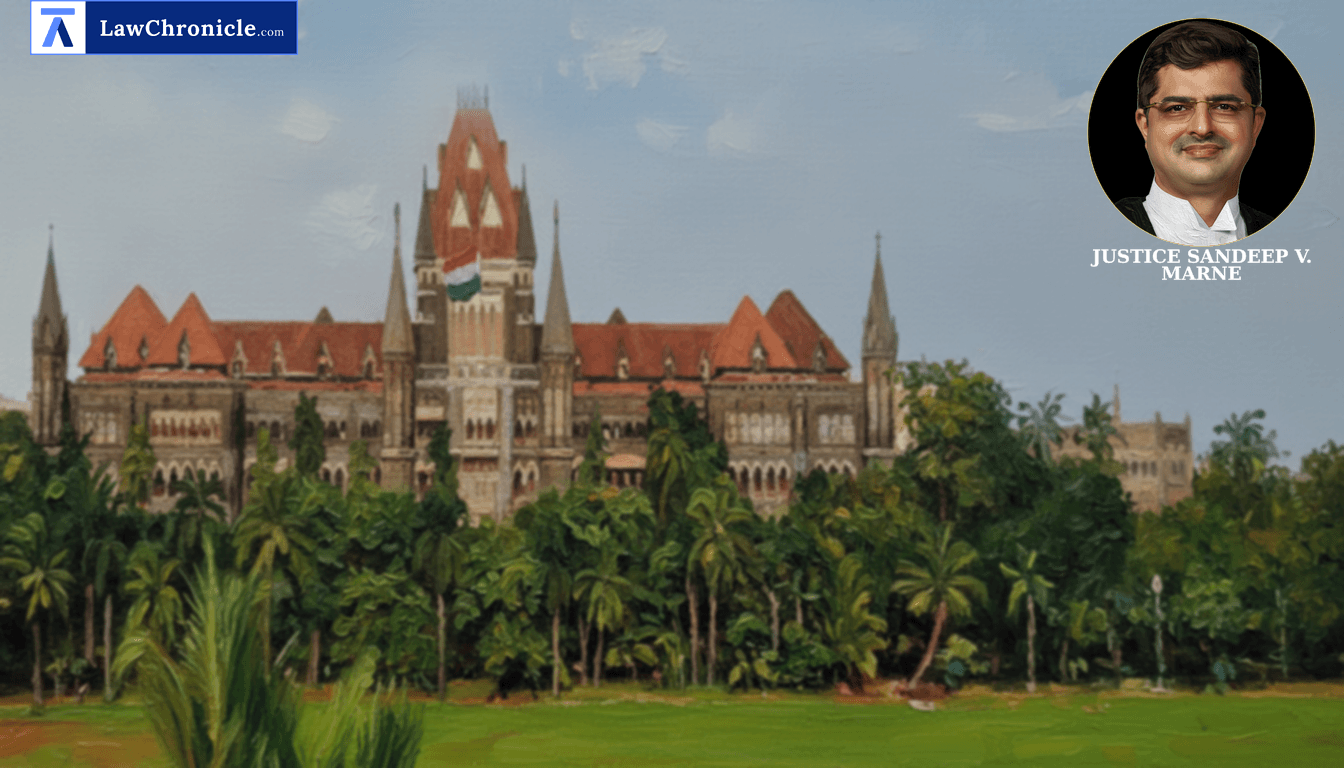
A single-judge bench of Justice Sandeep V. Marne heard a batch of writ petitions filed by a housing society challenging orders passed by the Deputy Registrar and the Divisional Joint Registrar. The lower authorities had directed the society to grant regular membership to a private company occupying 10 shops, despite the occupant being admitted only as a nominal member under specific restrictive conditions.
Key Takeaways
No Automatic Upgradation
Existing nominal memberships granted before the 2019 amendment do not automatically convert into regular memberships; the status of the member remains governed by the original terms of allotment.
Title is a Pre-requisite
Ordinary membership in a co-operative housing society is reserved for those who hold right, title, and interest in a unit; mere licensees or occupants cannot bypass this requirement.
Jurisdictional Thresholds
Registrars cannot entertain direct applications for membership; a prior application to the society and its subsequent refusal or non-decision is a jurisdictional fact necessary to invoke statutory remedies.
Redevelopment Rights Restricted
Commercial occupants holding only occupancy rights cannot use the 2019 amendment to claim ownership status to interfere with or benefit from a society's redevelopment process.
Court Rationale on Membership and Title
The Bombay High Court observed that the Petitioner-society was formed on government land allotted under a specific Government Resolution dated 12 May 1983, which mandated that only eligible persons for residential purposes could be regular members. While 15% of the area was permitted for shops, the occupants were inducted strictly as nominal members. The Bench noted that the Respondent company had acquired these shops through a "Deed of Confirmation/Transfer" executed with a previous occupant who had already surrendered rights to the society. It further observed that “The conspectus of the above discussion is that the impugned order passed by the Deputy Registrar is not only without jurisdiction but is otherwise unsustainable on merits. The Deputy Registrar has erroneously offered on a platter regular membership to Respondent No.4, although Respondent No. 4 is merely an occupant of the shops under a licence or by virtue of permissive use granted by the Petitioner-Society. The documents styled as Deeds of Confirmation/Transfer, brought into existence by Respondent No. 4, do not have any existence in the eyes of law and do not confer upon it any right, title or interest in respect of the shops in question.”
Ratio
Under the Maharashtra Co-operative Societies Act, 1960, the insertion of Chapter XIII-B abolishing nominal membership for housing societies operates prospectively; it does not convert the status of existing nominal members into regular members. A person who is a mere licensee, caretaker, or occupant as defined under Section 154B-7 and the society's bye-laws cannot be admitted as an ordinary member without holding valid title to the property. Furthermore, the Registrar lacks jurisdiction under Section 22(2) or 23(2) of the Maharashtra Co-operative Societies Act, 1960 unless a source application has first been filed with and decided upon by the society.
Background
The dispute involved shops in the 'Bhima Vaitarna' building of the Worli Sagar CHSL (later subdivided). The Respondent company, whose director was a former Chairman of the society, occupied 10 shops. These shops were originally allotted on a nominal membership basis with a specific prohibition on transfer and a mandate to surrender the shops back to the society if vacated.
In 2024, the Respondent executed private deeds with a former allottee and approached the Deputy Registrar for regular membership, bypassing the society. The Respondent relied on the judgment in Viviana CHSL Versus. State of Maharashtra to argue that shop owners must be treated as regular members post the 2019 amendment. However, Justice Marne distinguished Viviana CHSL Versus. State of Maharashtra, noting that in that case, the individuals were actual purchasers/owners, whereas here, the Respondent was a mere licensee. The Court also referred to District Collector Versus. K. Govindraj and Union of India and another Versus. Indusind Bank Limited and another regarding the prospective nature of substantive amendments. Finally, the Bombay High Court emphasized that under Section 11 of the Transfer of Property Act, 1882, absolute interest must be created first for restrictions to be void; since the respondent only held a license, no such absolute interest existed.
Case Details:
Case No.: WRIT PETITION NO. 14533 OF 2026 with Group
Neutral Citation: 2026:BHC-AS:45050
Case Title: Vaitarna Bheema Worli Sagar CHSL Versus The State of Maharashtra & Ors.
Appearances:
For the Petitioner(s): Mr. Pradeep Thorat, Mr. Mayur Khandeparkar, Dr. Abhinav Chandrachud, Mr. Aniesh Jadhav, Mr. Nikhil V. Adkine, Mr. Shubham B. Choudhari, Mr. Somnath Kale
For the Respondent(s): Mr. Drupad Patil, Mr. Priyank Daga, Mr. Malhar Vishwarupe, Ms. Ashwini Purav, AGP
Source: 2026 CaseBase(BOM) 7158
Similar Articles
 Breaking News


