


Non-Consideration of Binding Precedent Is Ground For Review: Calcutta High Court
 Copy Link
 Share
 Save
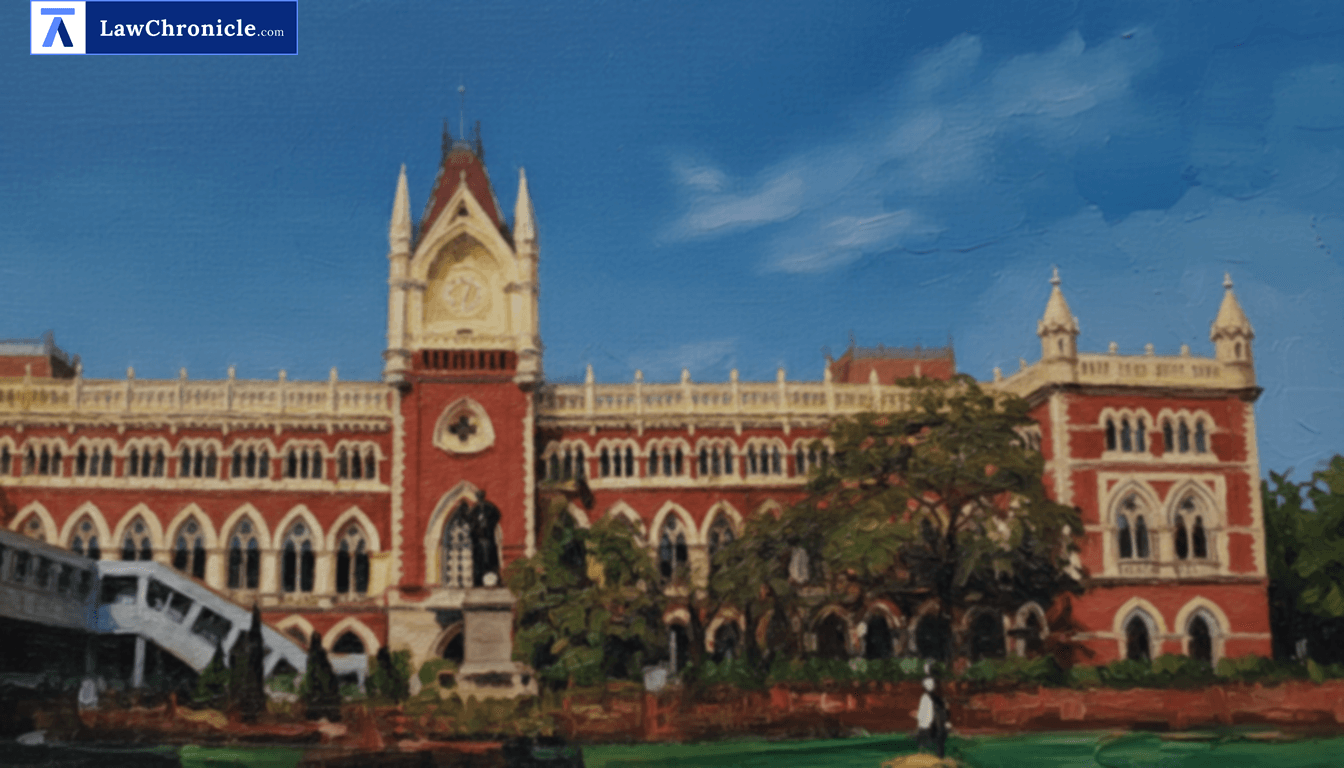
Failure to consider a binding Supreme Court precedent rendered prior to a judgment constitutes an error apparent on the face of the record, necessitating a review of the judicial order. The Calcutta High Court has clarified that even if counsel fails to bring a relevant authority to the court's notice, the doctrine of 'actus curiae neminem gravabit' ensures that judicial mistakes do not prejudice litigants.
A bench of Justice Debangsu Basak and Justice Md. Shabbar Rashidi adjudicated upon a review petition challenging a previous order that had declared a trial court decree a nullity. The controversy centered on whether a suit involving a commercial dispute, decided by a non-commercial division, could be struck down solely for lack of jurisdictional roster despite subsequent clarifications from the Apex Court.
Binding Precedents and the Scope of Review
The Court observed that a judgment delivered by the Supreme Court just two days prior to its own decision was a binding precedent that remained unnoticed during the original hearing. Relying on Nihar Ranjan Biswas v. The State of West Bengal and Board of Control For Cricket in India and another v. Netaji Cricket Club and others, the bench noted that a misconception of law by an advocate or a mistake by the court is a sufficient reason for review under the Code of Civil Procedure.
The Court, in its reasoning, observed: "A binding precedent not noticed by a Court, is a good ground for review when attention of the Court is drawn to such binding precedent... the words ‘sufficient reason’ in Order 47 Rule 1 of the Code are wide enough to include a misconception of fact or law by a court or even an advocate."
Addressing the respondent's reliance on Government of NCT of Delhi, Through its Secretary, Land and Building Department and Anr v. K. L. Rathi Steels Limited and Others, the High Court distinguished that while subsequent decisions of a higher forum might not ground a review, a decision existing at the time of the judgment but not considered definitely does.
Validity of Decrees in Commercial Disputes
Previously, the Court had relied on its own view in Steel Authority of India Limited v. Shri Balaji Industrial Products Limited to hold that the trial judge lacked the requisite roster to decide a commercial dispute under the Commercial Courts Act, 2015. However, the Supreme Court in Shri Balaji Industrial Engineering Ltd. (formerly known as Balaji Industrial Products Ltd.) v. Steel Authority of India Ltd-IISCO Steel Plant reversed this specific logic, holding that a merit-based examination is necessary rather than a summary dismissal on jurisdictional grounds. Consequently, the High Court recalled its finding of nullity and transferred the matter for a merit-based hearing.
Court Directions
The Court has the following directions:
"The finding that, the judgment and decree dated January 9, 2024 is a nullity is recalled. In terms of the ratio laid down in Shri Balaji Industrial Engineering Ltd. (formerly known as Balaji Industrial Products Ltd.) v. Steel Authority of India Ltd-IISCO Steel Plant, the appeal is required to be heard on merits. The appeal is transferred to the Commercial Division for hearing on merits. The Registry is directed to transfer the appeal being APD/9/2025 from the Non-commercial Division to the Commercial Division and renumber the same appropriately. Immediately on transferring and renumbering of APD/9/2025, the Registry will treat APD/9/2025 as disposed of in the Non-commercial Division. List the appeal in the Commercial Division four weeks hence. The Registry will treat the paper book filed in APD/9/2025 as the paper book in the Commercial Division."
Background:
The matter originated from a suit for recovery of possession and mesne profits (CS/244/2008) regarding a property used for commercial purposes. A decree was passed on January 9, 2024. In the subsequent appeal (APD/9/2025), the High Court originally held the decree to be a nullity, reasoning that the suit involved a "commercial dispute" under Section 2(i)(c)(vii) of the Commercial Courts Act, 2015 and was wrongly decided by a non-commercial roster judge.
The review applicant brought to the Court's notice the Supreme Court's decision in Shri Balaji Industrial Engineering Ltd. (formerly known as Balaji Industrial Products Ltd.) v. Steel Authority of India Ltd-IISCO Steel Plant, delivered on April 22, 2026 two days before the High Court's original judgment. The applicant argued that since this binding authority was not considered, the judgment suffered from an error apparent. The respondents argued that the review was not maintainable as it was based on a "subsequent" authority and alleged conflicts with older precedents like State of Madhya Pradesh v. Dewadas and Others. The Court rejected these objections, maintaining that Shri Balaji Industrial Engineering Ltd. (formerly known as Balaji Industrial Products Ltd.) v. Steel Authority of India Ltd – IISCO Steel Plant was binding law as of the date of the decision.
Key Takeaways:
Mandatory Compliance with Precedents
Binding authorities of the Supreme Court must be followed if they exist at the time of judgment, even if not cited by counsel.
Error Apparent on Record
Overlooking a well-settled proposition of law or a binding precedent constitutes a valid ground for review under Order 47 Rule 1.
Jurisdictional Procedural Flaws
Decisions in commercial disputes by non-commercial benches should not be declared nullities solely on roster grounds without merit assessment.
Ratio Decidendi:
Non-consideration of a binding precedent that was in existence at the time of delivering a judgment constitutes an error apparent on the face of the record and provides a 'sufficient reason' for the court to exercise its review jurisdiction. Procedural irregularities regarding the assignment of rosters for commercial disputes do not automatically render a decree a nullity; such appeals must be heard on their merits.
Case Details:
Case No.: RVWO/18/2026 IA No. GA/1/2026
Case Title: B. N. NOBBIS AND CO AND ORS v. KAMALES MALLIK AND ORS
Appearances:
For the Petitioner(s): Mr. Mainak Bose, Sr. Adv.; Mr. Shuvasish Sengupta, Adv.; Mr. Anurag Bagaria, Adv.; Ms. Pallavi Sengupta, Adv.
For the Respondent(s): Mr. Kushal Chatterjee, Adv.; Mr. Arindam Paul, Adv.; Ms. Debarati Das, Adv.; Mr. D. N. Sharma, Sr. Adv.; Mr. Altamas Alim, Adv.; Mr. S. R. Saha, Adv.; Ms. Ishita Chakraborty, Adv.; Mr. A. P. Gomes, Adv.; Mr. Subhendu Bandopadhyay, Adv.; Mr. Saikat Pal, Adv.
Source: 2026 CaseBase(CAL) 4
Similar Articles
 Breaking News


