


Omnibus Allegations Against In-Laws In Matrimonial Disputes Cannot Sustain Criminal Trial: Andhra Pradesh HC
 Copy Link
 Share
 Save
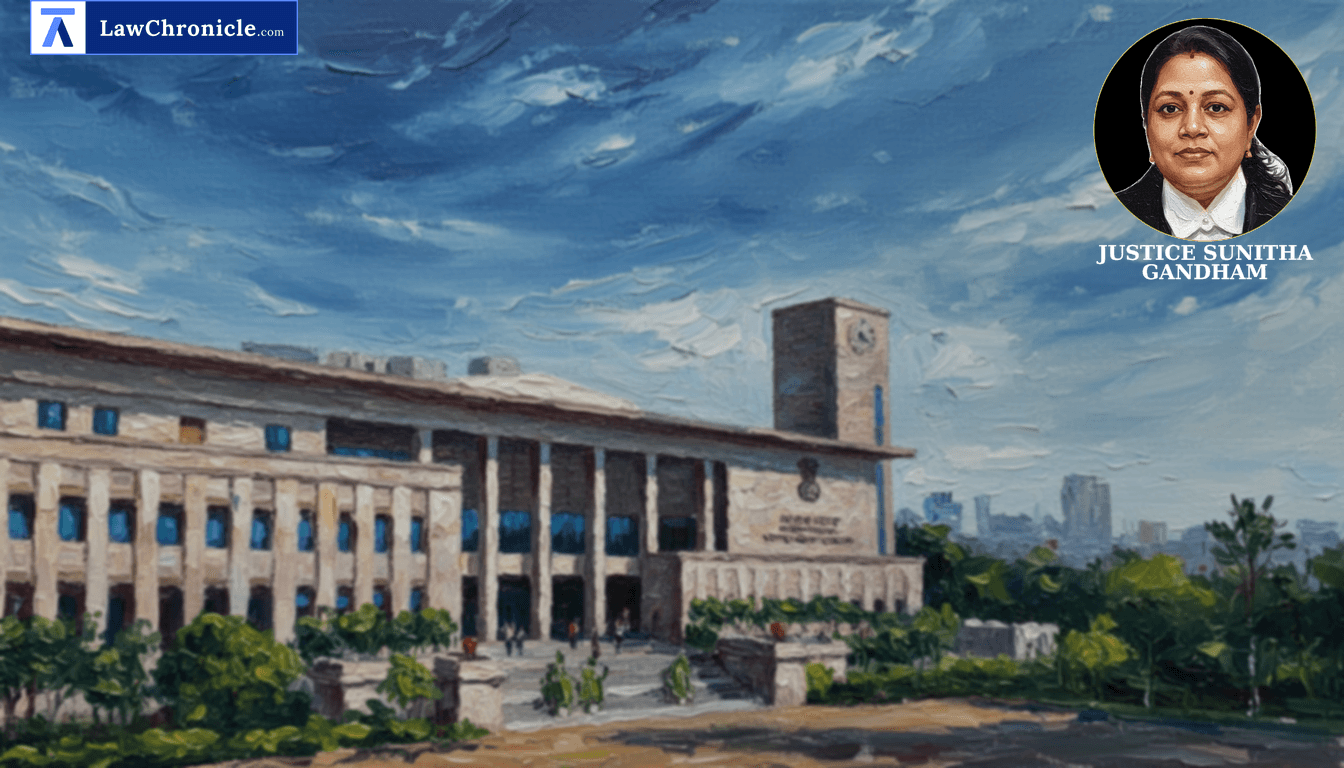
The High Court of Andhra Pradesh has shielded senior citizens from the ordeal of a criminal trial, ruling that general and sweeping accusations against in-laws without specific overt acts constitute an abuse of the judicial process. This judgment reinforces the protective wall against the common practice of implicating remote relatives in matrimonial discord under the guise of dowry harassment.
In a decisive move to curb matrimonial litigation excess, Justice Sunitha Gandham quashed proceedings against the parents-in-law, emphasizing that separate residence and lack of concrete evidence must be weighed heavily before forcing relatives to face prosecution. The Court heard a petition filed by the mother-in-law and father-in-law seeking to quash the case pending before the Judicial Magistrate of First Class, Puttaparthy, involving offences under Section 498-A and Section 323 of the Indian Penal Code, 1860 and Sections 3 and 4 of the Dowry Prohibition Act.
Key Takeaways
Shield Against Over-Implication
Relatives of the husband cannot be prosecuted based on their relationship alone; the prosecution must demonstrate specific individual roles in the alleged crime.
Residency as a Relevant Factor
While separate residence does not provide automatic immunity, the absence of specific allegations coupled with living in different cities (Bengaluru vs. Bhimavaram) weakens the case for prima facie cruelty.
Curbing Vague Accusations
Courts must exercise inherent powers under Section 482 of Cr.P.C (or Section 528 of BNSS) to quash proceedings when allegations are 'omnibus' or 'general' in nature, preventing the harassment of senior citizens.
Judicial Scrutiny of Vague Allegations
The Court observed that the allegations against the petitioners were primarily general, suggesting they supported their son and demanded dowry without providing specific dates, places, or particular acts of assault. The Bench noted that the couple resided in Bengaluru while the petitioners lived in Bhimavaram, West Godavari District.
Referring to the legal framework, the Court noted that while Section 482 of Cr.P.C mandates accepting allegations at face value, it does not permit the continuation of a trial where the ingredients of the offence are missing. The Court relied on the principles established in State of Haryana and others v. Bhajan Lal and others to identify cases fit for quashing, specifically where allegations are inherently improbable.
The Court has the following directions:
"In the result, and for the foregoing reasons, this Criminal Petition is allowed, quashing the proceedings against the petitioners/ accused Nos.2 and 3 alone in C.C. No.540 of 2022 on the file of the Judicial Magistrate of First Class, Puttaparthy, for the offences punishable under Sections 498-A and 323 read with Section 34 of the Indian Penal Code and Sections 3 and 4 of the Dowry Prohibition Act. The proceedings against the other accused shall continue in accordance with law."
The Court, in its reasoning, observed: "...merely referring to the names of family members in a criminal case arising out of a matrimonial dispute, without specific allegations indicating their active involvement, cannot form the basis for criminal prosecution and general and sweeping accusations, unsupported by concrete material or particularised allegations, do not justify continuation of criminal proceedings."
Ratio
In matrimonial disputes, the inclusion of the husband's relatives as accused requires specific and particularized allegations of their individual roles in the commission of the offence. General, sweeping, and omnibus allegations that lack concrete material or specific overt acts do not disclose the ingredients of offences under Section 498-A IPC or the Dowry Prohibition Act, and continuing such proceedings constitutes an abuse of the process of law, warranting the exercise of inherent powers to quash the same.
Background
The dispute originated from a report lodged by the daughter-in-law (Respondent No. 2), leading to the registration of Crime No. 102 of 2022. The prosecution alleged that the petitioners had harassed her and demanded additional dowry. However, the petitioners argued they were senior citizens living separately and had no involvement in the daily lives of the couple. The High Court examined the 161 statements and the charge sheet, finding that the allegations were non-specific and related to incidents prior to 2020.
The Court followed the precedents set in Dara Lakshmi Narayana and others v. State of Telangana and another ( "2024 SCC OnLine SC 953": 2024 CaseBase(SC) 857) and Geeta Mehrotra and another v. State of Uttar Pradesh, which caution against compelling relatives to undergo a trial without specific evidence. It further drew strength from Preeti Gupta and another v. State of Jharkhand ( "(2010) 7 SCC 667": 2010 CaseBase(SC) 1262) and Geddam Jhansi and another v. State of Telangana and others ( "2025 (3) ALT (Crl.) 26 (SC) (NRC)": 2025 CaseBase(SC) 222) regarding the misuse of criminal machinery in matrimonial discord. Consequently, the proceedings against the in-laws were quashed, while the trial against the husband was allowed to proceed.
Case Details:
Case No.: CRIMINAL PETITION NO: 4342/2023
Neutral Citation: 2026:APHC:47680
Case Title: Smt. Palakurthi Veera Venkata Lakshmi & Anr. vs. The State of Andhra Pradesh & Anr.
Appearances:
For the Petitioner(s): Sri Kadiyam Neelakanteswara Rao, Advocate
For the Respondent(s): Smt. K. Priyanka Lakshmi, Assistant Public Prosecutor
Source: 2026 CaseBase(AP) 19899
Similar Articles



 Breaking News


