


Omnibus Allegations In Matrimonial Disputes Cannot Sustain Prosecution Under Section 498A IPC: Gujarat HC
 Copy Link
 Share
 Save
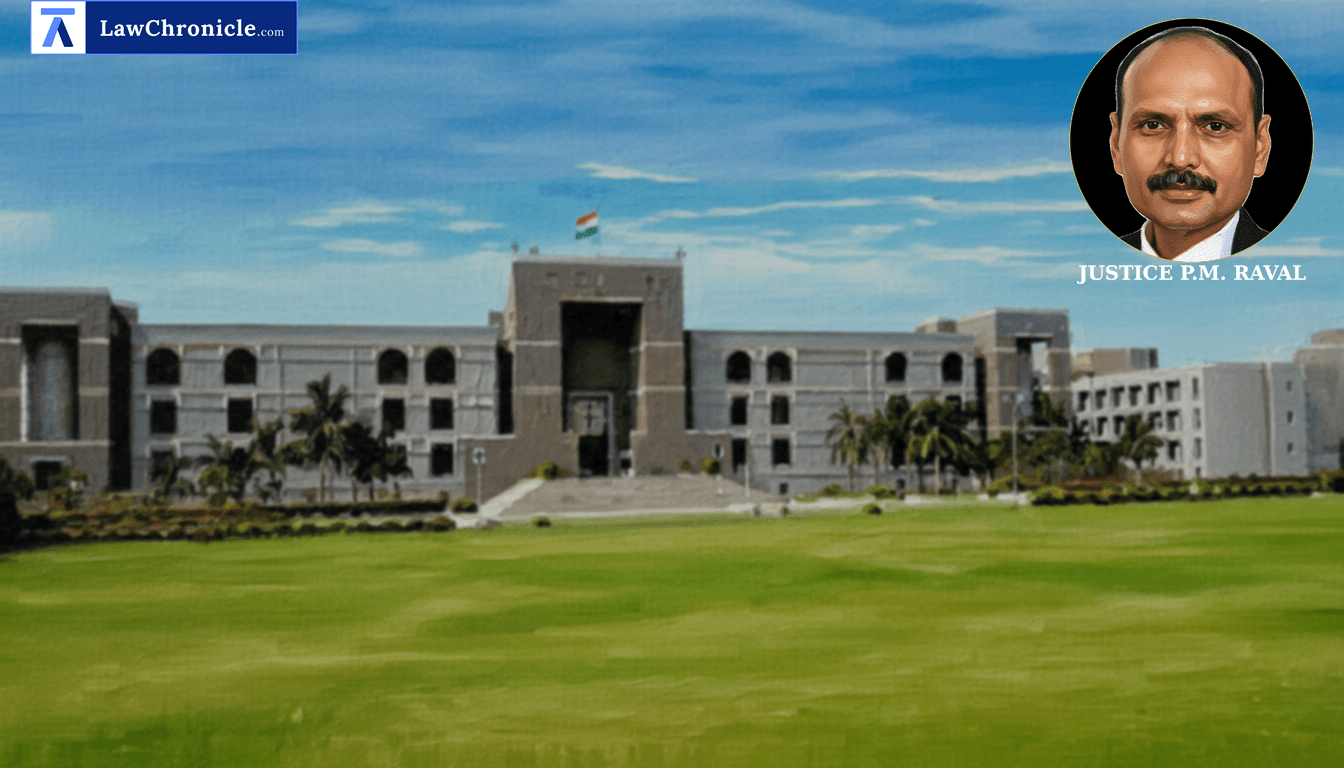
In a decisive shield against the weaponization of matrimonial laws, the Gujarat High Court quashed a criminal complaint against a husband and his extended family, ruling that vague and general allegations of cruelty without specific overt acts fail to meet the high threshold for prosecution. The Court underscored that ordinary 'wear and tear' of married life and minor differences cannot be criminalized under the guise of statutory protection meant for genuine victims of domestic abuse.
Justice P. M. Raval presided over the matter, hearing an application filed under Section 482 of the Code of Criminal Procedure, 1973. The applicants sought the quashing of an FIR registered at the Mahila Police Station, Rajkot, which alleged offences under Sections 498A, 323, and 114 of the Indian Penal Code. The bench examined the boundary between legitimate matrimonial grievances and 'omnibus' accusations designed to implicate entire families.
The Requirement of Specificity in Cruelty Allegations
The Court scrutinized the FIR, noting that the complainant’s allegations were largely general in nature, involving taunts about dowry and petty quarrels. Despite moving to separate residence, the complainant had alleged continued harassment by the husband’s extended relatives. However, the Court found these claims lacked specific details of time, place, or particular actions attributed to each relative.
The Court, in its reasoning, observed: "On a plain reading of the entire FIR, the allegations levelled therein are vague, general and omnibus in nature, arising out of matrimonial discord between the husband and wife. The allegations, as they stand, do not prima facie disclose 'cruelty' as contemplated under Section 498A of the Indian Penal Code."
The Court further relied on the principles established in Shobhit Kumar Mittal v. State of Uttar Pradesh & Another ( "AIR 2025 SC 4653": 2025 CaseBase(SC) 922), which defined the scope of 'cruelty' as either conduct driving a woman to suicide or causing grave injury, or harassment for unlawful property demands. It also took note of Digambar and Another vs. The State of Maharashtra and Another ( "2024 INSC 1019": 2024 CaseBase(SC) 718) and Ghanshyam Soni v. State (NCT of Delhi) to highlight that prosecution is not justified when accusations are broad and unsupported by concrete evidence.
Impact of Finalized Matrimonial Proceedings
A significant factor in the Court's decision was the finality of the civil matrimonial dispute. The marriage between the parties had already been dissolved by a Family Court under Section 13(1)(ib) of the Hindu Marriage Act, 1955 due to the non-compliance of a restitution of conjugal rights decree. The High Court observed that the continuation of criminal proceedings in light of these developments and the vague nature of the FIR would be an abuse of the process of law.
The Court has the following directions:
"The FIR being C.R. No. II-173 of 2016 dated 28.12.2016 registered with Mahila Police Station, Rajkot for the offences punishable under Sections 498A, 323 and 114 of the Indian Penal Code, and all consequential proceedings arising therefrom, are hereby quashed and set aside qua the present applicants. Rule is made absolute accordingly."
Key Takeaways
Bar on Vague Implications
The Court has reinforced that for a case to proceed under Section 498A, the FIR must contain specific overt acts rather than omnibus allegations against all relatives.
Distinction Between Discord and Cruelty
Ordinary matrimonial friction or 'wear and tear' does not constitute criminal cruelty unless it meets the statutory criteria of causing grave injury or coercive harassment for dowry.
Relevance of Civil Decree
A finalized divorce decree or a history of uncomplied restitution of conjugal rights can be a significant factor in assessing the veracity of delayed criminal complaints.
Ratio
Prosecution under Section 498A of the Indian Penal Code cannot be sustained on the basis of vague and omnibus allegations that do not specify the role of each accused relative or satisfy the statutory definition of 'cruelty,' as such proceedings amount to an abuse of judicial process.
Background:
The dispute originated from an FIR filed in 2016 by Sonalben, who alleged that since her marriage in 2014, her husband and his entire family (including parents-in-law and distant relatives) subjected her to mental and physical cruelty. She alleged taunts regarding dowry and physical desertion. The applicants argued that the allegations were false and motivated, especially since a Family Court had already dissolved the marriage on the grounds of desertion by the wife. They contended that the FIR was an attempt to harass the extended family members who lived separately. The Court, after applying the 'anvil of principles' regarding quashing, found that even if the FIR were accepted as true, it did not disclose a prima facie offence, leading to the quashing of all proceedings.
Case Details:
Case No.: R/Criminal Misc.Application No. 1283 Of 2017
NeutralCitation: 2026:GUJHC:44324
Case Title: Ravibhai Maganbhai Bhalodiya & Ors. Versus State Of Gujarat & Anr.
Appearances:
For the Petitioner(s): Dhwani P Lakhani, Mr Pm Lakhani, Mrs R P Lakhani
For the Respondent(s): Mr. Kuldeep N. Joshi, Mr Rohan Shah, App
Source: 2026 CaseBase(GUJ) 374
Similar Articles



 Breaking News


