One-Time Settlement No Shield Against Criminal Prosecution in Bank Fraud: PHHC
 Copy Link
 Share
Share Save
Save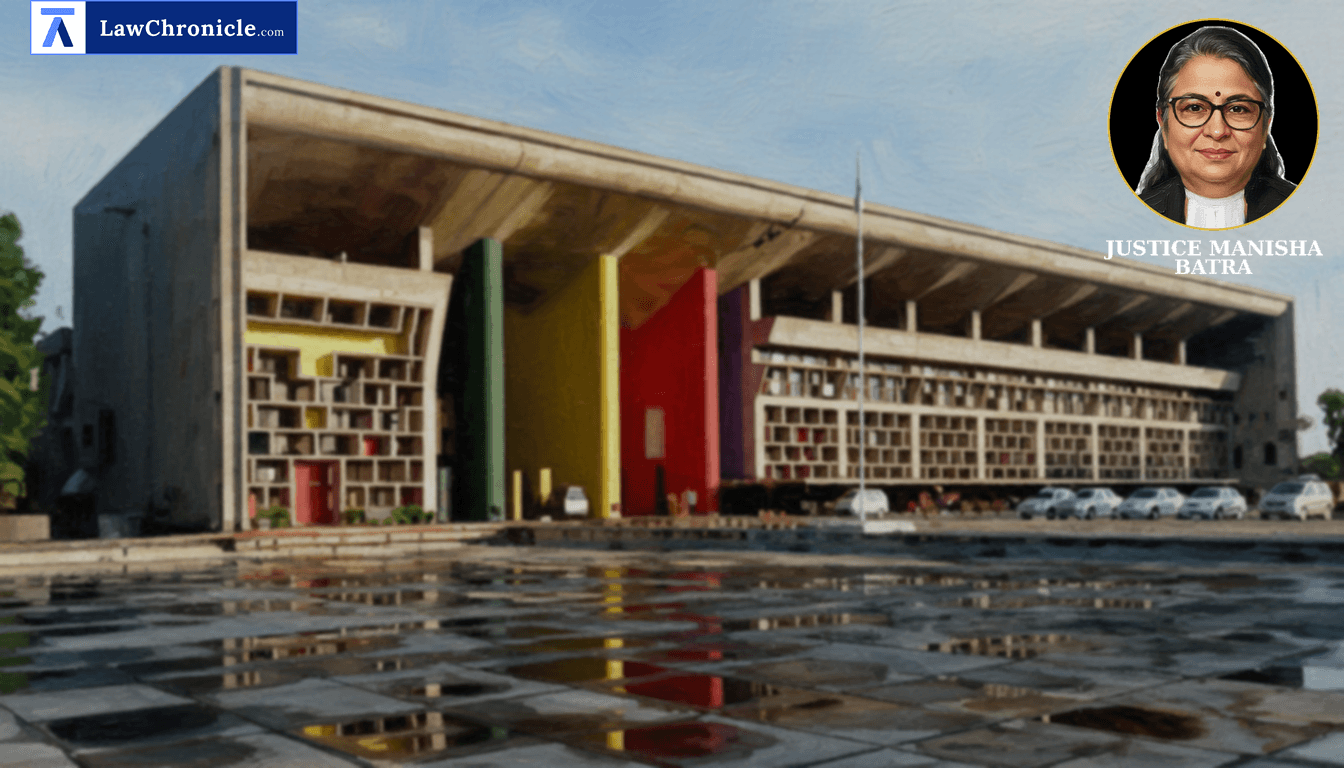
The Punjab and Haryana High Court dismissed attempts to escape criminal liability through financial compromises, ruling that a One-Time Settlement with a bank does not extinguish prosecution for forgery, conspiracy, and the abuse of official position.
In an authoritative intervention, Justice Manisha Batra dismissed a revision petition filed by a construction company and its directors, upholding the trial court's decision to frame charges despite a substantial settlement already being paid to the bank. The Punjab and Haryana High Court was hearing a challenge to an order passed by the Special Judge, CBI, Panchkula, involving allegations of obtaining credit facilities through forged work orders.
Key Takeaways
Settlement vs Criminality
Repayment or One-Time Settlement (OTS) does not automatically lead to the quashing of criminal proceedings, especially where allegations of forgery and corruption are involved.
Public Exchequer Priority
Offences involving losses to the public exchequer or the Prevention of Corruption Act, 1988 cannot be treated as private disputes compoundable by mere financial restitution.
Threshold of Charge
At the stage of framing charges, the Court is only concerned with the existence of 'strong suspicion' rather than absolute proof of guilt, preventing the premature dismissal of complex fraud cases.
Judicial Scrutiny of the Discharge Plea
The petitioners argued that since the company had entered into an OTS and paid over Rs. 46 crores, the continuation of criminal proceedings was an exercise in futility. They further contended that they could not be vicariously liable as directors without specific individual roles being attributed to them. However, the respondent-CBI highlighted that ten work orders valuing Rs. 348.24 crores were fabricated to induce the bank into sanctioning credit limits.
Applying the established legal principles, the Punjab and Haryana High Court noted that revisional jurisdiction is limited to correcting patent defects and should not be used to conduct a 'mini-trial' by weighing evidence. Referring to Manendra Prasad Tiwari v. Amit Kumar Tiwari, the Court reiterated that if the prosecution material, taken at face value, discloses the commission of an offence, the charges must stand. The Bench stated that "At the stage of framing of charge, probative value of the materials on record cannot be gone into and the materials brought on record by the prosecution has to be accepted as true at that stage... if the Court were to think that the accused might have committed the offence it can frame the charge, though for conviction the conclusion is required to be that the accused has committed the offence."
Regarding the Prevention of Corruption Act, 1988, the Punjab and Haryana High Court leaned on the necessity of examining the role of the bank manager who allegedly facilitated the fraud by failing to verify the end-use of funds. The Bench noted that the lack of direct evidence of 'illegal gratification' at this stage does not negate the charge of 'abuse of official position'.
Ratio
The 'law declared' in this judgment is that a financial settlement between a borrower and a bank does not provide immunity from criminal prosecution for offences under the Indian Penal Code, 1860 and the Prevention of Corruption Act, 1988. Furthermore, at the stage of framing charges under Section 227 or 228 of the Code of Criminal Procedure, the trial court is required only to evaluate if there is a 'grave suspicion' of the accused's involvement, without a meticulous examination of the probative value of the evidence.
Background
The dispute originated from an FIR registered by the CBI in 2015 based on a complaint from the State Bank of Bikaner and Jaipur. It was alleged that the petitioners submitted fake work orders to secure a cash credit limit of Rs. 20 crores, which was later enhanced to Rs. 50 crores. Investigation revealed that several work orders were denied by the companies purportedly issuing them, and funds were diverted through associate entities.
The High Court had previously quashed the FIR in 2022 following the OTS, but that order was set aside by the Supreme Court in 2025. The Apex Court, while restoring the case, observed that the Punjab and Haryana High Court failed to consider that the settlement did not cover the actual dues and that the offences impacted society. Following this restoration, the Special CBI Court rejected the discharge application, leading to the current revision which the Punjab and Haryana High Court has now dismissed.
Case Details:
Case No.: CRR-1938-2026 (O&M)
Case Title: M/s Sarvodaya Highways Ltd. and others v. Central Bureau of Investigation
Appearances:
For the Petitioner(s): Mr. Sunil Chadha, Senior Advocate with Mr. Akshay Chadha, Advocate
For the Respondent(s): Mr. Gagandeep S. Wasu, Advocate
Source: 2026 CaseBase(PNH) 21357
 Breaking News