Original Receipt for e-payment Impossible: Supreme Court directs Bid Consideration
 Copy Link
 Share
 Save
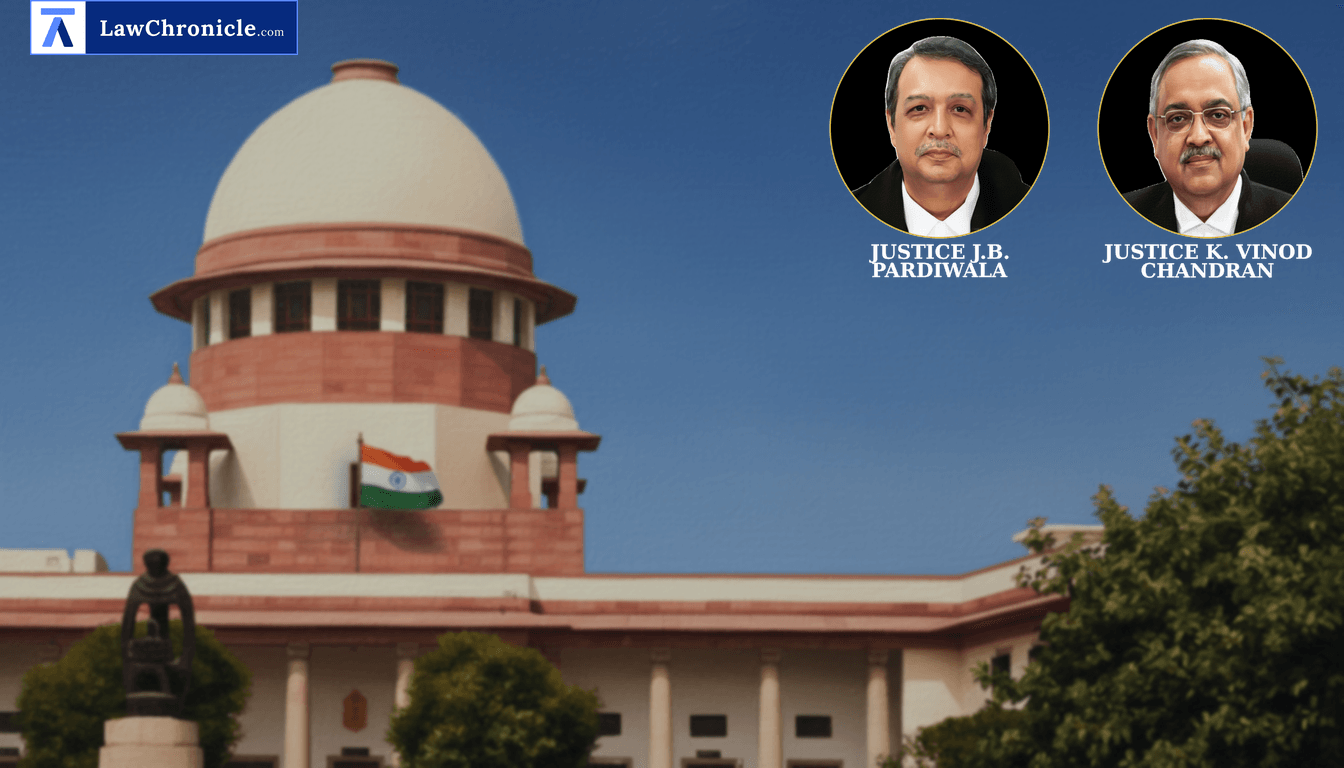
The Supreme Court has ruled that once funds enter authority coffers via e-payment, enforcing a requirement to physically produce an original receipt amounts to perverse interpretation of tender conditions. The Apex Court emphasized that mandating physical submission of an original receipt for digital tender deposits made via online payment gateways is a perverse impossibility that invalidates the rejection of a bid.
A Bench comprising Justice J.B. Pardiwala and Justice K. Vinod Chandran set aside the judgment of the Patna High Court which had affirmed the rejection of a tenderer's bid for failing to submit a physical original receipt of bid security paid electronically.
Key Takeaways
- Proportionality Over Formalism: Authorities cannot disqualify technical bids over impossible conditions like producing original receipts for electronic transactions.
- Limit on Administrative Discretion: While courts defer to tendering authorities, judicial intervention is imperative where bid document interpretation is perverse or unreasonable.
- Protection of Exchequer Interests: Unreasonable rejection of lower technical bids on hyper-technical grounds ultimately prejudices the public exchequer.
Reiterating the scope of judicial review in contractual matters, the Supreme Court observed that tender conditions must be evaluated practically rather than through hyper-technical lenses when the underlying object of the clause is met. The Bench added that “Rigid adherence to the letter of a document cannot be countenanced, especially when there is a clear impossibility in compliance of the same. As we noticed, Bid Security, when furnished in all other forms, cannot be enforced, unless the original comes into the hands of the respondents. However, insofar as the e-payment is concerned, the money has already been transferred to the account of the respondents, and they have full control over it.”
Ratio
Rejection of a tender bid for non-production of a physical original receipt of bid security paid via an official e-payment gateway constitutes perverse appreciation of tender terms, carving an exception to the rule of judicial deference in tender matters.
Background
The appellant submitted a bid for the tender concerning the construction of guide bunds and river protection works for the Bikramshila-Katareah New Line Rail Link Project. The bid was rejected at the technical stage under Clause 2.20.6(ii) of the Request For Proposal for failing to physically deliver the original Bid Security receipt, despite the appellant remitting the money through the e-payment gateway and uploading the scanned digital receipt.
The Patna High Court upheld the rejection. Before the Supreme Court, the successful tenderer relied upon Prakash Asphaltings and Toll Highways (India) Ltd. v. Mandeepa Enterprises and Others ( "(2026) 4 SCC 310": 2025 CaseBase(SC) 739) to argue that tendering authorities are best equipped to interpret tender terms and constitutional courts must defer to their understanding unless mala fides exist.
Distinguishing Prakash Asphaltings and Toll Highways (India) Ltd. v. Mandeepa Enterprises and Others ( "(2026) 4 SCC 310": 2025 CaseBase(SC) 739), the Supreme Court noted that while courts generally defer to an authority's interpretation of bid documents, an exception exists where the understanding is perverse. Since bid security paid through demand drafts or bank guarantees requires physical possession for enforcement, physical delivery is logical. However, for e-payments, funds are directly transferred to the authority's account, making the demand for a physical original an impossibility. Consequently, the Supreme Court allowed the appeal.
Case Details:
Case No.: Civil Appeal No. of 2026 (Arising out of SLP (C) No.25855 of 2026)
Neutral Citation: 2026 INSC 1110
Case Title: Hardev Construction Private Limited v. Union of India & Ors.
Appearances:
For the Petitioner(s): Sri A. K. De, Learned Counsel
For the Respondent(s): Sri Kanakamedala Ravindra Kumar, Learned A.S.G.; Ms. Nina R. Nariman, Learned Counsel
Source: 2026 CaseBase(SC) 8256
 Breaking News