


Panchayat Staff Are Not Government Servants: Chhattisgarh HC denies Entitlement To Pension
 Copy Link
 Share
 Save
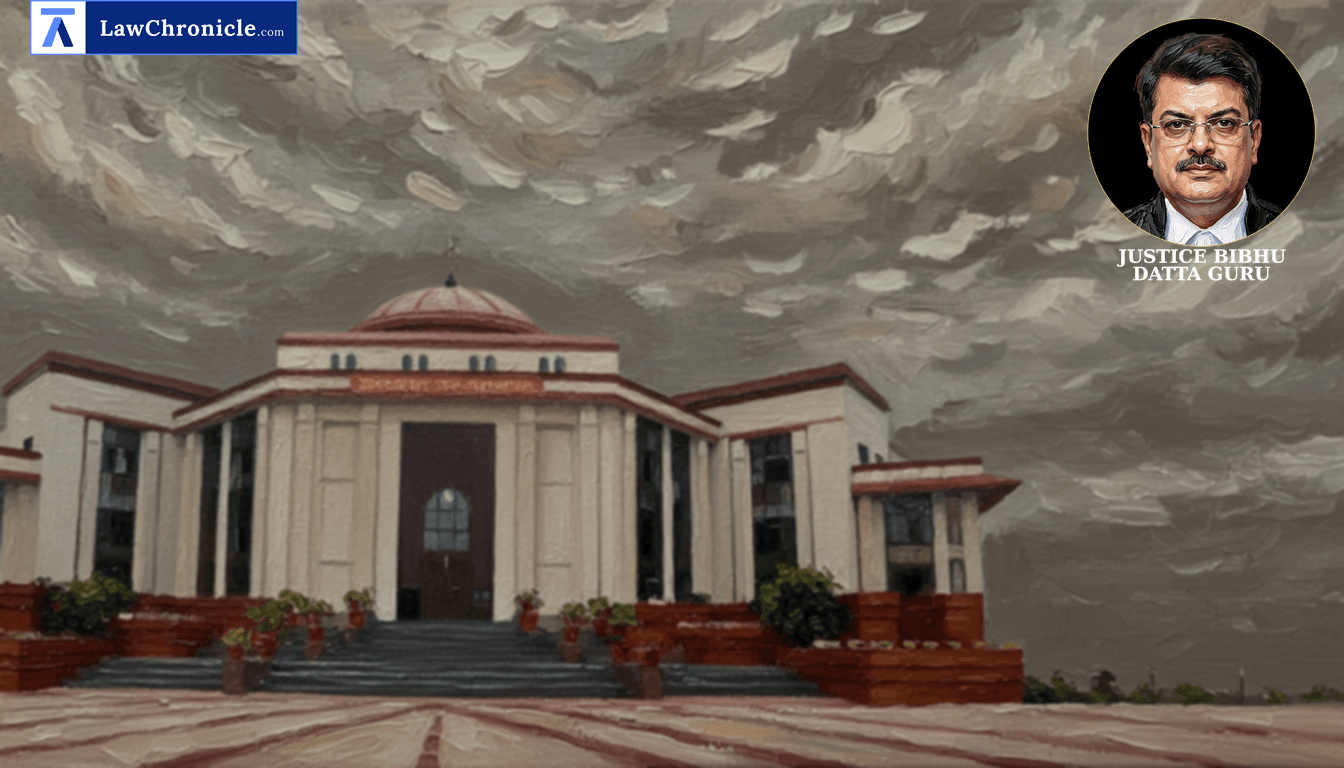
The Chhattisgarh High Court restricted pension claims by Panchayat staff, ruling that these autonomous body employees are not 'civil servants' and cannot demand pensionary benefits in the absence of explicit statutory schemes.
A Single Bench of Justice Bibhu Datta Guru heard a batch of writ petitions filed by retired employees of various Janpad Panchayats who challenged the denial of pensionary benefits by the State. The petitioners, having served for decades, sought parity with certain other Panchayat employees who were purportedly receiving pension, arguing that their services were protected under the saving provisions of the law.
Key Takeaways
Autonomous Status vs. Civil Service
Employees of Gram, Janpad, or Zila Panchayats are governed by separate service rules and do not acquire the status of 'civil servants' merely by performing public functions.
Limits of Judicial Review
Courts cannot issue a writ of mandamus to the legislature to enact a specific law or to the executive to adopt a particular pension policy.
Negative Equality Prohibited
If a benefit (pension) is extended to some employees erroneously or without statutory authority, other employees cannot claim the same benefit based on the principle of equality.
CPF as Valid Retirement Benefit
Where recruitment rules specifically provide for a Contributory Provident Fund (CPF) scheme, employees cannot later demand a switch to a pension scheme without statutory backing.
Court Rejects Parity Claims and Defines Statutory Boundaries
The Chhattisgarh High Court observed that the petitioners were governed by the Chhattisgarh Panchayat Raj Adhiniyam, 1993 and the Panchayat Services (Recruitment and General Conditions of Service) Rules, 1999, neither of which contains provisions for a pension scheme. The bench noted that the petitioners were already receiving benefits under the Contributory Provident Fund (CPF) scheme, which was the agreed-upon retirement benefit at the time of their appointment.
Regarding the petitioners' argument that employees in Janpad Panchayat Gunderdehi were receiving pension, the Chhattisgarh High Court clarified that those payments were being made from locally constituted funds pursuant to local resolutions and were not based on a State-wide statutory scheme. Furthermore, the State had already issued show-cause notices to those authorities challenging the legality of such payments.
The Chhattisgarh High Court ordered that "Consequently, no infirmity can be found in the impugned order warranting interference by this Court in exercise of its writ jurisdiction... this Court finds no merit in the present batch of writ petitions. The petitioners have failed to establish any statutory entitlement to pensionary benefits and, therefore, no interference with the respective impugned orders is warranted. Ex consequenti, all the writ petitions, being devoid of merit, deserve to be and are hereby dismissed."
The Chhattisgarh High Court explained that "Panchayat employees are not Government servants. Panchayat institutions are autonomous bodies and their employees are governed by the separate recruitment and service rules. Merely because a Panchayat employee performs public functions does not make him a Government servant. The petitioner continued to work in Panchayat service, drew salary from Panchayat funds and was governed by Panchayat rules. Therefore, the claim that they should be extended the benefit of pension is legally unsustainable."
Ratio
The right to receive pension is not an inherent right but a statutory one; in the absence of specific provisions in the service rules governing autonomous bodies like Panchayats, employees cannot claim parity with State Government civil servants. The doctrine of separation of powers prevents the judiciary from directing the executive to formulate a specific pension policy or the legislature to enact a law where no such entitlement exists.
Background
The petitioners were appointed under various Janpad Panchayats prior to the commencement of the Chhattisgarh Panchayat Raj Adhiniyam, 1993. They argued that Section 131 of the Act, which acts as a saving clause, protected their right to pension. They further contended that the denial was discriminatory since employees in other districts like Balod (Gunderdehi) and Bilaspur (Takhatpur) were receiving pension.
The State countered that the petitioners were not 'Government servants' as defined under the Chhattisgarh Civil Services (Pension) Rules, 1976 and were never borne on a pensionable establishment. The State relied on State of Himachal Pradesh & Others v. Satpal Saini and Supreme Court Employees' Welfare Assn. v. Union of India to argue that the judiciary cannot encroach upon legislative functions. The Chhattisgarh High Court also referred to State of J & K v. A.R. Zakki and V.K. Naswa v. Union of India to emphasize that a writ of mandamus cannot be issued to frame rules or enact laws. Relying on the precedent in Hemrai Nishad v. State of Chhattisgarh & Ors., the Court dismissed the petitions, holding that Panchayat service is distinct from the civil service of the State.
Case Details:
Case No.: WPS No. 11820 of 2025
Neutral Citation: 2026:CGHC:42896
Case Title: Urmila Panigrahi v. State of Chhattisgarh & Others
Appearances:
For the Petitioner(s): Ms. Meena Shastri, Advocate; Mr. Ramesh Nayak, Advocate
For the Respondent(s): Mr. Y.S. Thakur, Addl. A.G.; Mr. Shahil Singh, Panel Lawyer; Mr. C.J.K. Rao, Advocate
Source: 2026 CaseBase(CTH) 19875
Similar Articles



 Breaking News


