


Parental Ego Cannot Override Child's Right To Love And Affection: Karnataka HC
 Copy Link
 Share
 Save
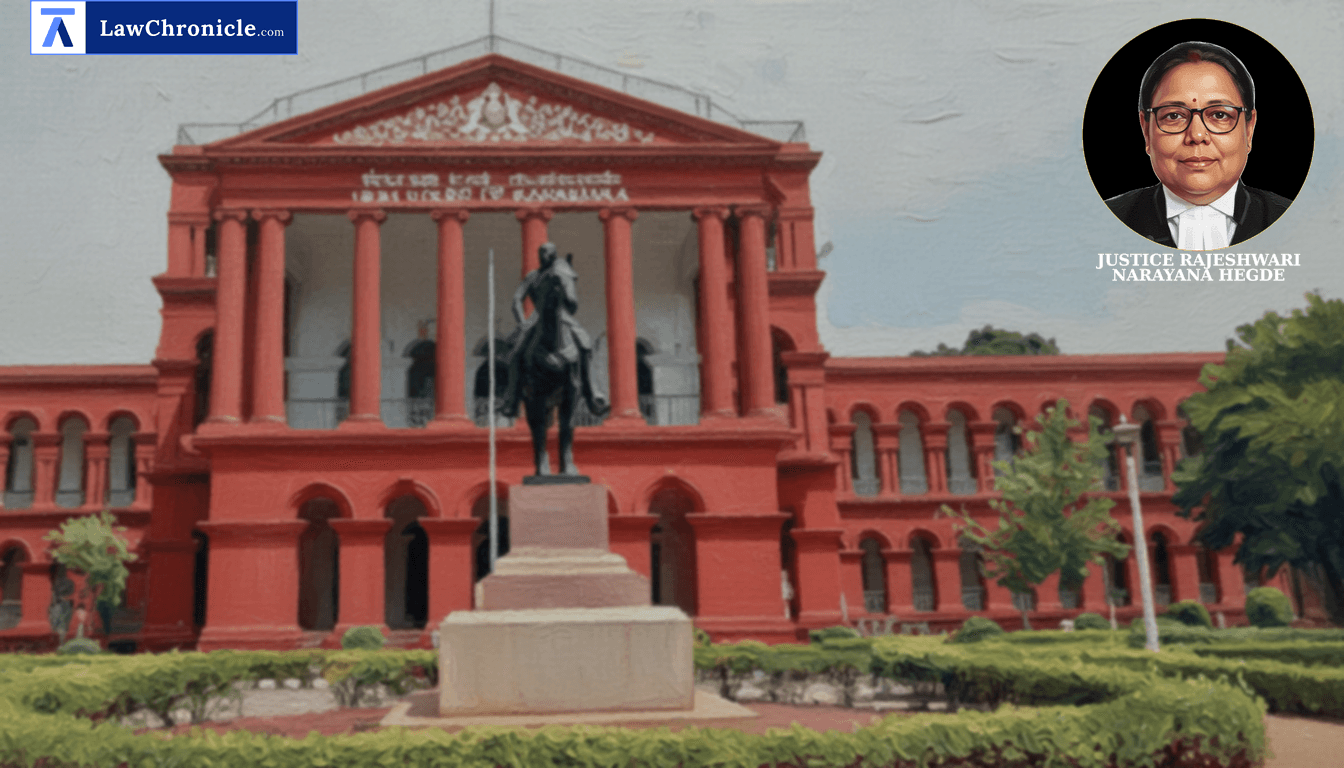
The Karnataka High Court has reinforced the principle that matrimonial disputes and maintenance defaults cannot be used as leverage to sever the biological bond between a child and a parent, ruling that visitation rights are governed by the paramount welfare of the child rather than the conduct of the spouses.
Justice Rajeshwari N. Hegde, presiding over the Dharwad Bench, modified a trial court order to ensure a four-year-old child maintains a relationship with her father, emphasizing that a child is not an inanimate object to be tossed between warring parents.
Key Takeaways
Welfare Over Maintenance
Arrears in maintenance payments do not automatically disqualify a parent from seeking visitation rights, as the child's emotional needs exist on a separate legal pedestal.
Human Right to Parenting
Access to the love, company, and protection of both parents is recognized as a basic human right and a necessity for the healthy development of a child of tender years.
Judicial Flexibility in Custody
Court-ordered visitation schedules must remain adaptable to the changing age, educational needs, and evolving circumstances of the minor child.
Impact of Parental Conflict on Minors
The Court expressed concern over children becoming victims in custody battles fuelled by parental acrimony. It noted that childhood is often the greatest sufferer when spoiled by the alter egos of spouses. While the petitioner-wife argued that the respondent-husband's failure to pay the full maintenance amount of ₹60,000 as per the Hindu Marriage Act, 1955 proceedings should bar him from visitation, the Court found this contention insignificant compared to the child's welfare.
The Court, in its reasoning, observed: "The child especially of tender years requires love, affection, company, protection and guidance of both the parents and these are not only the requirement of the child, but also his/her basic human rights and need. Further, the child should not be denied with proper care and affection, merely because his/her parents are at war with each other. The child is not an inanimate object which can be tossed from one parent to other."
Directions Issued to Parties
The Court has the following directions:
"a) The respondent-husband is permitted to visit and meet the child on any Saturday or Sunday or public holiday, for three hours on each day, subject to a maximum of three days in a month, at a mutually convenient place.
b) The respondent-husband is permitted to attend the school events of the child whenever such events are organised by the school.
c) The respondent-husband is permitted to meet the child on her birthday at the school premises or at any other mutually convenient place for a period of one hour.
d) The respondent-husband is permitted to take the child with him during the summer vacation for a period of ten days from the commencement of the school vacation. Upon completion of the said period, he shall hand over the child to the custody of the petitioner-wife. During the period of his custody, the respondent-husband shall ensure the safety, welfare and proper care of the child.
e) The petitioner-wife shall co-operate with the respondent-husband in facilitating the visitation rights granted to him under this order and shall not obstruct or prevent such visitation, subject to the terms and conditions contained herein."
Ratio
Visitation rights of a minor child are determined solely on the touchstone of the child's paramount welfare and cannot be denied or used as a punitive measure for a parent's failure to discharge maintenance obligations or comply with other matrimonial orders.
Background
The dispute arose from a marriage solemnized in 2017, which led to the birth of a child in 2019. Following matrimonial discord, the wife filed for dissolution of marriage under Section 13(1)(ia) and 13(1)(ib) of the Hindu Marriage Act, 1955. During the pendency of the case, the husband sought visitation rights under Section 26 of the Hindu Marriage Act, 1955.
The wife challenged the trial court's order granting visitation, alleging that the husband was in arrears of maintenance and that daily video calls were impractical for a child in LKG. She relied on Arpita vs. Ashish and H.P.Komala vs. N.Ravikumar to argue that a defaulting party should not be heard. Conversely, the husband cited Manjusha Singhania vs. Nimish Singhania and W.P.No.29562/2025, asserting that maintenance defaults are independent of visitation rights. The High Court, while acknowledging the husband's obligation to pay arrears as per the order in the Constitution of India, held that his status as a father entitles him to maintain a relationship with the child.
Case Details:
Case No.: WP No. 103228 of 2025
Case Title: Arpita Vs. Ashish
Appearances:
For the Petitioner(s): Sri S.V.Yaji, Advocate
For the Respondent(s): Sri Tejpal A. Kamal, Advocate
Source: 2026 CaseBase(KAR) 26154
Similar Articles
 Breaking News


