Patna High Court Mandates New DSR Guidelines Amid Mining Lease Negligence
 Copy Link
 Share
 Save
In a move to end chronic administrative delays in the mining sector, the Patna High Court has established strict mandatory guidelines for the issuance of District Survey Reports and environmental clearances, ruling that state negligence in providing necessary documentation constitutes a breach of promise. The court set aside a Single Judge order directing lease finalization, instead ordering the refund of a multi-crore deposit with interest due to 'contributory negligence' by both the state and the bidder.
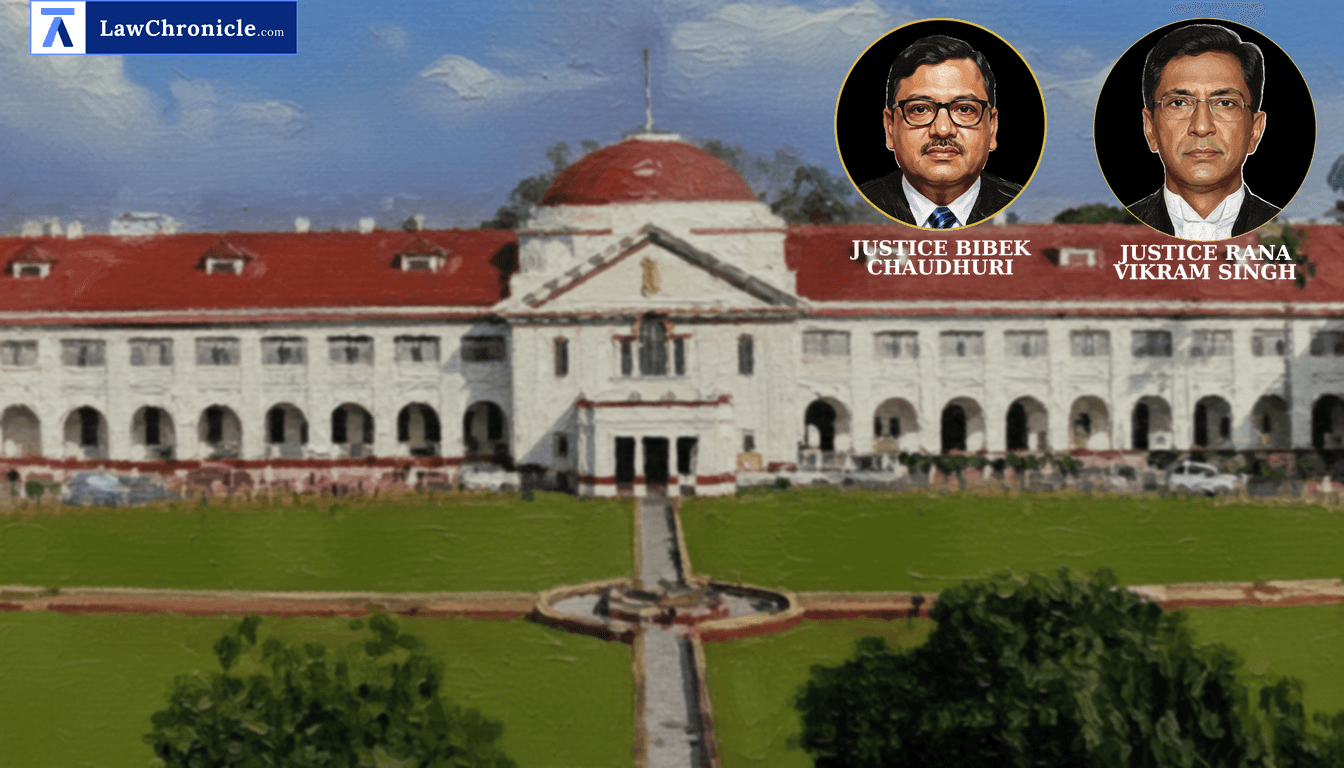
A division bench of Justice Bibek Chaudhuri and Justice Rana Vikram Singh adjudicated upon a Letters Patent Appeal filed by the State of Bihar against a Single Judge’s direction to finalize a mining lease despite a six-year delay. The Court examined the boundaries of judicial review in contractual matters and the impact of administrative lapses on statutory timelines under the Bihar Minerals (Concession, Prevention of Illegal Mining, Transportation & Storage) Rules, 2019 and Bihar Minor Mineral Concession Rules, 1972.
Key Takeaways
Curbing Administrative Lethargy
Future mining auctions must now include the District Survey Report (DSR) with precise geo-coordinates in the initial tender notice to prevent downstream delays in environmental clearances.
Strict Timelines for Mining Leases
Successful bidders must now submit mining plans within 15 days of the Letter of Intent, and the State is mandated to approve such plans within a further 15-day window.
Accountability for State Performance
Any failure by State departments to provide necessary information or documents will now be legally categorized as a non-performance of promise, making the State liable for damages.
Equity in Contributory Negligence
Where both the State and a private party contribute to a delay, the Court may set aside forfeitures of security deposits while denying the specific performance of the contract.
Judicial Review and Contributory Negligence
The Court observed that while the writ petitioner delayed their application for environmental clearance, the State was equally at fault for failing to provide DSRs with necessary geo-coordinates. The bench noted that this 'contributory negligence' led to a nine-year stalemate, causing revenue loss to the State and financial uncertainty for the bidder.
The Court has the following directions:
"(i) henceforth, District Survey Report (DSR) in respect of the tender shall be produced alongwith the notice of tender in respect of mining blocks;
(ii) the DSR must contain geo-coordinate mentioning latitude and longitude and all other information of each block separately;
(iii) within 15 days from the date of auction, the letter of intent shall be published;
(iv) within 15 days from the date of receipt of the letter of intent, the successful bidder shall deposit the mining plan;
(v) mining plan shall be approved within 15 days from the date of submission of the plan;
(vi) within 7 days thereafter the successful bidder shall make requisite application before SEIAA for environmental clearance, on receipt of environmental clearance from the Central Government, the deed of lease shall be executed within the statutory period of time as contemplated in the Rules.
(vii) failure to provide the information by executing appropriate documents shall be considered as non-performance of promise by the concerned department of the State Government and the State Government shall be under obligation to pay damages for non-performance of their part of performance."
The Court, in its reasoning, observed: "Over the years, the scope of judicial review and the extent to which a Court can interfere in disputes arising out of contracts or tenders has seen a significant development, marked by a nuanced understanding of the critical role of administrative discretion... Judicial review is permissible to prevent arbitrariness of public authorities and to ensure that they do not exceed or abuse their powers in contractual transactions and requires overseeing the administrative power of public authorities to award or cancel contracts or any of its stipulations."
Ratio
The scope of judicial review under Constitution of India extends to contractual disputes to prevent administrative arbitrariness and ensure fair play. Where a delay in executing a statutory contract arises from the mutual negligence of both the State and the private party, the court may direct the restitution of deposits with interest and mandate systemic procedural reforms rather than enforcing the specific performance of a stale contract.
Background
The dispute originated from a 2017 tender for Stone Block No. 27 in Sheikhpura. The respondent was the highest bidder and received a Letter of Intent (LOI). However, environmental clearance was stalled as the DSR lacked latitude and longitude coordinates. Consequently, the District Magistrate cancelled the LOI in 2023 and forfeited the earnest money, citing a five-year delay. The respondent challenged this, and a Single Judge directed the State to finalize the lease.
The State appealed, arguing that under Rule 28 of the Bihar Minerals (Concession, Prevention of Illegal Mining, Transportation & Storage) Rules, 2019 and Rule 25 of the Bihar Minor Mineral Concession Rules, 1972, revocation is automatic if documents aren't submitted within the statutory window. The High Court relied on Subodh Kumar Singh Rathore Vs. Chief Executive Officer & Ors. ( "(2024) 15 SCC 461": 2024 CaseBase(SC) 532) and A.B.L. International Ltd. Vs. Export Credit Guarantee Corpn. of India Ltd. ( "(2004) 3 SCC 553": 2003 CaseBase(SC) 82) to evaluate the state's conduct. While it set aside the Single Judge's direction to finalize the lease, it ordered the State to refund the initial deposit of Rs. 2.90 Crores with 12% interest, finding the State's failure to provide geo-coordinates was a significant factor in the delay.
Case Details:
Case No.: Letters Patent Appeal No.865 of 2024
Case Title: The State of Bihar & Ors. Vs. M/s. Balaji Enterprises
Appearances:
For the Petitioner(s): Mr. S.D. Sanjay, Advocate General; Mr. Prakash Chandra Agrawal, GA-5; Ms. Surbhi Agrawal, JC to GA-5
For the Respondent(s): Mr. Suraj Samdarshi, Advocate; Mr. Avinash Shekhar, Advocate; Ms. Simran Kumari, Advocate; Ms. Abhilasha Jha, Advocate
Source: 2026 CaseBase(PAT) 3295
 Breaking News