


Patna High Court Quashes 20-Year-Old Conviction Over Fatal Lapses In Evidence
 Copy Link
 Share
 Save
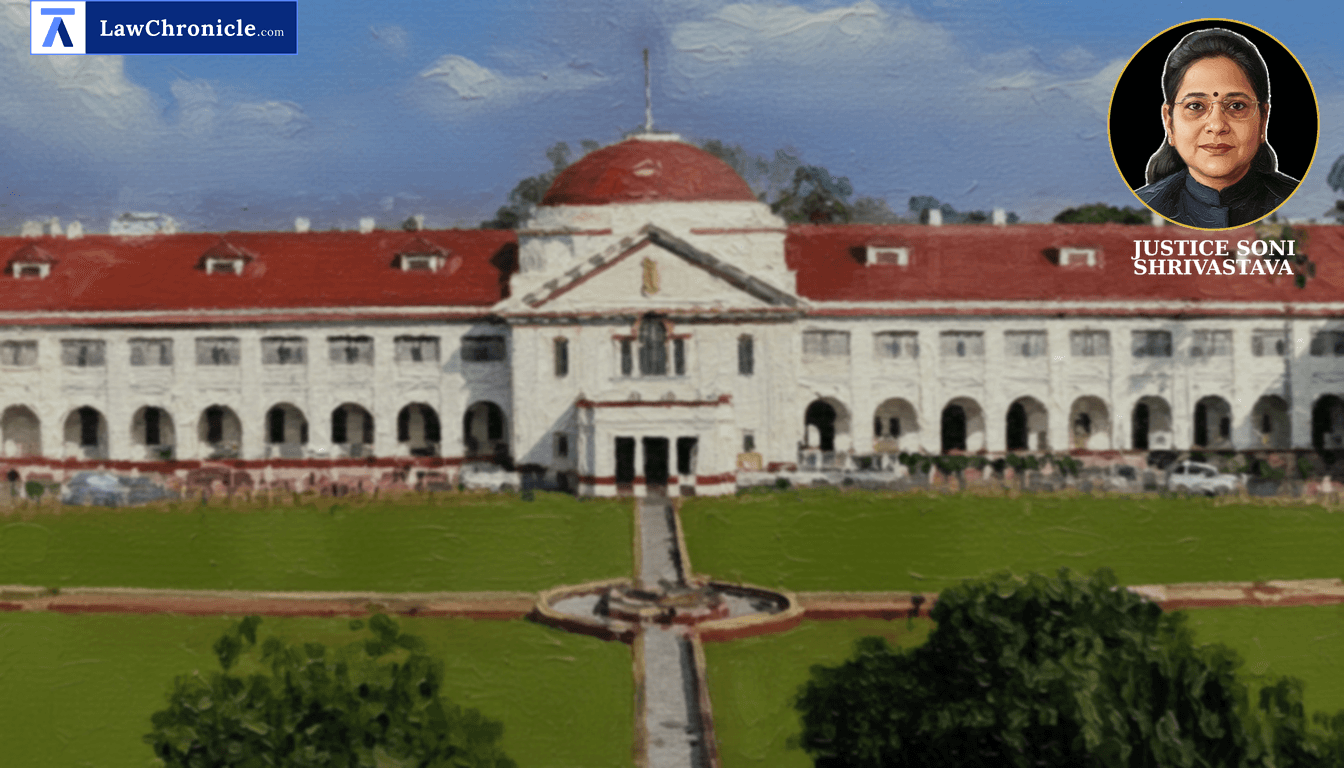
The Patna High Court has dismantled a twenty-year-old conviction in an attempt-to-murder case, ruling that the failure to examine the treating doctor and the Investigating Officer, coupled with improbable identification in the dark, renders the prosecution's version legally unsustainable. By setting aside the ten-year sentence, the Court reinforced the principle that when interested witnesses' versions are clouded by doubt, the absence of independent testimony and objective forensic evidence becomes a fatal blow to the State's case.
A Single Bench of Justice Smt. Soni Shrivastava heard the criminal appeal challenging the judgment of conviction and order of sentence dated 10.02.2004 and 11.02.2004, passed by the Additional Sessions Judge (Fast Track Court No. I), Aurangabad. The appellant had been convicted under Section 307 of the Indian Penal Code and Section 27 of the Arms Act and sentenced to ten years of rigorous imprisonment.
Key Takeaways
Evidentiary Value of Medical Documents
Formal proof of an injury report by a clerk is insufficient; the non-examination of the authoring doctor prevents the court from establishing the nature and opinion of injuries.
Corroboration in Night-time Identification
Identification of accused persons by witnesses while the accused are allegedly flashing torches is considered difficult and unreliable as the light may blind the witnesses.
Adverse Inference from Withheld Witnesses
Failure to examine the Investigating Officer and independent public witnesses, despite their availability, leads the court to draw an adverse inference against the prosecution.
Foundational Collapse
When the primary charges of dacoity and robbery (which formed the basis of the incident) are not proved, the incidental charge of attempt to murder becomes highly suspicious.
Court's Rationale on Witness Reliability and Identification
The Court scrutinized the testimony of the injured witness (PW-2) and the informant (PW-4), noting significant inconsistencies regarding the direction of firing and the victim's position. The Bench observed that while the FIR initially mentioned 20-25 unknown persons, the identification of the appellant four days later lacked corroboration, especially since the source of light (the torch) was never seized.
The Court has the following directions:
"In such view of the matter, the judgment of conviction and order of sentence dated 10.02.2004 and 11.02.2004 respectively, passed by the learned Additional Sessions Judge (Fast Track Court No. I), Aurangabad in Sessions Trial Nos. 296/1997, 83/2003 (arising out of Complaint Case No. 779/1996), is hereby set aside. The appellant is already on bail and hence, he would be discharged of the liability of his bail bonds, if not required in any other case."
The Court, in its reasoning, observed: "The non-examination of the doctor in the present case is a relevant fact to be taken into consideration for the purposes of assigning any conclusive nature or finding to the injuries received by PW-2... the non-examination of material witness affects the trustworthiness of prosecution version and leads the Court to draw an adverse inference against the prosecution."
Ratio
In criminal jurisprudence, the non-examination of the Investigating Officer and the medical professional who prepared the injury report, in the absence of independent corroboration, creates a reasonable doubt that entitles the accused to the benefit of doubt. Identification of assailants in the dark by victims who are being fired upon is subject to strict scrutiny, particularly when the prosecution fails to produce the alleged source of light (torch) as objective evidence.
Background
The case originated from an incident on the night of June 20, 1996, where 20-25 miscreants allegedly attacked the informant's house. It was alleged that the appellant fired a shot, hitting the victim in the stomach. While the police initially submitted a 'true but no clue' report, the informant filed a protest petition which was converted into a complaint case. The Trial Court acquitted two other accused but convicted the appellant based on the injured witness's identification. In its analysis, the High Court relied on Vijay Singh @ Vijay Kr. Sharma Vs. State of Bihar ( "2024 SCC OnLine SC 2623": 2024 CaseBase(SC) 918) to emphasize that family members' versions require independent corroboration when under doubt. It also cited Takhaji Hiraji Vs. Thakore Kubersing Chamansing and Ors. ( "(2001) 6 SCC 145": 2001 CaseBase(SC) 1061) and Parminder Kaur Vs. State of Punjab regarding the adverse inference drawn from withholding material witnesses. Furthermore, the Court noted the principles laid down in Tamilselvan Vs. State represented by Inspector of Police, Tamil Nadu ( "(2008) 7 SCC 755": 2008 CaseBase(SC) 144) regarding identification in torchlight and State of Maharashtra v. Kashirao & Ors. ( "(2003) 10 SCC 434": 2003 CaseBase(SC) 228) for the ingredients of Section 307 Indian Penal Code. The appeal was allowed, and the conviction was set aside.
Case Details:
Case No.: CRIMINAL APPEAL (SJ) No.111 of 2004
Case Title: Uday Mahto Vs. The State of Bihar
Appearances:
For the Petitioner(s): Ms. Shushmita Mishra, Amicus Curiae
For the Respondent(s): Ms. Anita Kumari Singh, APP
Source: 2026 CaseBase(PAT) 2695
Similar Articles
 Breaking News


