Plaintiff Need Not Physically Carry Cash To Prove Readiness For Specific Performance: Madras HC
 Copy Link
 Share
Share Save
Save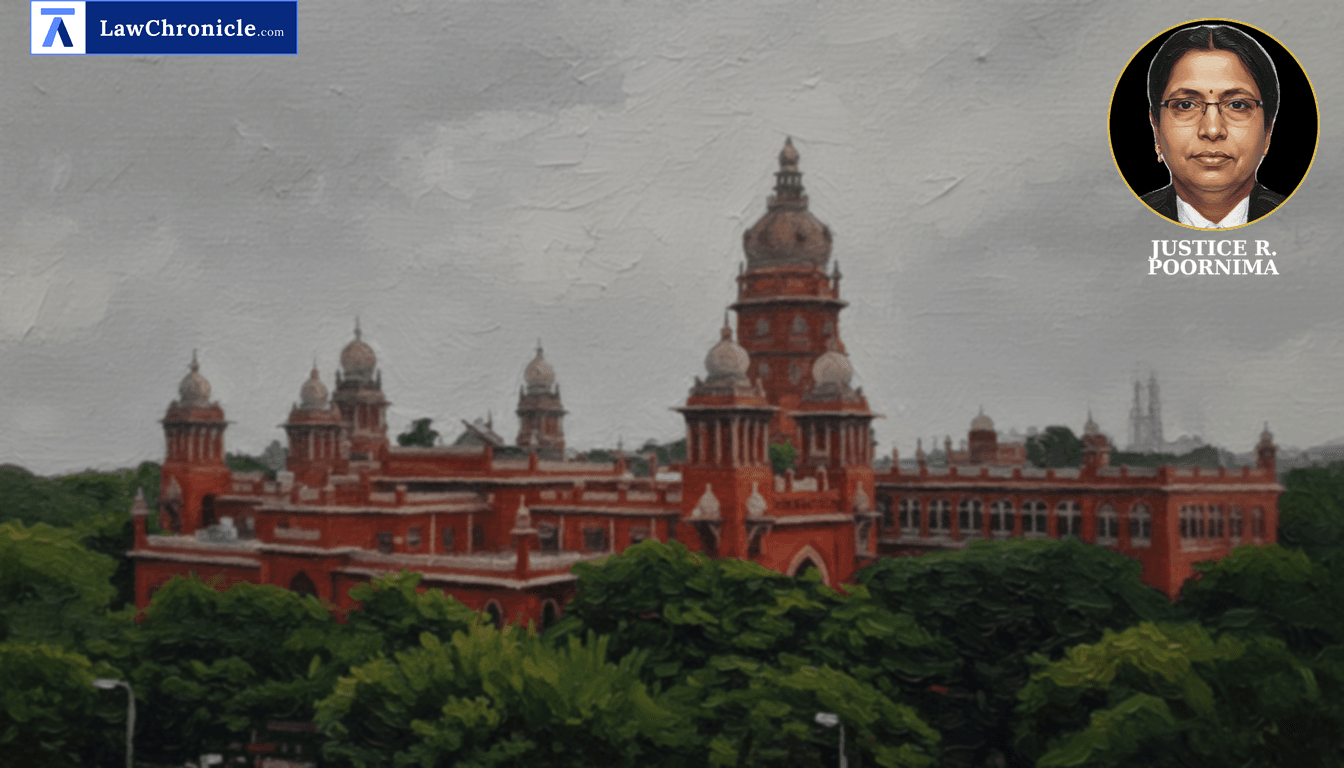
The Madras High Court, in S. Periasamy & Others v. Ganapaty Thevar (Died) & Others, held that a plaintiff seeking specific performance of a sale agreement need not physically produce or "jingle" coins to establish financial capacity, so long as they demonstrate a bona fide intention and sufficient means to perform the contract.
Justice R. Poornima, presiding over the Madurai Bench, heard this second appeal which challenged a reversal by the First Appellate Court. The primary issue revolved around whether the plaintiffs had adequately established their 'readiness and willingness' under the Specific Relief Act, 1963 to complete a sale transaction for immovable property. The Court noted that the plaintiffs had not only paid substantial sums as advance but had also taken active steps like purchasing stamp papers and issuing legal notices prior to the contract's expiry.
Court's Rationale on Financial Capacity and Readiness
Justice Poornima analyzed the requirements of Section 16(c) of the Specific Relief Act, 1963, emphasizing that readiness is a matter of proving the ability to generate funds rather than showing physical cash. The Court, in its reasoning, observed: "Under Section 16(c) of the Specific Relief Act, the plaintiff must establish readiness and willingness to perform his part of the contract. It is well settled that the plaintiff need not carry cash physically at all times. It is sufficient to demonstrate financial capacity and bona fide intention."
Interpretation of Time as Essence of Contract
Addressing the First Appellate Court's reliance on Section 55 of the Indian Contract Act, the High Court reiterated the established legal principle that in contracts involving immovable property, there is no automatic presumption that time is the essence of the contract. The Court found that the lower appellate court had grievously erred in its findings despite the plaintiffs proving their bank balance through Ex.A12 and other documentary evidence.
The Court has the following directions:
"In the result, the second appeal is allowed and the judgment and decree dated 21.11.2002 passed in A.S.No.312 of 2001 on the file of the Principal District Court, Tirunelveli, are set aside and the judgment and decree dated 12.09.2001 passed in O.S.No.108 of 1997 on the file of the Additional Subordinate Court, Tenkasi are restored."
Background:
The litigation originated from a sale agreement dated 23.10.1996 between the plaintiffs and the deceased Ganapathy Thevar for property worth Rs.2,10,000/-. The plaintiffs paid a total of Rs.60,000/- across various dates and were already mortgagees of the property. Despite the plaintiffs issuing a legal notice on 25.06.1997 and a telegram on 30.06.1997, and even waiting at the Sub-Registrar's office, the defendant failed to execute the sale deed.
While the Trial Court initially decreed the suit for specific performance, the Principal District Judge, Tirunelveli, reversed it on the grounds that the plaintiffs failed to prove they had the balance consideration of Rs.1,50,000/- ready by the stipulated date of 30.06.1997. The High Court, however, found the defendant’s conduct replying late to notices and admitting an intention to sell to third parties as evidence of breach, while the plaintiffs' bank records and purchase of stamp papers proved their readiness. The High Court set aside the appellate decree and restored the Trial Court's judgment.
Case Details:
Case No.: SA No.611 of 2003
Case Title: S.Periasamy & Others vs. Ganapaty Thevar (Died) & Others
Appearances:
For the Petitioner(s): Mr.M.Saravanan, Advocate
For the Respondent(s): Mr.S.Sundarapandian, Advocate (For R2, R3, R5 to R8)
Source: 2026 CaseBase(MAD) 267
 Breaking News