Pleadings Reveal Cause Of Action: Himachal Pradesh HC Refuses To Nip Defamation Suit In The Bud
 Copy Link
 Share
 Save
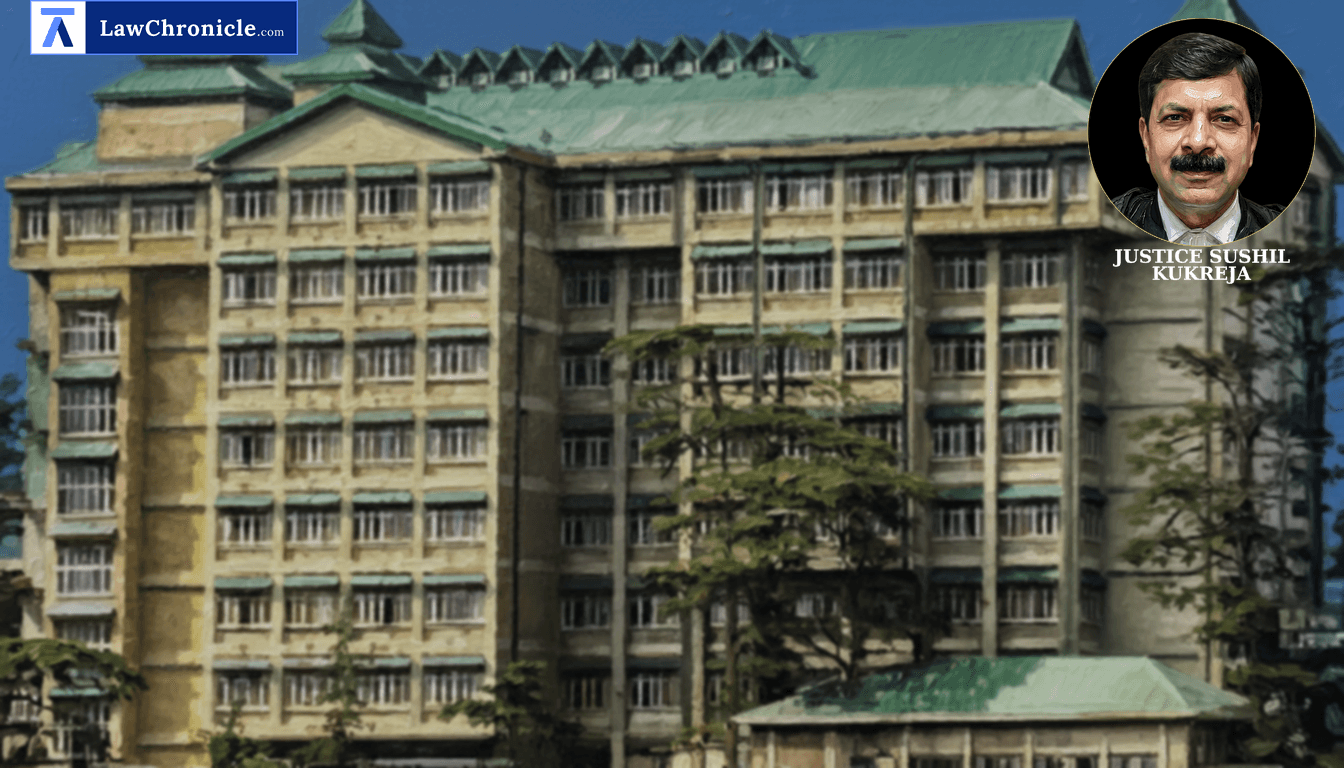
The High Court of Himachal Pradesh has reinforced the high threshold required for the dismissal of civil suits at the preliminary stage, ruling that a plaint cannot be rejected if it discloses a triable cause of action through clear and specific pleadings. In a significant affirmation of the 'gatekeeper' principle, the Court held that the truth of allegations or the likelihood of success are irrelevant factors when deciding the maintainability of a suit under Order VII Rule 11 of the Code of Civil Procedure, 1908.
Justice Sushil Kukreja presided over the matter, evaluating a challenge to the maintainability of a defamation suit arising from a contentious e-mail communication. The Court scrutinized whether the plaintiff’s narrative constituted a 'bundle of facts' sufficient to sustain a legal claim or if it was merely clever drafting intended to create an illusory cause of action.
Key Takeaways
Gatekeeping Not Gagging
Plaints should only be rejected to curb abusive or fruitless litigation; genuine disputes must not be stifled by hyper-technicalities at the threshold stage.
Averments Over Evidence
At the stage of Order VII Rule 11, the Court must assume the entire plaint to be correct without conducting an elaborate inquiry into the veracity of facts or the strength of the case.
Publication in Defamation
Access to a defamatory e-mail by third parties, including office staff and family members, constitutes sufficient 'publication' to disclose a cause of action for a defamation suit.
Independent Remedial Power
Section 11 of Order VII provides an independent remedy to challenge maintainability regardless of the defendant's right to contest the case on merits.
Judicial Scrutiny of Order VII Rule 11
The Court emphasized that the power to reject a plaint is an extraordinary one and must be exercised with circumspection. It noted that the primary objective of Order VII Rule 11 of the Code of Civil Procedure, 1908 is to keep irresponsible lawsuits out of the judicial system. Relying on Liverpool & London S.P. & I Association Ltd. v. M.V. Sea Success I and another, the Court reiterated that whether a plaint discloses a cause of action is essentially a question of fact to be determined solely by reading the plaint in its entirety.
In its reasoning, the Court observed: "Whether a plaint discloses a cause of action or not is a question of fact and whether a cause of action is disclosed or not is to be found out from a reading of the plaint itself. The veracity of the averments made in the plaint or the chances of the allegations made in the plaint being proved are not relevant while deciding an application under Order 7 Rule 11 of CPC."
Observations on Defamation and Publication
The applicant argued that the e-mail was a privileged communication and its handling by junior advocates did not constitute 'publication' in law. However, the Court found that the plaintiff had specifically pleaded that the e-mail was accessed by several individuals in his office at Shimla and also by family members, causing immense mental shock and loss of reputation. The Court held that these facts, if taken as true for the purpose of the application, certainly disclosed a cause of action.
The Court has the following directions:
"Accordingly, this application being devoid of any merits deserves dismissal and the same is dismissed. However the parties are left to bear their own costs. The application is disposed of accordingly."
Ratio
For the purposes of Order VII Rule 11(a) of the Code of Civil Procedure, 1908, the Court must look only at the averments in the plaint and the documents filed therewith. If the bundle of facts pleaded discloses some cause of action or raises questions fit to be decided by a judge, the plaint cannot be rejected, even if the case appears weak or unlikely to succeed. The focus is on the existence of the claim, not its eventual proof.
Background
The dispute originated from an e-mail sent by the defendant on October 9, 2023, which the plaintiff claimed contained false and malicious allegations regarding both his professional business and personal life. The plaintiff, a reputed lawyer, filed a suit for defamation, asserting that the e-mail was accessed by his junior advocates and forwarded to his son via an automatic filter in his wife's account, leading to widespread enquiries and loss of reputation.
The defendant moved an application under Order VII Rule 11 read with Section 151 of the Code of Civil Procedure, 1908, contending that the suit was a retaliatory counter-blast to criminal proceedings and that the pleadings were vague and contradictory. The defendant argued that internal handling of a communication by staff does not constitute actionable publication.
Citing Saleem Bhai v. State of Maharashtra ( "AIR 2003 SC 759": 2002 CaseBase(SC) 394) and Popat and Kotecha Property v. State Bank of India Staff Association ( "(2005) 7 SCC 510": 2005 CaseBase(SC) 431), the Court noted that the trial court can exercise the power to reject a plaint at any stage before the conclusion of the trial, but the pleas taken in a written statement are wholly irrelevant at this stage. Following the principles in Sopan Sukhdeo Sable v. Asstt. Charity Commr. and Azhar Hussain v. Rajiv Gandhi ( "AIR 1986 SC 1253": 1986 CaseBase(SC) 146), the Court concluded that the litigation was not 'meaningless' or 'abortive' and thus did not warrant being nipped in the bud.
Case Details:
Case No.: OMP No. 507 of 2026 in Civil Suit No. 03 of 2024
Neutral Citation: 2026:HHC:47945
Case Title: Keshav Dutt Shreedhar v. Nishant Sharma
Appearances:
For the Petitioner(s): Mr. Rajnish Maniktala, Senior Advocate with Mr. Dinkar Bhaskar, Advocate.
For the Respondent(s): Mr. Nishant Sharma, in person.
Source: 2026 CaseBase(HP) 11163
 Breaking News