


Plying Unregistered Vehicle Constitutes Fundamental Breach of Insurance Policy: Himachal Pradesh HC
 Copy Link
 Share
 Save
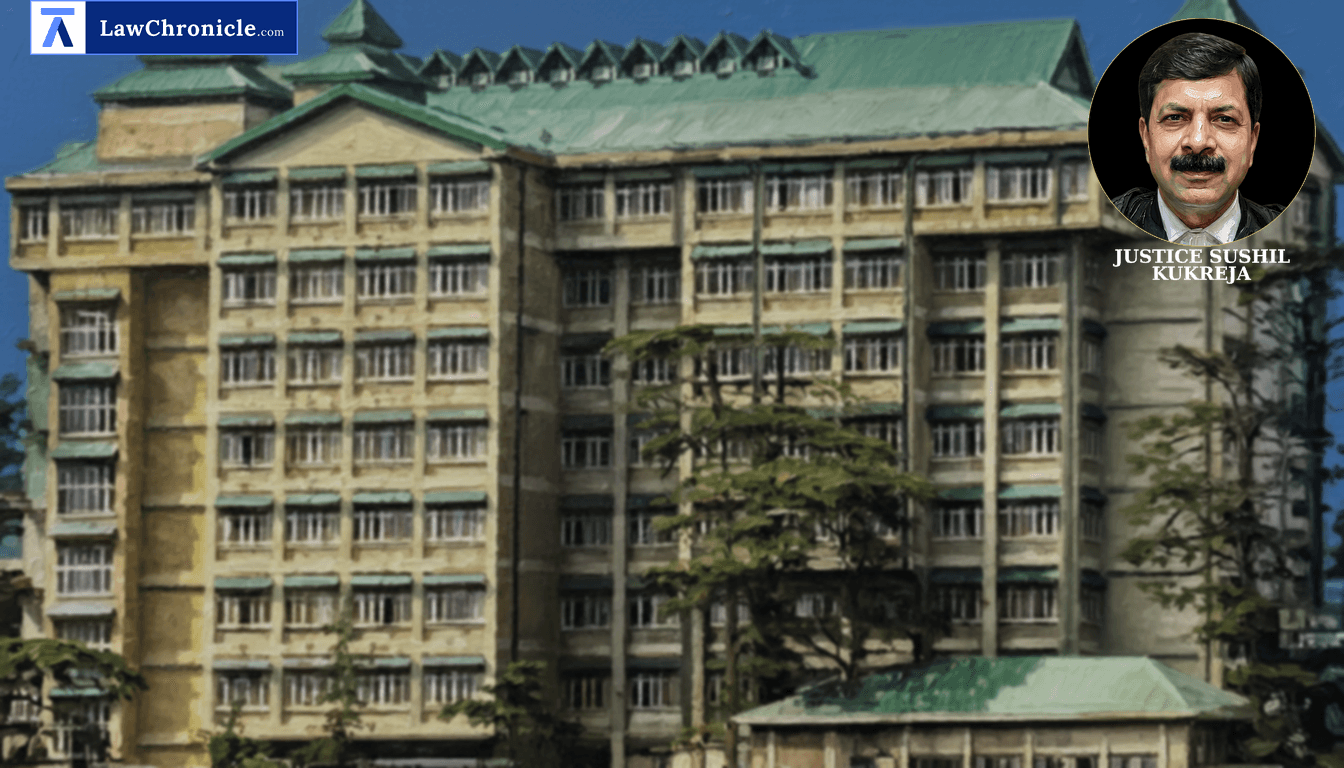
Operating a motor vehicle on public roads without a valid registration certificate after the expiry of a temporary permit constitutes a fundamental breach of insurance terms, exonerating insurers from primary liability. The High Court of Himachal Pradesh has reinforced the 'pay and recover' principle, holding that while insurers must satisfy third-party claims initially, they possess an absolute right to seek reimbursement from vehicle owners for such statutory infractions.
A Single Judge bench of Justice Sushil Kukreja adjudicated upon an appeal filed by the insurance company challenging a tribunal award that had fastened liability on the insurer despite the offending vehicle being unregistered at the time of the fatal accident. The Court was tasked with determining whether the lack of a permanent registration certificate after the lapse of a temporary one amounted to a fundamental breach of the Motor Vehicles Act, 1988 and the insurance contract.
Key Takeaways
Registration as Statutory Mandate
Driving an unregistered vehicle is not merely a technicality but an offence under Section 192 of the Motor Vehicles Act, 1988 and a fundamental breach of policy conditions.
Insurer's Right to Recovery
Even in cases of fundamental breach, insurers are mandated to satisfy third-party awards first to protect victims, thereafter recovering the amount from the owner.
Future Prospects in Compensation
Courts must strictly adhere to the standardized percentage additions for future prospects based on the deceased's age and employment status to ensure 'just compensation'.
Expanded Scope of Consortium
Consortium is a compendious term including filial consortium, entitling parents to compensation for the shock and agony of losing a child.
Fundamental Breach and Statutory Compliance
The Court observed that Section 39 of the Motor Vehicles Act, 1988 creates an absolute bar against driving any motor vehicle in a public place unless it is duly registered. The bench noted that the temporary registration had expired on July 9, 2011, and the accident occurred on July 22, 2011, during which period no permanent registration existed.
The Court, in its reasoning, observed: "In our view, therefore, using a vehicle on the public road without any registration is not only an offence punishable under Section 192 of the Motor Vehicles Act but also a fundamental breach of the terms and conditions of policy contract."
The Court further clarified that depositing documents with the Registering and Licencing Authority does not equate to valid registration. Relying on Narinder Singh vs. New India Assurance Company Limited & others ( "2014 (9) SCC 3024": 2014 CaseBase(SC) 6), the bench held that the findings of the learned Tribunal fastening liability on the Insurance Company deserved to be set aside, though the 'pay and recover' doctrine remained applicable to protect the claimants.
Enhancement of Compensation and Judicial Directions
Addressing the cross-objection for enhancement, the Court applied the principles laid down in National Insurance Company Limited Versus Pranay Sethi & others ( "(2017) 16 SCC 680": 2017 CaseBase(SC) 551) and Magma General Insurance Company Limited Vs. Nanu Ram alias Chuhru Ram and others ( "(2018) 18 Supreme Court Cases 130": 2018 CaseBase(SC) 597). It noted that the deceased, a 27-year-old associate at a law firm, was entitled to a 40% addition for future prospects. The Court also revised the awards under conventional heads, including filial consortium, following the mandate in Sunita & ors. Vs. United India Insurance Co. Ltd. & ors. to revise such amounts by 10% every three years.
The Court has the following directions:
"...the present appeal as well as cross objections are partly allowed and the impugned award dated 29.04.2013, passed by the learned Tribunal below, is modified to the extent that the petitioner is entitled to compensation to the tune of Rs. 1,01,62,950/-, which shall be first paid to the petitioner by the Insurance Company, who shall be entitled to recover the same from respondent No. 3/owner of the offending vehicle, in accordance with law."
Ratio
Plying a motor vehicle in a public place without a valid registration certificate, following the expiration of its temporary registration, constitutes a fundamental statutory infraction under Section 39 of the Motor Vehicles Act, 1988 and a breach of the insurance policy. In such instances, the 'pay and recover' principle applies: the insurer must satisfy the third-party claim in the first instance but is entitled to recover the awarded sum from the insured owner.
Background
The case arose from a fatal accident on July 22, 2011, involving an I-20 car that plunged into a dhank near Lakkar Mandi, resulting in the death of Ankit Mahajan. The claimant, the deceased's mother, sought compensation under Section 166 of the Motor Vehicles Act, 1988. The insurer resisted the claim, arguing that the vehicle was unregistered and thus the policy was voided by fundamental breach. The Tribunal had originally awarded Rs. 72,67,700/-, holding the insurer liable. In appeal, the High Court scrutinized the impact of National Insurance Co. Ltd. vs. Swaran Singh ( "2004 (3) SCC 297": 2004 CaseBase(SC) 114), United India Insurance Company Ltd. vs. Lehru & Ors. ( "(2003) 3 SCC 338": 2003 CaseBase(SC) 927), Kusum Lata vs. Satveer ( "(2011) 3 SCC 646": 2011 CaseBase(SC) 385), and Amrit Paul Singh & another vs. Tata AIG General Insurance Company Limited & others ( "(2018) 7 Supreme Court Cases 558": 2018 CaseBase(SC) 1249) regarding liability and recovery. The High Court modified the award, increasing it to over Rs. 1.01 Crore, while granting the insurer the right to recover the entire amount from the vehicle owner.
Case Details:
Case No.: FAO (MV) No. 146 of 2014 a/w C.O. No. 14 of 2014
Case Title: NIAC Ltd. Versus Santosh Kumari & Ors.
Appearances:
For the Petitioner(s): Mr. B.M. Chauhan, Senior Advocate with Ms. Kamakshi Tarlokta and Mr. Amit Himalvi, Advocates.
For the Respondent(s): Mr. Vijay Chaudhary, Advocate for respondent No. 1; Mr. Ajay Kumar, Senior Advocate with Mr. Vinay Kumar, Advocate for respondents No. 2 & 3.
Source: 2026 CaseBase(HP) 9452
Similar Articles

 Breaking News


