PMLA Freezing Order Need Not Incorporate 'Reasons To Believe': Kerala High Court
 Copy Link
 Share
Share Save
Save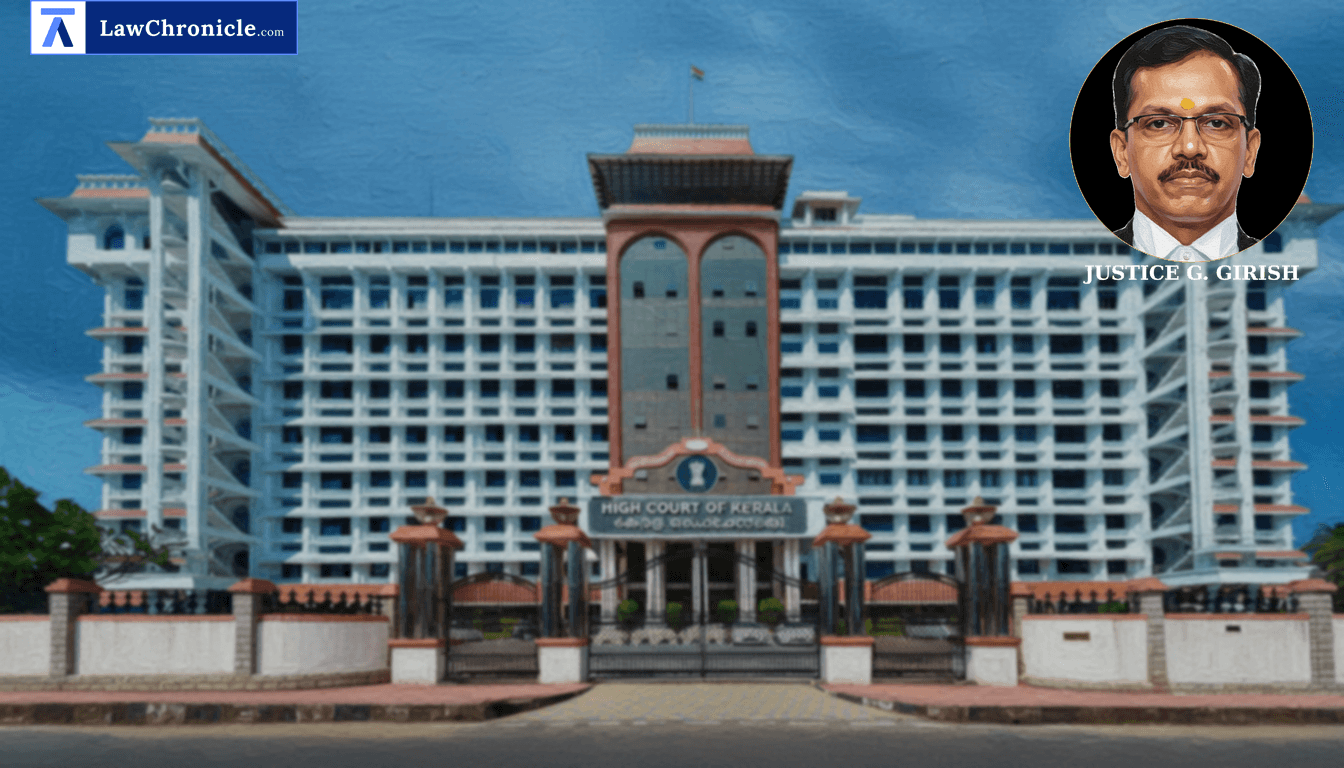
The Kerala High Court has reinforced the Directorate of Enforcement's (ED) sweeping powers to freeze bank accounts under the anti-money laundering framework, ruling that the specific 'reasons to believe' recorded by investigators need not be disclosed within the freezing order itself. This decision curtails the ability of litigants to challenge initial freezing actions on procedural technicalities of non-disclosure, emphasizing that statutory safeguards are met once records are transmitted to the Adjudicating Authority.
A Single Judge bench of Justice G. Girish delivered this significant verdict while hearing a challenge against the freezing of bank accounts belonging to a proprietor of an Ayurveda Centre and Spa allegedly linked to an international organ trafficking racket. The Court examined the interplay between executive action and the procedural mandates under the Prevention of Money Laundering Act, 2002.
Key Takeaways
Non-Disclosure of Reasons
Specific 'reasons to believe' for freezing properties under Section 17(1-A) do not need to be written in the freezing order, as they are intended for the Adjudicating Authority, not the account holder.
Validity of Statutory Safeguards
Compliance with Section 17(2) and 17(4), involving the timely submission of reasons and materials to the Adjudicating Authority, satisfies the requirements of due process.
Exhaustion of Remedies
High Courts should be wary of invoking Article 226 jurisdiction when efficacious alternative remedies like appeals before the Adjudicating Authority and the Appellate Tribunal are available under the PMLA.
Organ Trafficking as Money Laundering
Proceeds generated from illegal human organ transplantation constitute 'proceeds of crime' liable for attachment and freezing under the Prevention of Money Laundering Act, 2002.
Court's Rationale on Section 17 PMLA
The petitioner challenged the freezing order, Ext.P1, primarily on the grounds that it omitted the 'reasons to believe' the element of money laundering and failed to comply with the mandatory forwarding of materials to the Adjudicating Authority. The Court, however, dismissed these contentions, clarifying that the officer authorized under Section 17(1) is empowered to freeze property if seizure is not practicable, such as in the case of bank records.
The Court, in its reasoning, observed: "...the legislature never intended to disclose such reasons to believe in the orders passed under Section 17(1-A) of the PMLA. The reasons to believe recorded by the Director or Deputy Director, along with other relevant materials, are required to be transmitted in sealed cover to the Adjudicating Authority immediately after the search and seizure... Therefore, the absence of reason to believe in Ext P1 order, is of no consequence at all."
Distinction from Supreme Court Precedents
The petitioner placed reliance on the judgment of the Supreme Court in OPTO Circuit India Limited v. Axis Bank and Others ( "(2021) 6 SCC 707": 2021 CaseBase(SC) 1145) to argue for judicial interference. The High Court, however, distinguished the case, noting that in OPTO Circuit India Limited v. Axis Bank and Others ( "(2021) 6 SCC 707": 2021 CaseBase(SC) 1145), the ED had not invoked Section 17(1-A) but had instead issued notices to banks under Section 54 of the Prevention of Money Laundering Act, 2002. In the present case, the Court found that the authorities had correctly invoked the statutory power for freezing accounts where proceeds of crime were suspected to have reached.
The Court has the following directions:
"In the light of the discussions aforesaid, the prayers in this writ petition to quash Ext.P1 order and to defreeze the accounts, cannot be allowed. In the result, the writ petition is hereby dismissed."
Ratio
The officer authorized under Section 17 of the Prevention of Money Laundering Act, 2002 is not legally mandated to incorporate the 'reasons to believe' within the freezing order issued under Section 17(1-A). Compliance with the statutory requirement is achieved when such reasons and materials are recorded and transmitted in a sealed cover to the Adjudicating Authority as per Section 17(2) of the Act. The existence of a statutory remedy under Section 8 and Section 26 of the Act precludes the exercise of writ jurisdiction unless there is a patent lack of jurisdiction or procedural infraction.
Background
The matter arose from a writ petition filed by Debin Joseph, who operated the Dhiya Ayurveda Centre and Spa. The ED registered an ECIR based on FIRs involving an organized criminal conspiracy related to illegal organ trafficking for exorbitant unlawful gain. The FIRs included offenses under Section 61, 338, 340(2), and 341(2) of the Bharatiya Nyaya Sanhita, 2023 and Sections 19(g) and 19A(g) of the Transplantation of Human Organs and Tissues Act, 1994.
Investigations suggested the petitioner acted as a middleman in a kidney trafficking network, luring financially distressed donors with compensations of Rs. 5 to 15 Lakh while charging recipients up to Rs. 35 Lakh. The ED contended the frozen bank accounts represented the proceeds of this crime. The petitioner argued that the total freezing of his accounts jeopardized his legitimate business and prevented him from meeting financial commitments. The Court concluded that since the Adjudicating Authority had already issued a show-cause notice under Section 8 of the Prevention of Money Laundering Act, 2002, the petitioner must avail the statutory remedies provided under the Act rather than seeking a writ of certiorari.
Case Details:
Case No.: WP(CRL.) NO. 1171 OF 2026
Neutral Citation: 2026:KER:68826
Case Title: Debin Joseph V. The Assistant Director, Directorate Of Enforcement & Others
Appearances:
For the Petitioner(s): Shri.Nissam Nazzar, Sri.Shashank Devan, Advocates
For the Respondent(s): Shri.Jaishankar V.Nair, Sc, Enforcement Directorate; Smt.Cristy Therasa Suresh, SC, Enforcement Directorate; Mohan Jacob George For R3; Smt.Gayathri Krishnan, CGC
Source: 2026 CaseBase(KER) 20307
 Breaking News