


Police Must Follow Statutory Arrest Guidelines for Offences Under Seven Years: Andhra Pradesh HC
 Copy Link
 Share
 Save
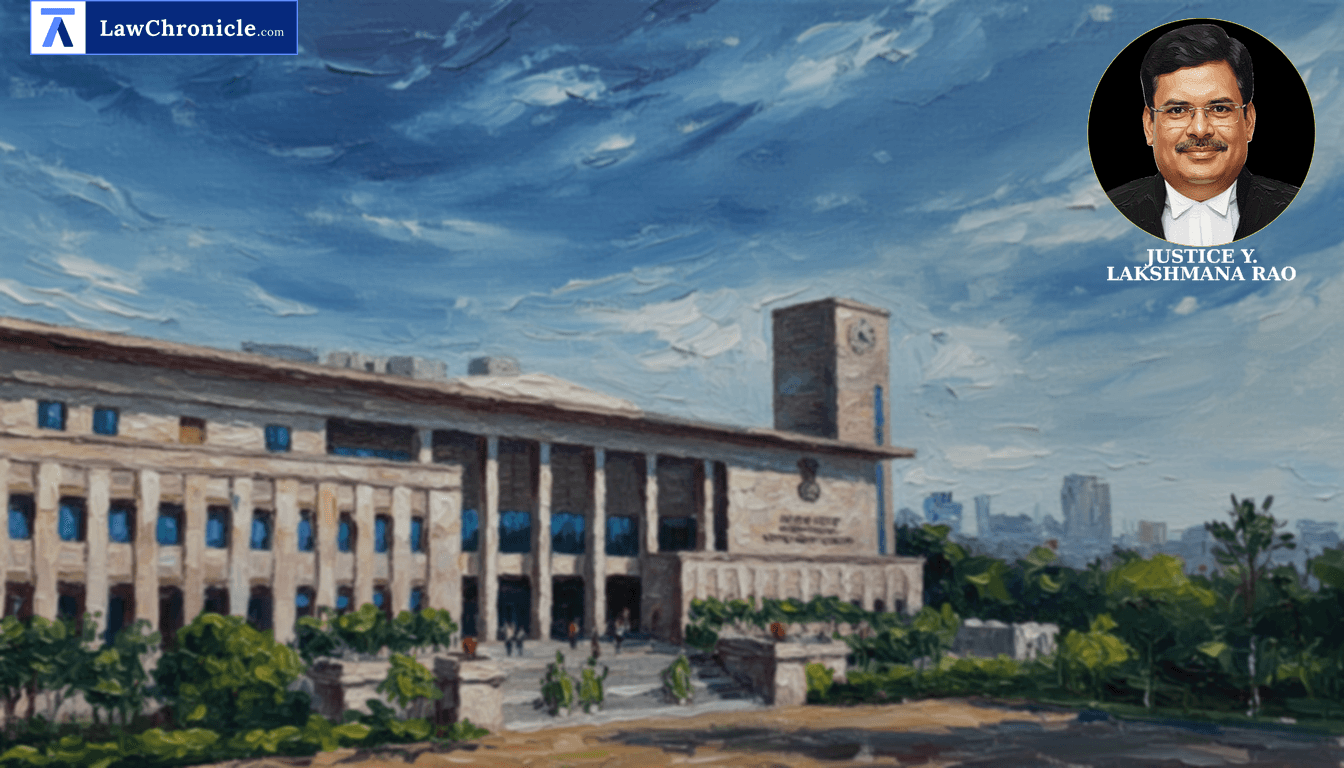
Law enforcement agencies cannot bypass the mandatory procedural safeguards against arbitrary arrests for offences carrying sentences below seven years, reinforcing the judicial wall against mechanical detention. The High Court of Andhra Pradesh has underscored that the power to arrest is a discretionary statutory tool for investigation, not a mandatory ritual, particularly under the new criminal law regime.
In a proceeding heard by the Hon'ble Justice Dr. Y. Lakshmana Rao, the Court addressed a pre-arrest bail plea concerning allegations under the Bharatiya Nyaya Sanhita, 2023. The bench was tasked with balancing the state's investigative powers against the personal liberty of an accused facing charges with a maximum punishment of less than seven years.
Key Takeaways
Arrest Discretion vs. Necessity
Police officers must objectively determine if an arrest is a necessity for investigation rather than exercising the power as a matter of routine.
Mandatory Compliance with Section 35 BNSS
For offences punishable with up to seven years, issuance of a notice under Section 35(3) of the Bharatiya Nagarik Suraksha Sanhita, 2023 is the rule, and arrest remains a circumspect exception.
Judicial Oversight on Detention
Magistrates are prohibited from authorizing detention casually and must record specific satisfaction based on the police's furnished checklist and reasons.
Accountability for Non-Compliance
Failure to follow arrest guidelines renders police officers liable for both departmental action and contempt of court proceedings.
Strict Adherence to Arrest Protocols
The Court emphasized that the transition from the Code of Criminal Procedure, 1973 to the Bharatiya Nagarik Suraksha Sanhita, 2023 maintains the core protective principles established by the Supreme Court. The bench noted that the investigating officer is under a legal obligation to follow the procedure prescribed under Section 41 and 41(A) of the Code of Criminal Procedure, 1973, which now correspond to Section 35 and 35(3) of the Bharatiya Nagarik Suraksha Sanhita, 2023.
The Court has following directions:
"a).All the State Governments to instruct its police officers not to automatically arrest when a case under Section 498-A of the IPC is registered but to satisfy themselves about the necessity for arrest under the parameters laid down above flowing from Code of Criminal Procedure, 1973;
b) All police officers be provided with a check list containing specified sub- clauses under Section 41(1)(b)(ii);
c) The police officer shall forward the check list duly filed and furnish the reasons and materials which necessitated the arrest, while forwarding/producing the accused before the Magistrate for further detention;
d) The Magistrate while authorizing detention of the accused shall peruse the report furnished by the police officer in terms aforesaid and only after recording its satisfaction, the Magistrate will authorize detention;
e) The decision not to arrest an accused, be forwarded to the Magistrate within two weeks from the date of the institution of the case with a copy to the Magistrate which may be extended by the Superintendent of police of the district for the reasons to be recorded in writing;
f) Notice of appearance in terms of Section 41-A of Code of Criminal Procedure, 1973 be served on the accused within two weeks from the date of institution of the case, which may be extended by the Superintendent of Police of the District for the reasons to be recorded in writing;
g) Failure to comply with the directions aforesaid shall apart from rendering the police officers concerned liable for departmental action, he shall also be liable to be punished for contempt of court to be instituted before High Court having territorial jurisdiction.
h) Authorizing detention without recording reasons as aforesaid by the judicial Magistrate concerned shall be liable for departmental action by the appropriate High Court."
The Court, in its reasoning, observed: "A notice under Section 35(3) of the Bharatiya Nagarik Suraksha Sanhita, 2023 to an accused or any individual concerned, qua offences punishable with imprisonment up to 7 years, is the rule. Even if the circumstances warranting an arrest of a person are available in terms of the conditions mentioned under Section 35(1)(b) of the Bharatiya Nagarik Suraksha Sanhita, 2023, the arrest shall not be undertaken, unless it absolutely warranted."
Ratio
For offences punishable with imprisonment for a term less than seven years, the police must strictly adhere to the guidelines laid down in Arnesh Kumar v. State of Bihar ( "(2014) 8 SCC 273": 2014 CaseBase(SC) 560) and Satender Kumar Antil v. Central Bureau of Investigation ( "Special Leave Petition (Crl.) No.5191 of 2021, dated 15.01.2026": 2026 CaseBase(SC) 170), ensuring that a notice of appearance is the primary course of action. Arrest under Section 35 of the Bharatiya Nagarik Suraksha Sanhita, 2023 (formerly Section 41/41A Code of Criminal Procedure, 1973) is a discretionary power to be exercised only when absolutely necessary for investigation, and any deviation renders the officer liable for contempt.
Background
The petitioner sought pre-arrest bail in connection with Crime No.307 of 2026 registered at Vijayawada II Town Police Station for offences under Sections 318(4), 336(3), and 61(2)(a) of the Bharatiya Nyaya Sanhita, 2023. The petitioner argued that since the maximum punishment for the alleged offences was less than seven years, the benefit of the Supreme Court's rulings in Arnesh Kumar v. State of Bihar ( "(2014) 8 SCC 273": 2014 CaseBase(SC) 560) and Md.Asfak Alam v. the State of Jharkhand ( "(2023) 8 SCC 632": 2023 CaseBase(SC) 1003) should apply.
The Court analyzed the precedent in Satender Kumar Antil v. Central Bureau of Investigation ( "Special Leave Petition (Crl.) No.5191 of 2021, dated 15.01.2026": 2026 CaseBase(SC) 170), which interpreted the provisions of the Bharatiya Nagarik Suraksha Sanhita, 2023, concluding that arrest is not mandatory but a statutory discretion. Consequently, the Court disposed of the petition by directing the Investigating Officer to comply with the statutory notice requirements and the established judicial guidelines. The Court also clarified that the petitioner is obligated to cooperate fully with the investigation and that the police maintain the liberty to proceed in accordance with law should offences carrying higher penalties be discovered.
Case Details:
Case No.: Crl.P.No.8790 of 2026
Neutral Citation: 2026:APHC:41491
Case Title: Kattera Pradeep Kumar v. The State of Andhra Pradesh
Appearances:
For the Petitioner(s): Nagendra Babu Paragati, Advocate
For the Respondent(s): Public Prosecutor
Source: 2026 CaseBase(AP) 17797
Similar Articles




 Breaking News


