


Post-Cut-Off Qualification Ineligible for Teacher Recruitment: Allahabad HC
 Copy Link
 Share
 Save
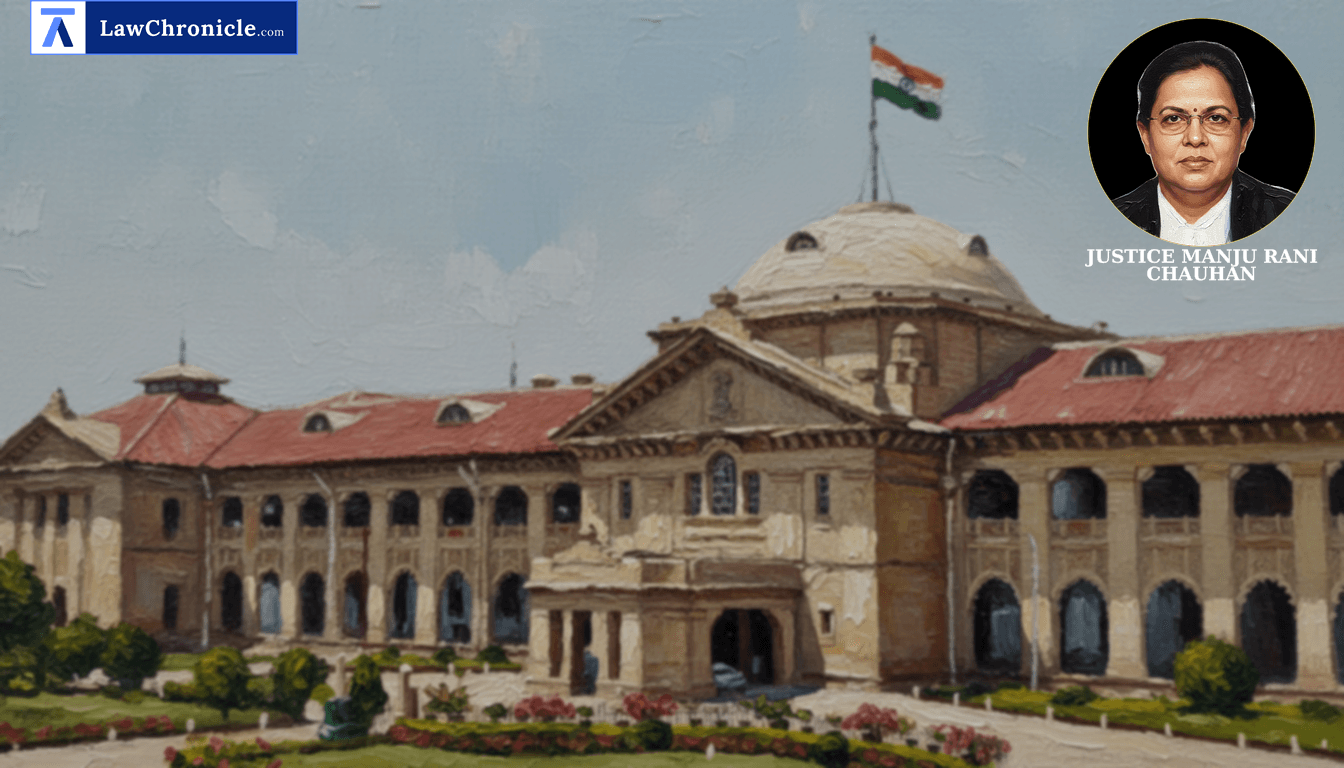
The Allahabad High Court has reinforced the sanctity of recruitment deadlines, ruling that subsequent academic success does not cure a fundamental lack of eligibility at the time of application. The Court clarified that acquiring requisite educational qualifications through back-paper results after the prescribed cut-off date cannot retrospectively validate a candidate's eligibility for public recruitment.
Justice Manju Rani Chauhan scrutinized the termination of Assistant Teachers who had initially failed their BTC examinations and only cleared them via back-papers after the recruitment deadline had passed. The Allahabad High Court emphasized that administrative errors, such as the erroneous issuance of admit cards or appointment letters, do not create an estoppel against the enforcement of statutory eligibility conditions.
Key Takeaways
Strict Adherence to Cut-Off Dates
Eligibility for public employment must be determined strictly as of the last date prescribed for applications, regardless of subsequent academic rectifications.
Administrative Error No Shield
An erroneous appointment or the issuance of an admit card to an ineligible candidate does not confer a legal right to continue in service or override statutory requirements.
Limited Scope of Back-Paper G.O.s
Government Orders concerning mark revisions are intended for candidates who already possessed the qualification, not for those who failed and subsequently passed after the deadline.
Exclusion of Disciplinary Inquiry
Termination based on a lack of foundational eligibility at the recruitment stage does not require a full departmental misconduct inquiry as the appointment itself was void ab initio.
Legal Sanctity of Eligibility Deadlines
The Court observed that the foundational fact remained undisputed: on the last date for submission of applications, the petitioners had not completed the BTC training. The subsequent acquisition of the qualification, while bona fide, could not relate back to the determinative date. The Court, in its reasoning, observed: "The circumstance that the petitioners disclosed their marks correctly in the application forms, or that their applications were accepted and admit cards were subsequently issued, cannot, by itself, confer an indefeasible right of appointment upon candidates who did not possess the prescribed qualification within the stipulated time. An erroneous acceptance of an application, issuance of an admit card, declaration of result, or even subsequent appointment cannot operate as an estoppel against the competent authority in the matter of enforcement of the statutory eligibility conditions."
Addressing the petitioners' reliance on their duration of service, the Court noted that equitable considerations cannot eclipse statutory requirements. The Court has following directions:
"Accordingly, the writ petition fails and is, hereby, dismissed. The impugned orders dated 30.04.2025 passed by the Basic Shiksha Adhikari, Ballia, and order dated 29.05.2026 passed by the Secretary, Uttar Pradesh Basic Education Board, Prayagraj, are upheld."
Ratio
Eligibility of a candidate for appointment is to be determined solely with reference to the last date fixed for making an application. A qualification acquired after the prescribed cut-off date, even through back-paper examinations, does not retrospectively confer eligibility. Furthermore, the principles of legitimate expectation and Article 14 of the Constitution of India, 1950 cannot be invoked to perpetuate a legally defective appointment.
Background
The petitioners applied for the post of Assistant Teacher against 69,000 vacancies pursuant to a Government Order dated 01.12.2018. The last date for applications was 22.12.2018. While the petitioners were part of the 2015-16 BTC batch, they failed the initial examination and only cleared it via back-papers in 2019, receiving certificates in August 2019. Despite correctly disclosing their fail status, they were issued admit cards, appeared in the ATRE-2019, and were eventually appointed in 2021 following various state circulars regarding mark discrepancies.
However, in 2025, the Basic Shiksha Adhikari (BSA) issued notices questioning their eligibility, leading to their termination. The petitioners argued that their appointment was valid under state circulars allowing revised results to be considered and alleged discrimination, citing others who were permitted to continue. They further contended that their termination without a departmental inquiry violated natural justice.
The Allahabad High Court dismissed these arguments, relying on precedents such as Preeti Jatave And 6 Others vs. State of U.P. And 6 Others, Preeti Jatave And 5 Others vs. State of U.P. And 7 Others, and Anjali Singh vs. State of U.P. and 8 Others. The Court held that negative equality cannot be claimed under the Constitution of India, 1950 and that the specific Government Orders did not extend the last date for possessing the qualification. The Allahabad High Court followed the logic in Anjali Singh vs. State of U.P. and 8 Others, where it was settled that clearing a back-paper subsequently does not revive eligibility from a retrospective date.
Case Details:
Case No.: WRIT - A No. - 11062 of 2026
Case Title: Dileep Kumar Yadav and 3 others Versus State of U.P. and 3 others
Appearances:
For the Petitioner(s): Siddharth Khare, Sr. Advocate
For the Respondent(s): C.S.C., Sanjay Kumar Singh
Source: 2026 CaseBase(ALL) 886
Similar Articles



 Breaking News


