


Post-Remand Trials Cannot Reopen Decided Issues Through Section 151 Applications: Calcutta High Court
 Copy Link
 Share
 Save
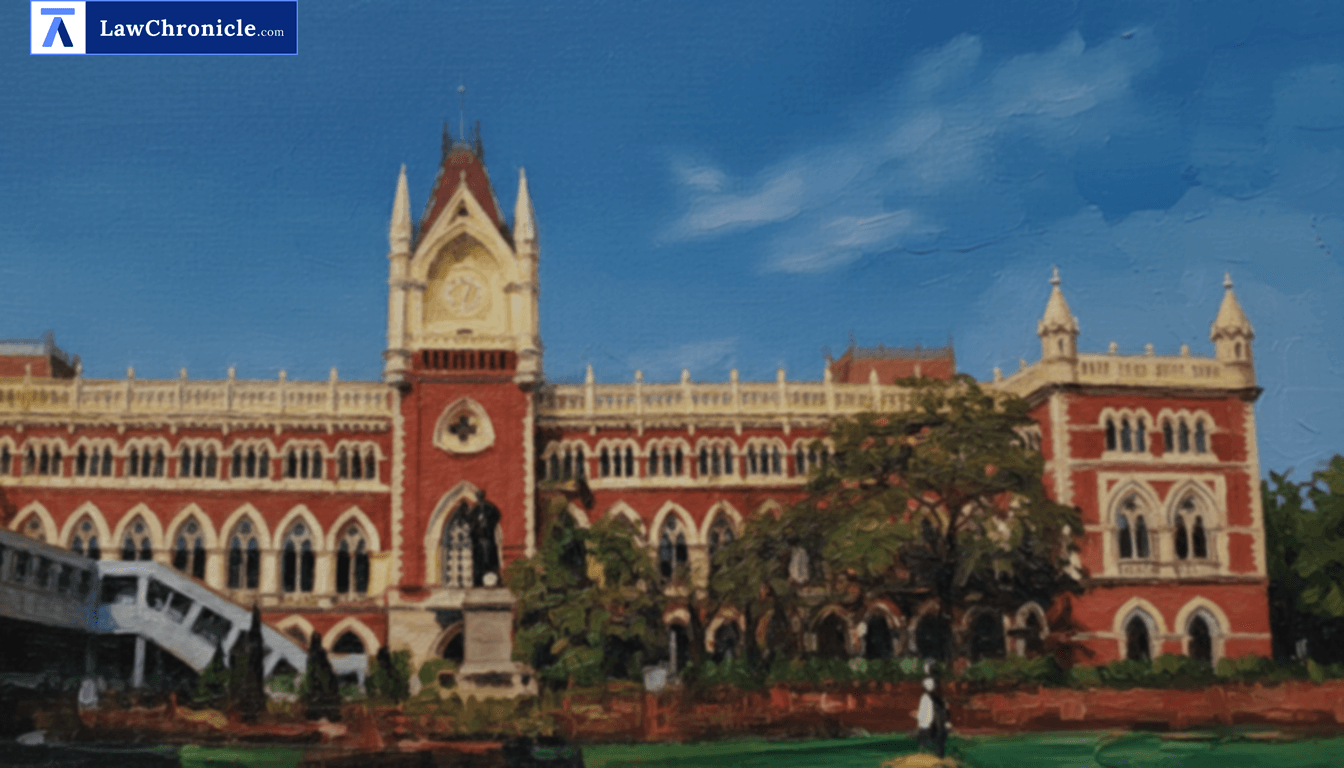
The Calcutta High Court has fortified the doctrine of finality in litigation, ruling that a trial court cannot permit the introduction of new evidence to challenge findings already upheld by an appellate court under the guise of an inherent power application. The judgment underscores that Section 151 of the Code of Civil Procedure, 1908 cannot be weaponized by unsuccessful litigants to bypass statutory frameworks or secure a de facto re-hearing of issues that have attained finality through judicial remand.
Justice Md. Shabbar Rashidi adjudicated upon two revisional applications arising from a partition suit where the trial court had erroneously allowed a plea to introduce fresh evidence of alleged fraud long after the relevant issues were decided and affirmed in appeal. The Bench emphasized that trial courts must act in strict compliance with remand directions and lack the jurisdiction to expand the scope of proceedings beyond the specific mandate of the superior court.
Key Takeaways
Finality of Litigation Upheld
Lower courts are barred from reopening concluded adjudications or re-evaluating evidence once a superior court has affirmed specific findings, ensuring judicial certainty.
Limits of Inherent Powers
Section 151 of the Code of Civil Procedure, 1908 is a supplementary provision and cannot be used to confer jurisdiction where none exists or to circumvent express procedural rules.
Waiver of Evidentiary Objections
Failure to object to the admissibility or mode of proof of a document (such as a death certificate) during the trial stage is fatal and prevents a party from challenging its genuineness at a later stage.
Remand Compliance Mandatory
When a case is remanded for a specific purpose, such as the determination of shares, the trial court must confine itself to that mandate and cannot initiate what amounts to a de novo trial.
Invalidation of Attempt to Reopen Trial Findings
The Court observed that the defendants attempted to introduce a new deed to allege that a previously exhibited death certificate was fraudulent. However, since the Division Bench in F.A.T. No. 346 of 2019 had already remitted the matter specifically for the determination of shares based on the validity of that very evidence, the trial court overstepped its bounds by entertaining a fresh plea under Section 151.
The Court, in its reasoning, observed: "...since the Partition Suit was remanded to the learned trial with directions which was limited to the determination of shares on the basis of its findings on issue nos. 3 and 4, it was not open to the learned trial court to allow introduction of further evidence which shall have direct bearing on its findings on issue nos. 3 and 4, which was not interfered by the Appellate Court. The prayers in the petition so filed on behalf of the defendants, which resulted in the impugned order, has the effect of de novo trial of the Partition Suit, which was not directed by the learned Appellate Court."
The Court has following directions:
"The impugned order is hereby set aside. Learned trial court shall proceed to act in strict compliance of the order passed in FAT 346 of 2019 in accordance with law."
Ratio
The inherent powers of a Civil Court under Section 151 of the Code of Civil Procedure, 1908 are intended to supplement prescribed procedures and cannot be exercised to re-adjudicate issues already decided or to bypass the statutory framework of appeals and reviews. A party who fails to object to a document's mode of proof at the time it is marked as an exhibit is precluded from challenging its veracity at a subsequent stage of the litigation, particularly after the finding has been affirmed by an appellate forum.
Background
The dispute originated from a 2005 partition suit where the plaintiffs claimed shares in properties inherited from one Dilbahar. The defendants contested this, producing deeds from 1969 and 1972 alleging Dilbahar had sold the property. However, the plaintiffs produced a death certificate (Exhibit 2) showing Dilbahar died in 1968, rendering the subsequent deeds void. The trial court initially dismissed the suit on a technicality regarding Specific Relief Act, 1963, but the High Court in F.A.T. No. 346 of 2019 set aside that finding and remanded the case solely to determine the specific shares based on the trial court's finding that the deeds were void.
Post-remand, the defendants moved an application under Section 151 of the Code of Civil Procedure, 1908, claiming they discovered a 1968 deed where Dilbahar was allegedly alive, seeking to prove the death certificate was a fraud. The trial court allowed this, directing the parties to seek an order from a "correct forum." The High Court, relying on Brij Lal & Sons v. Delhi Development Authority and Bipin Shantilas Panchal v. State of Gujrat and Another ( "(2001) 3 Supreme Court Cases 1": 2001 CaseBase(SC) 2886), held that such a procedure violates the principle of finality. It also cited R.V.E. Vendatachala Gounder v. Arulmigu Viswesaraswami & V.P. Temple and Another ( "(2003) 8 Supreme Court Cases 752": 2003 CaseBase(SC) 243) and S.P. Cheengalvaraya Naidu v. Jagannath and Others regarding the consequences of failing to object to evidence during trial and the restricted use of Section 151 to avoid "engines of fraud."
Case Details:
Case No.: CO 4341 of 2023 With CO 115 of 2025
Case Title: Sahanaj Begum and Others Vs. Md. Sajid and Others
Appearances:
For the Petitioner(s): Mr. Partha Sarathi Bhattacharyya, Sr. Adv., Mr. Raju Bhattacharyya, Adv.
For the Respondent(s): Mr. Pritam Chowdhury, Adv., Mr. M. Nazar Chowdhury, Adv., Mr. Farheen Riaz, Adv., Mr. Yusuf Hassan, Adv.
Source: 2026 CaseBase(CAL) 2942
Similar Articles
 Breaking News


