Pre-Trial Incarceration Cannot Masquerade As Punitive Detention: SC reiterates
 Copy Link
 Share
 Save
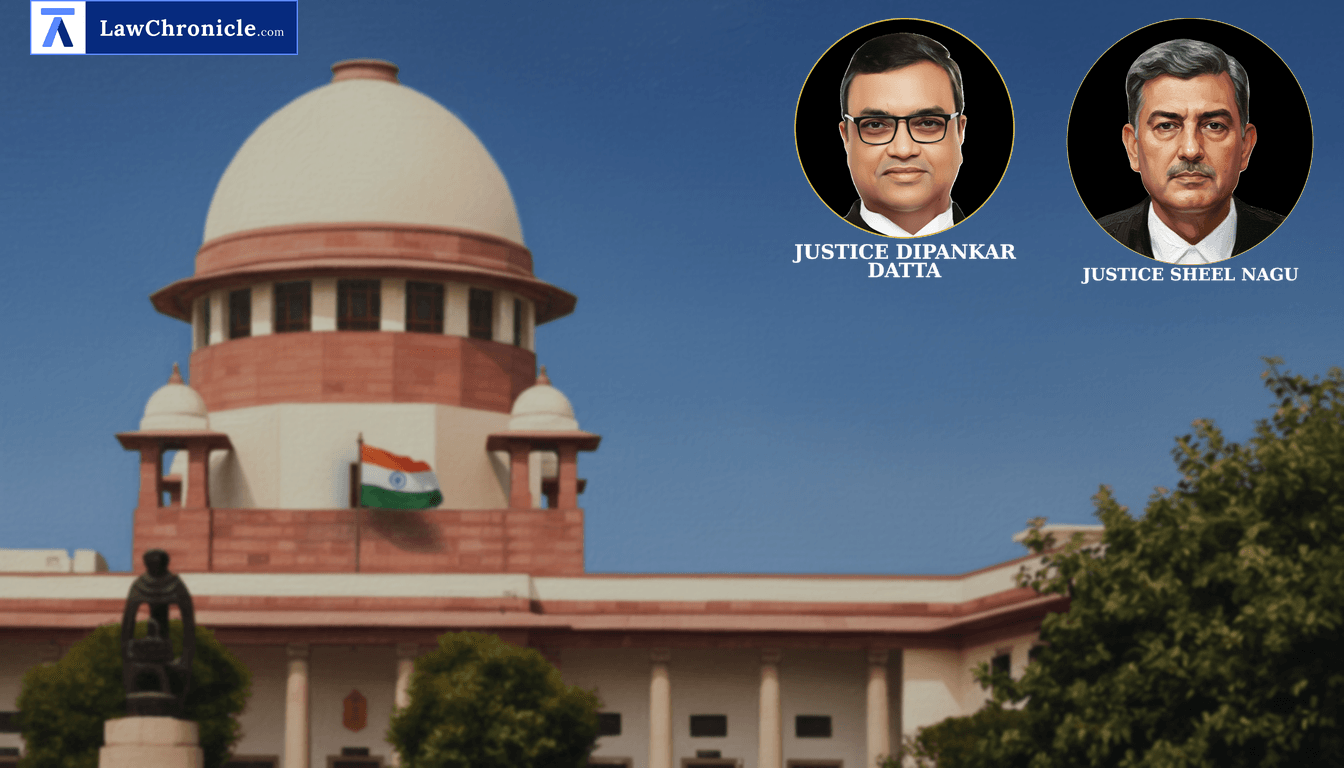
On prolonged pre-trial detention in complex fraud cases, the Supreme Court has declared that accused persons cannot be subjected to indefinite custody under the guise of investigating economic offenses when a trial is bound to be a protracted exercise. Safeguarding the fundamental right to personal liberty under Constitution of India, 1950, the apex court granted bail to accused persons in a high-stakes scam involving hundreds of crores in public tender allocations.
A bench comprising Justice Dipankar Datta and Justice Sheel Nagu set aside the Rajasthan High Court orders that had denied regular bail to key accused in the Jal Jeevan Mission corruption case. The apex court noted that while economic offenses involving deep-rooted conspiracies demand serious consideration, the courts cannot ignore the procedural realities of delayed trials, complete investigations, and seized documentary evidence.
Key Takeaways
- No Punitive Pre-Trial Custody: Incarceration before trial completion must not function as a form of premature punishment.
- Completeness of Seized Evidence: Reliance on documentary and electronic trails already in safe custody eliminates fears of evidence tampering.
- Parity and Protracted Proceedings: Delayed trial initiation due to pending sanctions or absconding co-accused justifies bail, particularly when co-accused have secured relief.
Bail in Prolonged Trial
The Supreme Court made critical observations regarding the intersection of personal liberty and protracted trial timelines in financial crime prosecutions. The Bench highlighted that the investigation against the appellants was complete with chargesheets already filed, making further detention unnecessary.
The Apex Court touched upon the law pertaining to law pertaining to bail when trial is bound to take time for commencement as well as conclusion, by stating that "It is a well-settled postulate of criminal jurisprudence that pre-trial incarceration cannot masquerade as punitive detention, particularly when the commencement and conclusion of the trial are not imminent. This Court must intervene to safeguard the right to personal liberty under Article 21 of the Constitution of India when a trial cannot be reasonably concluded in the near future."
Ratio
Pre-trial detention cannot be extended indefinitely as punitive confinement when the prosecution's case rests primarily on documentary and electronic evidence already in official custody and the trial is bound to be prolonged due to voluminous evidence and procedural delays. In such circumstances, the constitutional protection of personal liberty under Constitution of India, 1950 mandates the grant of bail, provided the accused cooperates with ongoing proceedings.
Background
The dispute originates from Preliminary Enquiry No. 06/2024, which led to the registration of FIR No. 245/2024 at Police Station, Anti-Corruption Bureau, Jaipur, Rajasthan. The offences were registered under Sections 7(c), 9, 10, 13(1)(a) read with Section 13(2), and Section 12 of the Prevention of Corruption Act, 1988, alongside Sections 409, 466, 467, 468, 471, 477-A, and 120-B of the Indian Penal Code, 1860.
The prosecution alleged a massive financial conspiracy in the Public Health Engineering Department (PHED), Rajasthan, under the "Jal Jeevan Mission". Two private firms allegedly used forged work-experience certificates from IRCON International Limited to secure eligibility for 104 tenders amounting to Rs. 979.45 crore. Accused Shubhanshu Dixit, a public servant acting as Secretary of the RWSSMB and de facto Secretary of the PHED Finance Committee, was accused of suppressing whistleblower complaints and approving financial bids. Private intermediary Sanjay Badaya was accused of taking cash bribes to influence departmental operations and routing money into entities connected to high-level functionaries.
Following chargesheets citing 124 witnesses and voluminous documents, the appellants sought bail. The High Court of Judicature for Rajasthan, Bench at Jaipur, dismissed their bail applications on 1st June, 2026, and 13th August, 2026. Challenging these orders before the Supreme Court, the appellants highlighted that co-accused had received bail, including relief granted in corresponding PMLA proceedings as noted in Mahesh Chandra Joshi v. State. The Supreme Court allowed the appeals, set aside the High Court orders, and granted bail subject to trial court conditions.
Case Details:
Case No.: Criminal Appeal No. of 2026 [Arising out of SLP (Crl.) No. 15347 of 2026] with Criminal Appeal No. of 2026 [Arising out of SLP (Crl.) No. 13461 of 2026]
Neutral Citation: 2026 INSC 1065
Case Title: Sanjay Badaya v. State of Rajasthan (with Shubhanshu Dixit v. State of Rajasthan)
Source: 2026 CaseBase(SC) 8122
 Breaking News