


Preventive Detention Is Interceptive Not Punitive: Jammu & Kashmir HC
 Copy Link
 Share
 Save
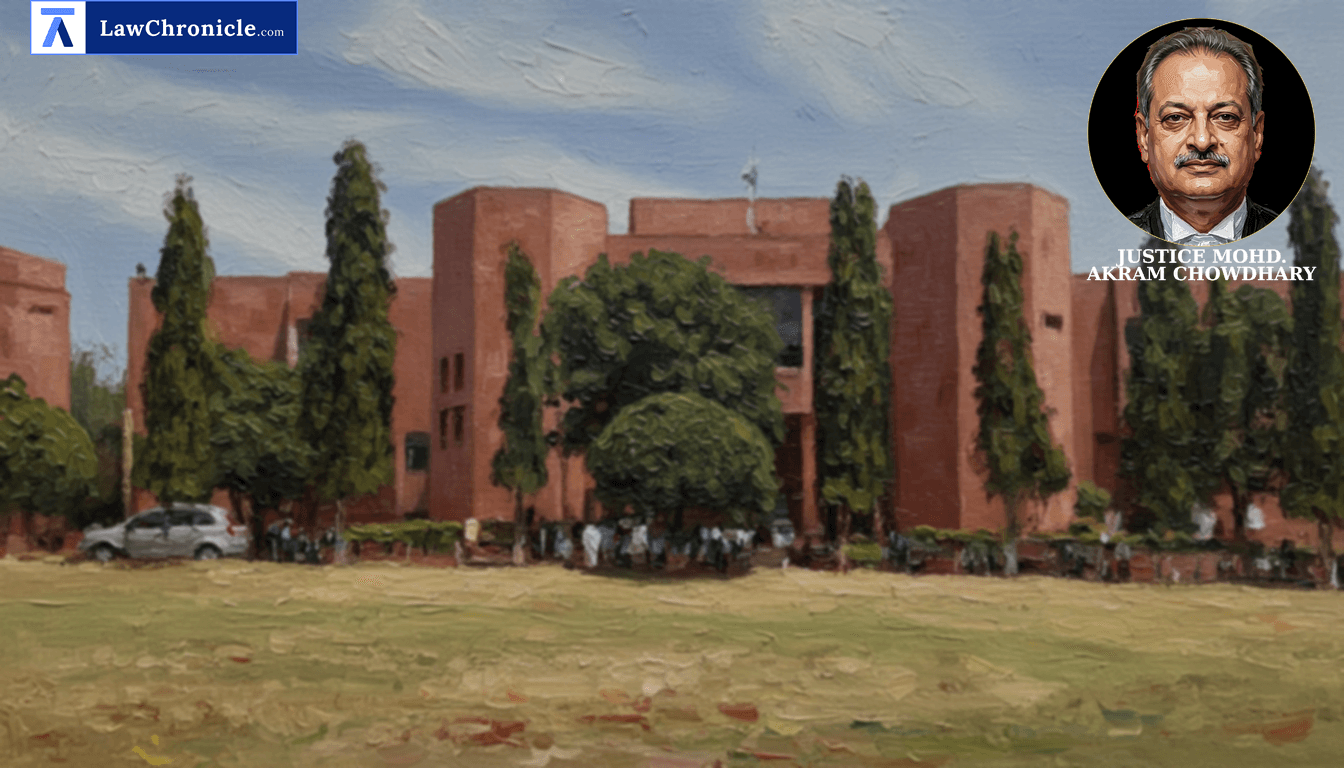
The Jammu & Kashmir and Ladakh High Court has reinforced the bedrock principle that preventive detention is a precautionary measure designed to intercept potential mischief rather than punish past conduct, ruling that the pendency of criminal prosecution or the grant of bail is no bar to such executive action.
In a decisive affirmation of state security powers, a bench of Justice M A Chowdhary dismissed a challenge against a detention order issued under the J&K Public Safety Act, 1978, emphasizing that the subjective satisfaction of the detaining authority regarding a person's prejudicial activities cannot be substituted by the objective test of a court.
Executive Satisfaction and Judicial Review
The Court examined the scope of judicial interference in matters of preventive detention, noting that the judiciary does not act as a court of appeal over the detaining authority's findings. The Court, in its reasoning, observed: "The wording of the section thus clearly shows that it is the satisfaction of the Central Government or the State Government on the point which alone is necessary to be established... The satisfaction of the Government however must be based on some grounds. There can be no satisfaction if there are no grounds for the same... it is a matter for the subjective decision of the Government and that cannot be substituted by an objective test in a court of law."
Addressing the petitioner's argument regarding the grant of bail in a pending FIR, the Court relied on Haradhan Saha v. State of West Bengal & Ors and Union of India v. Paul Manickam ( "(2003) 8 SCC 342": 2003 CaseBase(SC) 1110) to clarify that criminal prosecution and preventive detention operate in distinct legal spheres. The Court noted that even if a person is enlarged on bail, the authority may still invoke detention laws if there exists a compelling necessity to prevent activities prejudicial to public order.
Validity of Statutory Safeguards
The petitioner had challenged the order on grounds of non-confirmation by the government and non-supply of material. However, the Court found these contentions factually incorrect, noting that the detention was approved within three days and confirmed subsequently as per J&K Public Safety Act, 1978. The bench reiterated the constitutional philosophy under Article 22(5) of the Constitution of India, 1950, stating that while personal liberty is precious as established in Maneka Gandhi vs. Union of India ( "1978 AIR SC 597": 1978 CaseBase(SC) 307), it may be curtailed to save society from dangerous designs that expose the general public to risk.
The Court further referenced The State of Bombay v. Atma Ram Shridhar Vaidya ( "AIR 1951 SC 157": 1951 CaseBase(SC) 23) to emphasize that the detaining authority need not possess full legal proof required for a conviction, but rather enough information to indicate a strong probability of an impending prejudicial act. The bench also cited Ashok Kumar v. Delhi Administration & Ors. ( "AIR 1982 SC 1143": 1982 CaseBase(SC) 121), Naresh Kumar Goyal v. Union of India & Ors. ( "2005 (8) SCC 276": 2005 CaseBase(SC) 692), and Union of India & Anr. v. Dimple Happy Dhakad ( "AIR 2019 SC 3428": 2019 CaseBase(SC) 2741) to highlight that detention is a preventive action, not a curative or reformative one.
The Court has following directions:
"In view of the foregoing discussion and the settled legal position, impugned detention order is upheld and the petition is found devoid of any merit and is, accordingly, dismissed along-with pending application(s). Photocopy of the record, as produced, be returned to learned counsel for respondents."
Key Takeaways
Separation of Prosecution and Detention
The grant of bail or the pendency of a criminal case does not legally prevent the government from issuing a preventive detention order if the person's future conduct is deemed a threat to public order.
Subjective Satisfaction Priority
Courts will not substitute their own opinion for that of the detaining authority; judicial review is limited to checking if the grounds for detention are relevant and not mala fide.
Interceptive Nature of the Law
Preventive detention is not meant to be a punishment for a crime but a strategic tool to protect society by intercepting an individual before they can execute harmful plans.
Strict Statutory Compliance
Administrative compliance, such as providing materials in a language understood by the detenue and timely government approval, remains a critical check on executive power.
Ratio
Preventive detention is a precautionary power exercised in reasonable anticipation of future conduct and is qualitatively different from punitive detention. The subjective satisfaction of the detaining authority, when based on rational grounds connected to the objects of the J&K Public Safety Act, 1978, cannot be challenged on the merits of the evidence in a court of law, as the court does not sit in appeal over the executive's decision to afford protection to society.
Background:
The dispute arose when Mohammad Rizwan was detained via Order No. 3rd/DMK/PSA of 2025 issued by the District Magistrate, Kishtwar, to maintain public order. The petitioner, through his father, challenged the detention, alleging that the order lacked government confirmation, that materials were not supplied in his native language, and that the detention was unjustified since he had already been granted bail in a criminal case (FIR No. 05/2025). The State contended that Rizwan was a habitual offender involved in multiple burglaries and thefts that created fear in the community. The Court, after perusing the detention records, found that 99 leaves of material had been supplied to the detenue and explained in Urdu/Kashmiri. Relying on constitutional precedents and the J&K Public Safety Act, 1978, the Court dismissed the petition, holding that the detention was legally sound and necessary for public safety.
Case Details:
Case No.: HCP No.159/2025
NeutralCitation: 2026:JKLHC-JMU:2066
Case Title: Mohammad Rizwan v. Union Territory of Jammu & Kashmir & Ors.
Appearances:
For the Petitioner(s): Mr. Tayyab Javed Qureshi, Advocate.
For the Respondent(s): Mr. Adarsh Bhagat, GA.
Source: 2026 CaseBase(JK) 7
Similar Articles




 Breaking News


