

Private Persons Can File Complaints Under Section 125A of RoP Act: SC
 Copy Link
 Share
Share Save
Save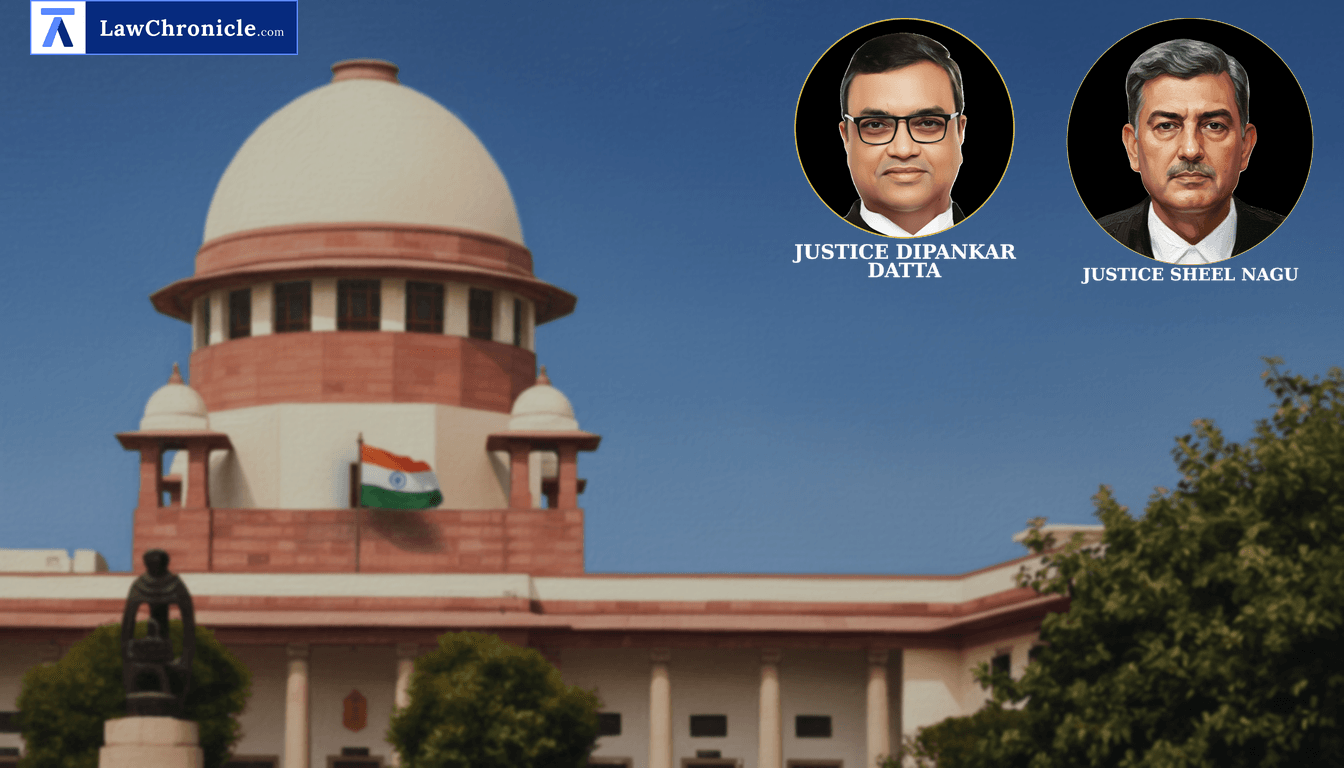
The Supreme Court ruled that private complaints for non-disclosure or false statements in election affidavits under Section 125A of the Representation of People Act, 1951 do not attract the procedural bars prescribed under Section 195(1) of the Code of Criminal Procedure, 1973. The Bench pressed that voters and private citizens are fully empowered to initiate criminal proceedings against political candidates who file false affidavits during elections, bypassing the strict requirement of public servant sanction.
A Division Bench comprising Justice Dipankar Datta and Justice Sheel Nagu adjudicated upon the significant legal issue while hearing an appeal against a judgment of the High Court of Karnataka at Bengaluru.
Key Takeaways
Electoral Transparency Empowered: Citizens and voters maintain an independent legal standing to initiate criminal complaints against candidates for filing false nomination affidavits without relying on election machinery.
No Section 195 CrPC Bar: Section 125A of the Representation of People Act, 1951 operates independently of the strict statutory bar under Section 195(1)(a) of the Code of Criminal Procedure, 1973, which restricts cognizance of offences involving false information to public servants.
Judicial Safeguards Intact: Competent Magistrates possess adequate procedural powers to summarily dismiss or penalize frivolous complaints filed to harass elected representatives.
Complaint under Section 125A of Representation of People Act
The Supreme Court addressed the unresolved question of whether a private complaint under Section 200 of the Code of Criminal Procedure, 1973 alleging an offence under Section 125-A of the Representation of People Act, 1951 requires compliance with Section 195(1) of the Code of Criminal Procedure, 1973. Overturning the High Court's legal conclusion, the Apex Court clarified that the legislature consciously omitted Section 125-A of the Representation of People Act, 1951 from the statutory prohibition under Section 195 of the Code of Criminal Procedure, 1973. While clarifying the legal principle, the Court declined to restore the criminal trial against the returned candidate on factual grounds, observing that the possibility of conviction was remote given the documentary evidence on record.
The Bench observed that "Significantly, Section 125-A was inserted in the RoP Act with effect from 24th August, 2002, while it is noticed that Section 195, Cr. PC suffered an amendment thereafter in April, 2006. The legislature is presumed to be conscious of its insertion of Section 125-A in the RoP Act four years back. It stands to reason that omission of the legislature to include Section 125-A of the RoP Act in Section 195, Cr. PC is deliberate and no court, in terms of the latter provision, would be barred from taking cognizance of an alleged offence under Section 125-A of the RoP Act, even on the complaint lodged by a private person."
Ratio
A private complaint under Section 200 of the Code of Criminal Procedure, 1973 alleging an offence punishable under Section 125-A of the Representation of People Act, 1951 is not barred by the provisions of Section 195(1) of the Code of Criminal Procedure, 1973. The statutory requirement restricting complaints solely to public servants does not extend to non-disclosures or false affidavits filed by election candidates.
Background
The dispute originated when a private complainant lodged a complaint under Section 200 of the Code of Criminal Procedure, 1973 against a returned candidate to the Karnataka Legislative Assembly from the Bidar constituency. The complaint alleged an offence under Section 125-A of the Representation of People Act, 1951, contending that the candidate had made false disclosures regarding his residential address in the affidavit accompanying his nomination paper.
The High Court of Karnataka allowed a writ petition filed by the returned candidate and quashed the complaint. The High Court reasoned that Section 125-A of the Representation of People Act, 1951 must pass muster under Section 195(1) of the Code of Criminal Procedure, 1973, concluding that only the Election Commission or an authorized public servant could institute such proceedings, while a voter's remedy was limited to an election petition.
During arguments, reliance was placed on Union of India v. Association for Democratic Reforms & Anr. ( "(2002) 5 SCC 294": 2001 CaseBase(SC) 124) to explain the constitutional framework of candidate disclosures, as well as provisions under Rule 4A of the Conduct of Election Rules, 1961 and offences under Sections 172 to 188 of the Indian Penal Code, 1860. References were also made to the ruling in Raghunath Deshpande v. State of Karnataka and an ECI Press Note dated June 16, 2020.
Dismissing the High Court's legal reasoning while maintaining the quashing of trial proceedings on factual grounds, the Supreme Court held that the non-obstante clause in Section 125-A ensures its operation free from the procedural restrictions of Section 195, Code of Criminal Procedure, 1973.
Case Details:
Case No.: Criminal Appeal No. 3387 of 2026
Neutral Citation: 2026 INSC 1138
Case Title: Sri. Rajkumar Madki vs. Dr. Shailendra Beldale
Appearances:
For the Petitioner(s): Ms. Meenakshi Arora, Senior Advocate; Mr. Kamat, Senior Advocate
For the Respondent(s): Mr. Anand Sanjay M Nuli, Senior Advocate; Ms. Akhila Wali, Advocate
Source: 2026 CaseBase(SC) 8274
 Breaking News