Prolonged Detention Overcomes Rigors of Successive Bail Restrictions: Himachal Pradesh HC
 Copy Link
 Share
 Save
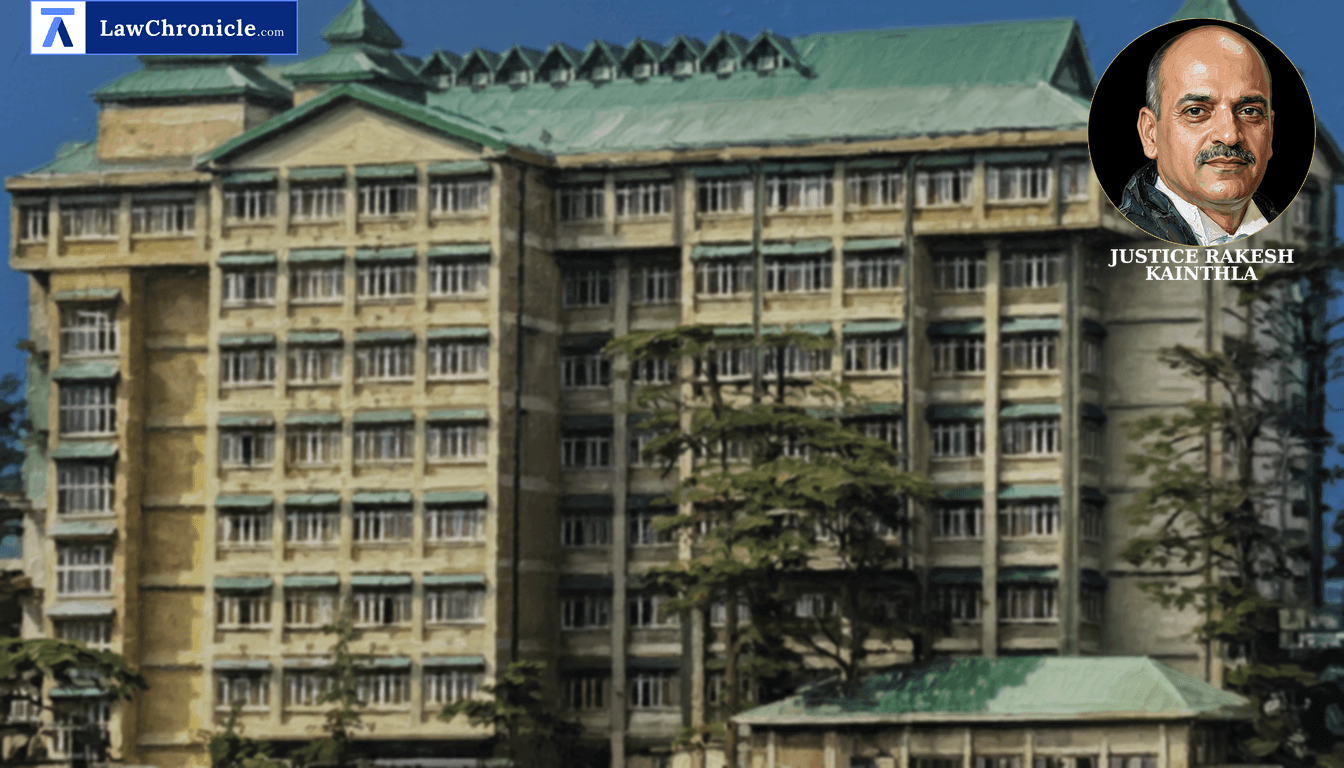
Prioritizing the fundamental right to a speedy trial over procedural hurdles, the Himachal Pradesh High Court has granted bail to an accused in a narcotics case, ruling that eighteen months of incarceration justifies release despite the previous dismissal of bail pleas by the Supreme Court and High Court. This decision reinforces the principle of proportionality, establishing that pre-trial detention cannot be allowed to extend indefinitely where the trial's conclusion is not in sight.
Justice Rakesh Kainthla presided over the matter, considering a petition for regular bail in a case involving the alleged recovery of 13 grams of heroin. The Court had to navigate the strict legal landscape governing successive bail applications and the specific rigors of the Narcotic Drugs and Psychotropic Substances Act.
Key Takeaways
Principle of Proportionality Applied
The Court held that if an accused has undergone a substantial part of the potential sentence during the trial, further detention becomes unjustified.
Material Change in Circumstances
While successive bail pleas generally require a 'substantial change' in facts, the mere passage of significant time in custody and the slow pace of trial constitute valid grounds for reconsideration.
Judicial Propriety vs. Personal Liberty
The ruling balances judicial discipline which discourages 'judge-shopping' via repeated filings with the constitutional mandate to protect an individual from indefinite incarceration without conviction.
Court's Rationale on Successive Bail and Custody Period
The Court noted that the petitioner had been in custody since May 2025. Although earlier bail applications were dismissed by the High Court and a Special Leave Petition was rejected by the Supreme Court, the Bench observed that the trial was still at the stage of recording prosecution witnesses.
The Court, in its reasoning, observed: "The petitioner has remained in custody for more than one year and five months. The Central Government has notified 250 grams of heroin as the commercial quantity... If the principle of proportionality is applied to the present case, the petitioner has undergone a substantial part of the imprisonment that can be awarded to him in case of his conviction... Considering the period of incarceration and the imprisonment that can be awarded to the petitioner, the petitioner’s further detention is not justified."
Regarding the maintainability of the petition, the Court referred to State of Maharashtra v. Captain Buddhikota Subha Rao ( "(1989) Suppl. 2 SCC 605": 1989 CaseBase(SC) 622), noting that a subsequent application requires a substantial change in the fact situation. It also relied on Kalyan Chandra Sarkar v. Rajesh Ranjan @ Pappu Yadav ( "(2004) 7 SCC 528": 2004 CaseBase(SC) 837) and State of T.N. v. S.A. Raja to emphasize that while res judicata does not apply to bail, the Court must record fresh grounds when taking a different view from earlier rejections. The Court further cited Prasad Shrikant Purohit v. State of Maharashtra and Ajay Rajaram Hinge v. State of Maharashtra to define 'material change' as a change in law or fact that renders previous findings obsolete.
The Court has following directions:
"(I) The petitioner will not intimidate the witnesses, nor will he influence any evidence in any manner whatsoever.
(II) The petitioner shall attend the trial on each and every hearing and will not seek unnecessary adjournments.
(III) The petitioner will not leave the present address for a continuous period of seven days without furnishing the address of the intended visit to the SHO concerned, the Police Station concerned and the Trial Court.
(IV) The petitioner will surrender his passport, if any, to the Court; and
(V) The petitioner will furnish his mobile number and social media contact to the Police and the Court and will abide by the summons/notices received from the Police/Court through SMS/WhatsApp/Social Media Account. In case of any change in the mobile number or social media accounts, the same will be intimated to the Police/Court within five days from the date of the change."
Ratio
In cases involving non-commercial quantities of contraband, the right to a speedy trial and the principle of proportionality under Article 21 of the Constitution outweigh the procedural restrictions on successive bail applications; significant prolonged incarceration during a slow-moving trial constitutes a 'material change in circumstances' justifying the grant of bail even after prior rejections by superior courts.
Background
The prosecution's case originated from secret information received on May 19, 2025, suggesting that the petitioner and a co-accused were selling contraband from their residence. A police search led to the recovery of 13 grams of heroin. The petitioner was charged under Sections 21 and 29 of the Narcotic Drugs and Psychotropic Substances Act.
The petitioner argued that Section 37 of the Narcotic Drugs and Psychotropic Substances Act (which places strict conditions for bail in commercial quantity cases) did not apply as the quantity was intermediate. The State opposed the bail, citing the petitioner's criminal antecedents and the previous dismissals of bail pleas by various forums. However, the Court found that the apprehension of witness intimidation could be mitigated by conditions and that the petitioner's deep roots in society made him a low flight risk.
Case Details:
Case No.: Cr. MP(M) No. 2099 of 2026
Neutral Citation: 2026:HHC:47938
Case Title: Sashi Kumar @ Shashi Kumar Versus State of HP
Appearances:
For the Petitioner(s): Mr Rakesh Chaudhary, Advocate.
For the Respondent(s): Mr Pawan Kumar Nadda, Additional Advocate General, assisted by ASI Raj Kumar, IO.
Source: 2026 CaseBase(HP) 11162
 Breaking News