Property Brought into Firm Becomes Firm Property Under Section 14, Supreme Court Affirms High Court
 Copy Link
 Share
 Save
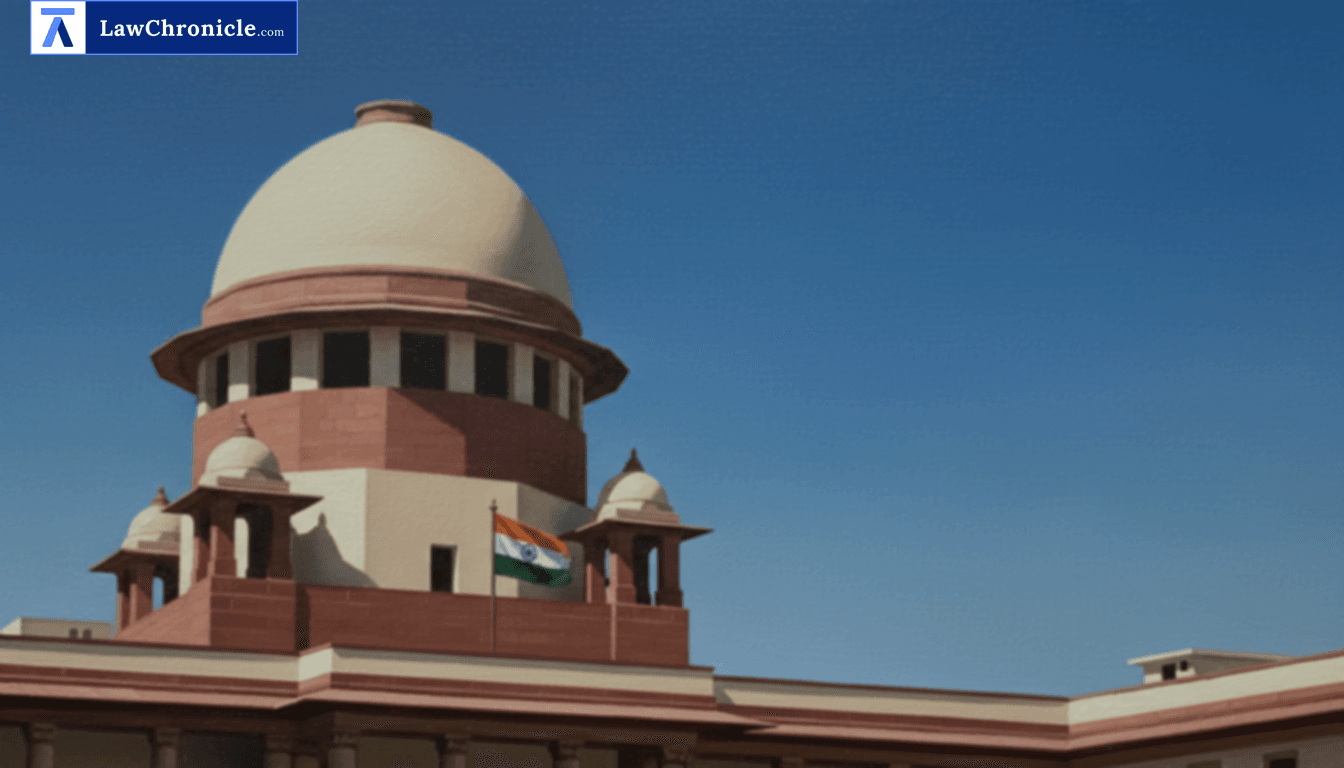
A bench of Justices Sudhanshu Dhulia and Ahsanuddin Amanullah heard an appeal by Sachin Jaiswal challenging the Allahabad High Court’s order dated 09.03.2022 in First Appeal No. 60/2021 (arising out of SLP (C) No. 18717 of 2022) concerning whether land and a hotel building constituted the property of a partnership firm.
The Supreme Court affirmed the High Court’s clarification that the disputed hotel property was the property of the firm M/s Hotel Alka Raje and dismissed the appeal. The Court agreed that once the land and the building were brought into the partnership stock, they became firm property by virtue of Section 14 of the Indian Partnership Act, 1932. The judgment noted the settled law that a partner’s separate property could be converted into partnership property and that no formal document was necessary where contribution and intention were evident. The Court, in its reasoning, observed: “7. It seems to us that looking to the scheme of the Indian Act no other view can reasonably be taken. The whole concept of partnership is to embark upon a joint venture and for that purpose to bring in as capital money or even property including immovable property. Once that is done whatever is brought in would cease to be the trading asset of the person who brought it in. It would be the trading asset of the partnership in which all the partners would have interest in proportion to their share in the joint venture of the business of partnership. The person who brought it in would, therefore, not be able to claim or exercise any exclusive right over any property which he has brought in, much less over any other partnership property. He would not be able to exercise his right even to the extent of his share in the business of the partnership. As already stated, his right during the subsistence of the partnership is to get his share of profits from time to time as may be agreed upon among the partners and after the dissolution of the partnership or with his retirement from partnership of the value of his share in the net partnership assets as on the date of dissolution or retirement after a deduction of liabilities and prior charges.” The Court also recorded and adopted the High Court’s clarification: “We, therefore, clarify the position to the effect that the decree rendered by the trial court shall be read in favour of the firm namely 'M/s Hotel Alka Raje' alone.”
Background
The dispute arose from a plot purchased in 1965 by the late Bhairo Prasad Jaiswal on which a building for Hotel Alka Raje was later constructed. In 1971 he entered into partnership with his brother Hanuman Prasad Jaiswal, and the partnership was reduced to writing by a deed dated 11.10.1972. The building was constructed as a contribution to the partnership. A relinquishment deed dated 09.03.1983, executed and registered by Bhairo Prasad, recorded that he released the property in favour of the firm and that his legal heirs would have no right, title or interest. Subsequent partnership deeds modified profit-sharing; Bhairo Prasad died in 2005 and the firm continued with other partners.
In October 2018 the appellant and others purported to stake a claim over the property, and the firm filed a suit for declaration of title and injunction on 22.11.2018. The trial court decreed the suit on 22.12.2020, holding that respondent Nos. 1 to 4 were sole owners in possession and that the appellants had no right, placing reliance on the registered relinquishment deed. The High Court disposed of the first appeal on 09.03.2022, clarifying that the decree should be read in favour of the partnership firm alone and that the share of the late Bhairo Prasad would “stand inherited by his legal heirs to the extent mentioned in the last partnership deed entered in accordance with law.”
The appellant challenged the High Court’s clarification before the Supreme Court, contending that ownership could not have been transferred by a relinquishment deed and could only be transferred under modes defined in the Transfer of Property Act. The Supreme Court held that there was no error in the High Court’s approach because the property had been brought into the partnership stock and therefore became firm property under Section 14. The Court relied on precedent including Addanki Narayanappa v. Bhaskara Krishnappa (1966) and a Full Bench decision of the Madras High Court, which supported the principle that contribution of property to partnership converted its character. The Supreme Court found no need to separately adjudicate the appellant’s contention on relinquishment and dismissed the appeal. The appeal stood dismissed on 27 February 2025.
Case Details: Case No.: 2025 INSC 275 Case Title: Sachin Jaiswal v. M/s Hotel Alka Raje & Others Appearances: For the Petitioner(s): [Advocate not indicated in judgment] For the Respondent(s): [No appearance recorded / respondents unrepresented]
Similar Articles
 Breaking News