Property Sale Fraud: PHHC refuses to discharge Brother for forged Release Deed by Sisters
 Copy Link
 Share
Share Save
Save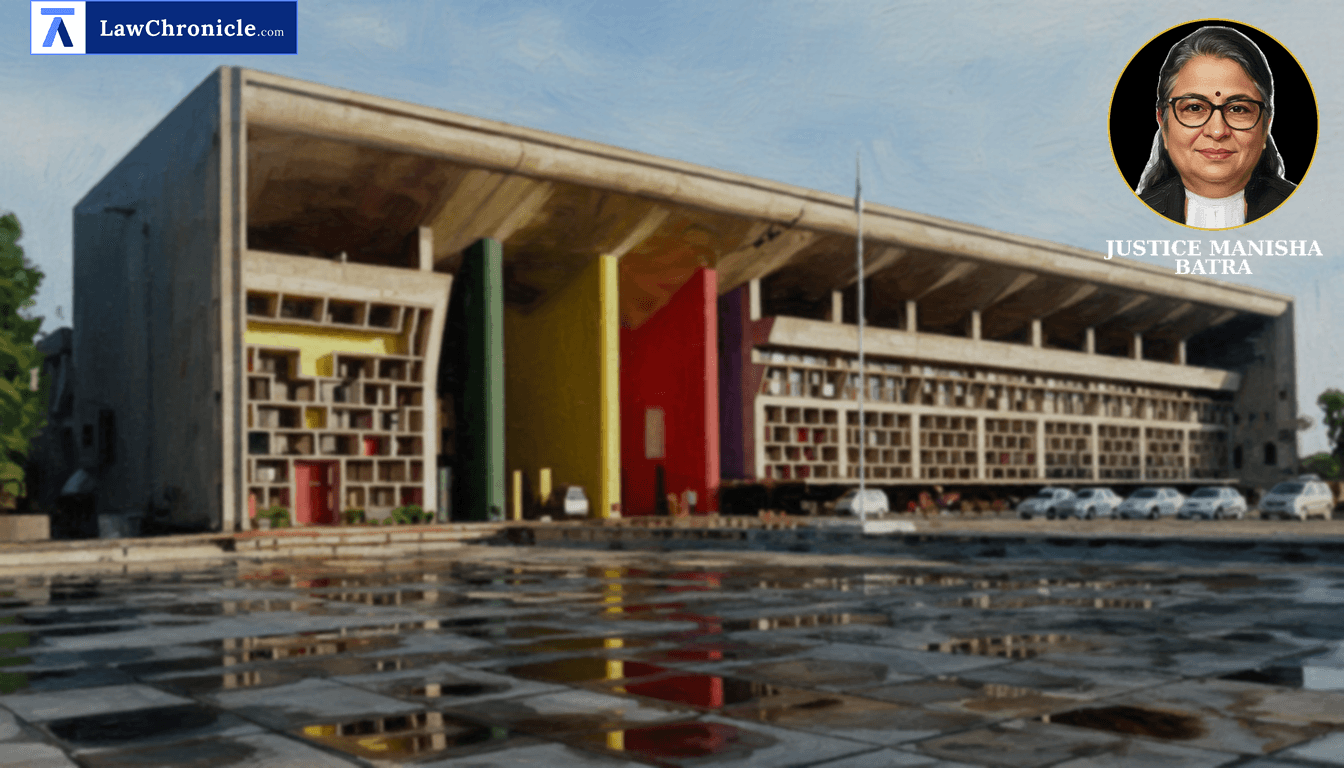
The Punjab and Haryana High Court has affirmed that at the stage of framing charges, the judiciary must only determine the existence of a strong suspicion rather than conducting a detailed trial into the merits of the defense.
Justice Manisha Batra presided over the revision petition challenging a trial court's refusal to discharge a petitioner accused under Section 420 of the Indian Penal Code, 1860. The case centered on allegations that the petitioner induced a buyer to pay a substantial sum by falsely representing sole ownership of a property through a purportedly forged relinquishment deed.
Key Takeaways
Threshold for Discharge
Courts are not required to conduct a 'mini-trial' at the discharge stage but must only ascertain if the investigation reveals a prima facie case.
Civil vs. Criminal Dichotomy
Contractual disputes involving allegations of inception-level deception and false representations regarding property title satisfy the essential elements of criminal cheating.
Limited Right to Produce Documents
Accused persons do not have an inherent right to introduce defense evidence at the stage of framing charges; the court's review is confined to the material provided by the investigating agency.
Persistence of Primary Charges
The deletion of aggravated charges like forgery does not automatically entitle an accused to discharge from the remaining primary charge of cheating if sufficient grounds exist.
Court's Rationale on Section 420
The Punjab and Haryana High Court observed that the allegations were not merely a failure to honor a contract but involved specific representations of exclusive ownership backed by a document whose execution was disputed by the alleged executants. This, according to the Bench, disclosed the essential elements of deception and inducement.
The Punjab and Haryana High Court expressed that "At this stage, the Court is not required to conduct a mini-trial or undertake a meticulous appreciation of the evidence but is required to sift and weigh the material for the limited purpose of determining whether the allegations and the material collected during investigation disclose a prima facie case or raise a strong suspicion warranting the accused to face trial."
Ratio
At the stage of consideration for discharge under Section 262 of the Bharatiya Nagarik Suraksha Sanhita, 2023, the Court must apply its judicial mind to the materials collected during investigation to determine if the charge is groundless; however, it is not permitted to substitute a possible defense of the accused for the prosecution's material or conduct a roving enquiry into the probative value of the evidence.
Background
The petitioner allegedly approached the complainant in 2020, claiming sole ownership of a Gurugram property through a relinquishment deed from his sisters. Relying on this, the complainant entered into an agreement for Rs. 5.55 crores and paid Rs. 41 lakhs. Later inquiries revealed the property was still in the petitioner's father's name and the sisters denied executing the deed. The petitioner sought discharge under Section 239 of the Code Of Criminal Procedure, 1973 (now Section 262 of Bharatiya Nagarik Suraksha Sanhita, 2023), arguing the dispute was purely civil and that the complainant had defaulted on payments.
The Punjab and Haryana High Court relied on established precedents, including Union of India v. Prafulla Kumar Samal ( "(1979) 3 SCC 4": 1978 CaseBase(SC) 17) and P. Vijayan v. State of Kerala ( "(2010) 2 SCC 398": 2010 CaseBase(SC) 1462), to emphasize that the court should not examine the defense's documents at this stage. It further referenced State of Gujarat vs. Dilipsinh Kishorsinh Rao ( "2023 SCC OnLine SC 1294": 2023 CaseBase(SC) 760) and Vishnu Kumar Shukla and another vs. State of Uttar Pradesh and another ( "2024 AIR Supreme Court 90": 2023 CaseBase(SC) 60) regarding the presumptive opinion required for framing charges. Distinguishing this case from Anand Kumar Mohatta and another vs. State (NCT of Delhi) and another and Naresh Kumar and another vs. State of Karnataka and another ( "2024 SCC Online SC 268": 2024 CaseBase(SC) 465), where disputes were purely civil, the Bench found that the specific allegation of initial deception regarding title justified a trial. Consequently, the revision petition was dismissed.
Case Details:
Case No.: CRR-741-2026 (O&M)
Case Title: Rajesh Malik Versus State of Haryana
Appearances:
For the Petitioner(s): Mr. K.S. Nalwa, Senior Advocate with Ms. Sanya Gupta, Advocate and Mr. Jyuvraj Singh Sandhu, Advocate
For the Respondent(s): Mr. Neeraj Poswal, AAG, Haryana
Source: 2026 CaseBase(PNH) 20986
 Breaking News