


Punjab and Haryana HC: Administrative Lapses Don't Bar Recovery of Electricity Charges
 Copy Link
 Share
 Save
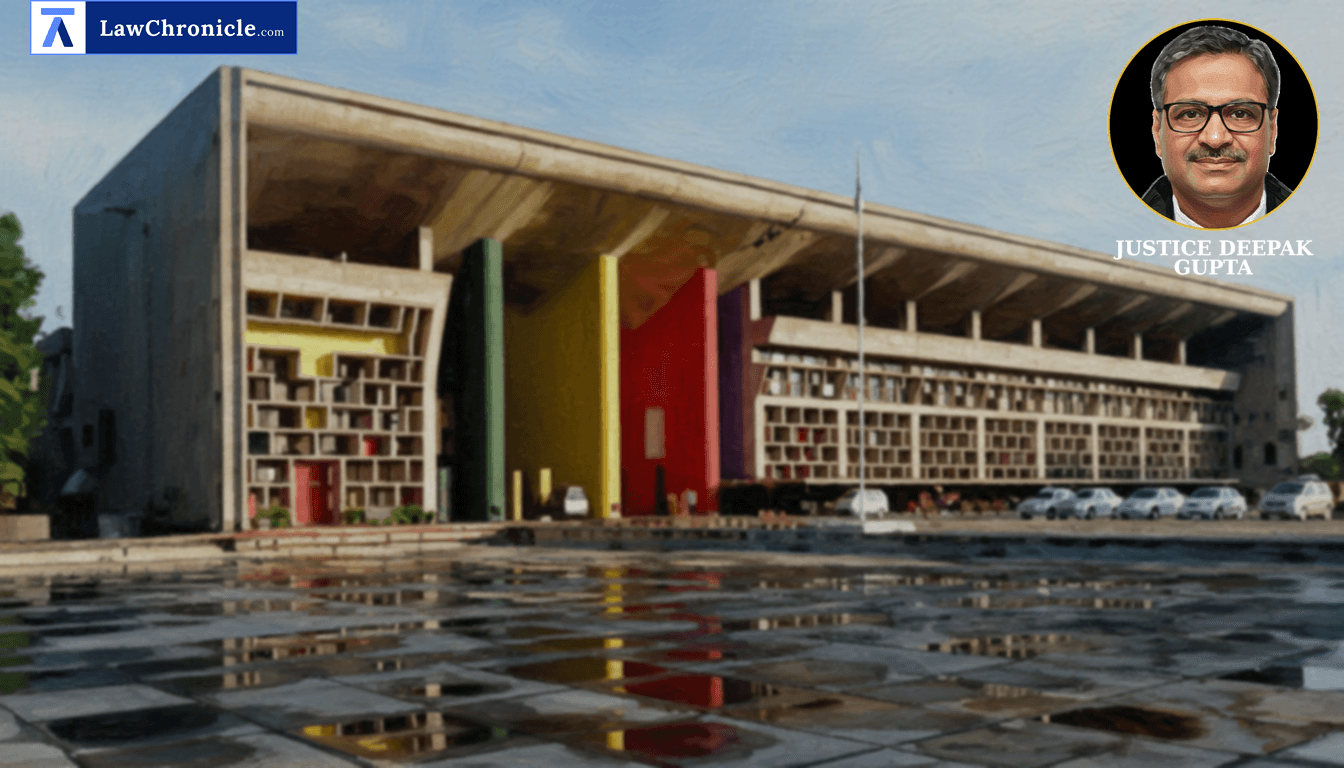
Public revenue cannot be sacrificed at the altar of administrative oversight, as the High Court affirms that consumers remain liable for electricity actually consumed even if departmental inspections lack regularity. The ruling reinforces that the Electricity Act serves to prevent unjust enrichment rather than providing a loophole for consumers to escape payment for documented power consumption.
In a decisive verdict, Justice Deepak Gupta dismissed a regular second appeal filed against concurrent findings of lower courts that upheld a significant revenue recovery demand. The Court was hearing a challenge against an electricity bill dated February 17, 2016, which included sundry charges of over ₹4.5 lakh due to alleged revenue loss caused by a malfunctioning meter.
Technical Evidence and Admission of Inspection
The dispute centered on an inspection where the meter was found recording zero voltage on one phase despite all phases being in use. The Court emphasized that the electronic meter data, which remained un-rebutted by expert evidence, clearly established under-recording. Critically, the Court noted that the plaintiff had admitted during cross-examination that the inspection took place in the presence of their production in-charge.
The Court, in its reasoning, observed: "Merely because the departmental officials may not have carried out periodical inspection with desired regularity would not extinguish the liability of a consumer to pay for electricity actually consumed. Recovery of actual charges for electricity supplied cannot be defeated solely because of administrative lapse on the part of departmental officials. The object of the Electricity Act is not to permit unjust enrichment of a consumer at the cost of public revenue."
Prejudice Must Be Shown for Natural Justice Claims
Addressing the appellant's argument regarding the lack of formal notice before the assessment, the Court held that procedural irregularities do not automatically invalidate an assessment. The Bench found that the appellant failed to show how the outcome would have differed had an additional opportunity been provided, especially since the technical data from the meter was not disputed.
Regarding clerical errors in the consumer's name on certain documents, the Bench remarked that once the consumer admitted to using the specific account and paying previous bills, minor descriptive errors could not render the entire assessment illegal. The Court has following directions:
"The present Regular Second Appeal is, accordingly, dismissed. Pending miscellaneous application(s), if any, shall also stand disposed of."
Key Takeaways:
Liability Overcomes Administrative Lapses
Consumers are legally bound to pay for actual energy consumption, and the failure of officials to conduct periodic checks does not grant a right to free or discounted electricity.
Evidence Overrides Clerical Errors
Substantial evidence, such as identical account numbers and usage history, prevails over minor clerical discrepancies in consumer names in departmental records.
Natural Justice Requires Proof of Prejudice
A mere allegation of lack of notice is insufficient to set aside an assessment unless the consumer can demonstrate that the lack of notice resulted in a concrete factual error or prejudice.
Limited Scope of Second Appeal
Findings of fact based on electronic data and admissions cannot be re-opened under Section 100 of the Code of Civil Procedure unless perversity or a substantial question of law is established.
Ratio Decidendi:
A consumer’s liability to pay for electricity actually consumed is an absolute obligation under the Electricity Act that cannot be extinguished by administrative delays in inspection or procedural irregularities, provided the underlying technical data of consumption is accurate and no prejudice is caused to the consumer.
Background:
The appellant, M/s Barar Resin Corporation, challenged an electricity bill issued by Dakshin Haryana Bijli Vitran Nigam which demanded ₹5,83,189. The department's inspection revealed that a broken PT wire inside the CT chamber caused the meter to record one-third less consumption. The appellant argued that the assessment violated principles of natural justice and that the documents referred to a different entity name. Both the Trial Court and the First Appellate Court dismissed the suit, finding that the consumer was present during inspection and that the account number remained consistent. The High Court, exercising jurisdiction under Section 100 of the Code of Civil Procedure, found no grounds to interfere with these concurrent findings, concluding that the electronic data was conclusive evidence of the loss of revenue.
Case Details:
Case No.: RSA-4539-2019 (O&M)
Case Title: M/s Barar Resin Corporation v. Dakshin Haryana Bijli Vitran Nigam and others
Appearances:
For the Petitioner(s): Mr. Jai Bhagwan Sharma, Advocate
Source: 2026 CaseBase(PNH) 143
Similar Articles
 Breaking News


