


Punjab and Haryana HC Bars Use of Fictional Age in Motor Accident Claims
 Copy Link
 Share
 Save
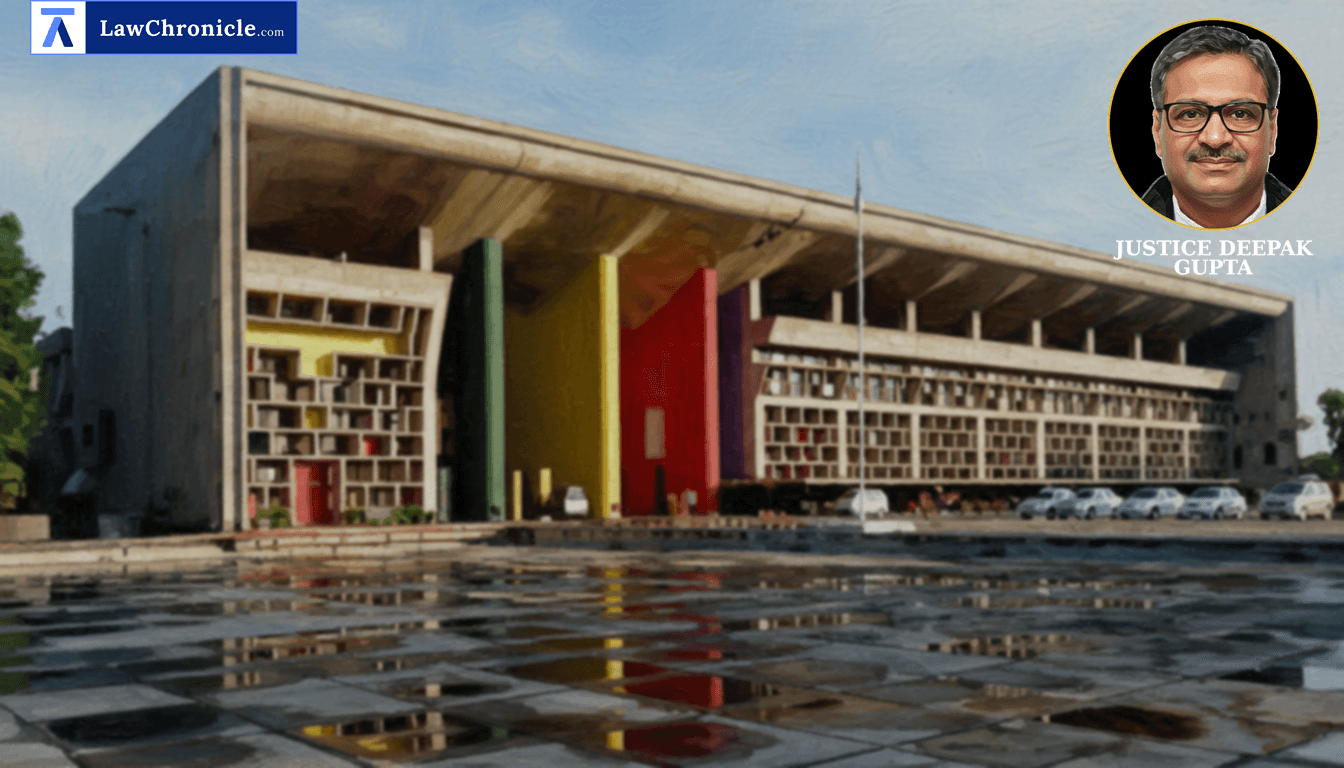
The Punjab and Haryana High Court has dismantled the practice of notionally enhancing a deceased's age to reduce insurance payouts, ruling that state-specific service rules cannot be arbitrarily applied to employees of different jurisdictions to slash compensation multipliers.
A single-judge bench of Justice Deepak Gupta overturned a Tribunal's decision that had artificially inflated the age of a deceased Delhi Police Constable by twelve years using Haryana-specific service rules, thereby significantly increasing the final award for the grieving family.
Invalidity of Fictional Age Enhancements
The Court addressed a critical error where the Motor Accident Claims Tribunal (MACT) had applied the ‘Haryana Compassionate Assistance to the Dependents of Deceased Government Employees Rules, 2006’ to a deceased who was an employee of the Delhi Police. By notionally adding twelve years to the actual age of 39, the Tribunal had reduced the multiplier from 15 to 11. The High Court clarified that such statutory service rules are exclusive to their respective state employees and cannot be imported into unrelated motor accident claims to the detriment of claimants.
The Court, in its reasoning, observed: "The Haryana Compassionate Assistance Rules, 2006 are statutory service rules applicable exclusively to employees of the State of Haryana. The deceased admittedly was an employee of Delhi Police. The financial benefits admissible to the dependents of an employee under the service rules governing his employment cannot be substituted by benefits available under an altogether different service regime. The Tribunal, therefore, committed a manifest error in importing the provisions of the Haryana Rules to a deceased, who was never governed thereby. Consequently, the multiplier could not have been reduced by adopting a fictional age."
Deduction of Ex-Gratia and Personal Allowances
While enhancing the multiplier, the Court also navigated the complex terrain of deductible benefits. Following the precedent in Reliance General Insurance Company Limited v. Shashi Sharma ( "(2016) 9 SCC 627": 2016 CaseBase(SC) 867), the Court ruled that only 'ex-gratia' financial assistance provided by the employer is deductible from the compensation, while independent service benefits like gratuity, leave encashment, and insurance proceeds remain untouched. Furthermore, the Court reiterated that 'Transport Allowance' and 'Conveyance Allowance' are personal to the employee and must be excluded from the monthly income calculation, as established in The New India Assurance Company Ltd. v. Shri Lal.
Strict Adherence to Conventional Head Caps
Regarding conventional heads such as consortium and funeral expenses, the Court applied the recent restrictive approach. Citing Hasina Yasmin and others v. National Insurance Co. Ltd., the Court held that the 10% periodical enhancement every three years, as originally suggested in National Insurance Company Limited v. Pranay Sethi ( "(2017) 16 SCC 680": 2017 CaseBase(SC) 551), is currently not permissible for accidents occurring prior to the 2017 ruling, pending further determination by a larger bench.
The Court has the following directions:
"Out of the total enhanced compensation, 50% shall be liable to the widow; 20% each shall be liable to the two children, whereas the rest 10% shall be liable to the mother of the deceased. The enhanced compensation shall carry an interest at the rate of 7.5% per annum from the date of filing of the claim petition till its actualization. The liability of all the three respondents shall remain joint and several."
Key Takeaways:
Multiplier Based on Actual Age Only
Tribunals cannot use fictional or notional age additions derived from service rules to reduce the multiplier; the actual age at the time of death is the sole criterion under Sarla Verma v. Delhi Transport Corporation ( "(2009) 6 SCC 121": 2009 CaseBase(SC) 380).
Selective Deduction of Employer Benefits
Only ex-gratia payments intended as a substitute for salary are deductible; statutory benefits like gratuity and insurance are independent contractual entitlements and cannot be set off.
No Automatic Conventional Head Increases
Until a larger bench of the Supreme Court decides otherwise, the 10% triennial increase in conventional awards for consortium and funeral expenses is stayed.
Ratio Decidendi:
The binding legal principle established is that service rules of a specific State (like the Haryana Compassionate Assistance Rules, 2006) cannot be applied to assess the compensation of a deceased employed by a different entity (Delhi Police). Furthermore, for the purpose of Section 166 of the Motor Vehicles Act, 1988, the multiplier must be chosen based on the actual age of the deceased, and only specific ex-gratia financial assistance not earned service benefits can be adjusted against the loss of dependency.
Background:
The case arose from a fatal road accident on September 6, 2015, when Sunil Kumar, a Constable with the Delhi Police, was killed after his scooty was hit head-on by a rashly driven Maruti Eeco. The Tribunal initially awarded ₹25.29 Lakhs by treating the 39-year-old deceased as 51 years old. The claimants appealed for enhancement, arguing against the misapplication of Haryana-specific rules. The High Court, after recalculating the income, applying a 50% addition for future prospects as per National Insurance Company Limited v. Pranay Sethi ( "(2017) 16 SCC 680": 2017 CaseBase(SC) 551), and selecting the correct multiplier of 15 under Sarla Verma v. Delhi Transport Corporation ( "(2009) 6 SCC 121": 2009 CaseBase(SC) 380), enhanced the total compensation to ₹66,93,544. After adjusting the ex-gratia amount of ₹10 Lakhs already received, the net enhanced amount was determined to be approximately ₹30.55 Lakhs.
Case Details:
Case No.: FAO-2970-2017 (O&M)
NeutralCitation: 2026:PHHC:094919
Case Title: Anita and others Vs. Raj Kumar and others
Appearances:
For the Petitioner(s): Mr. Ram Pal Verma, Advocate
For the Respondent(s): Mr. Dinesh Kumar Prajapati, Advocate for respondent No.3
Source: 2026 CaseBase(PNH) 161
Similar Articles
 Breaking News


