Railway Servants are Central Government Employees: Supreme Court
 Copy Link
 Share
 Save
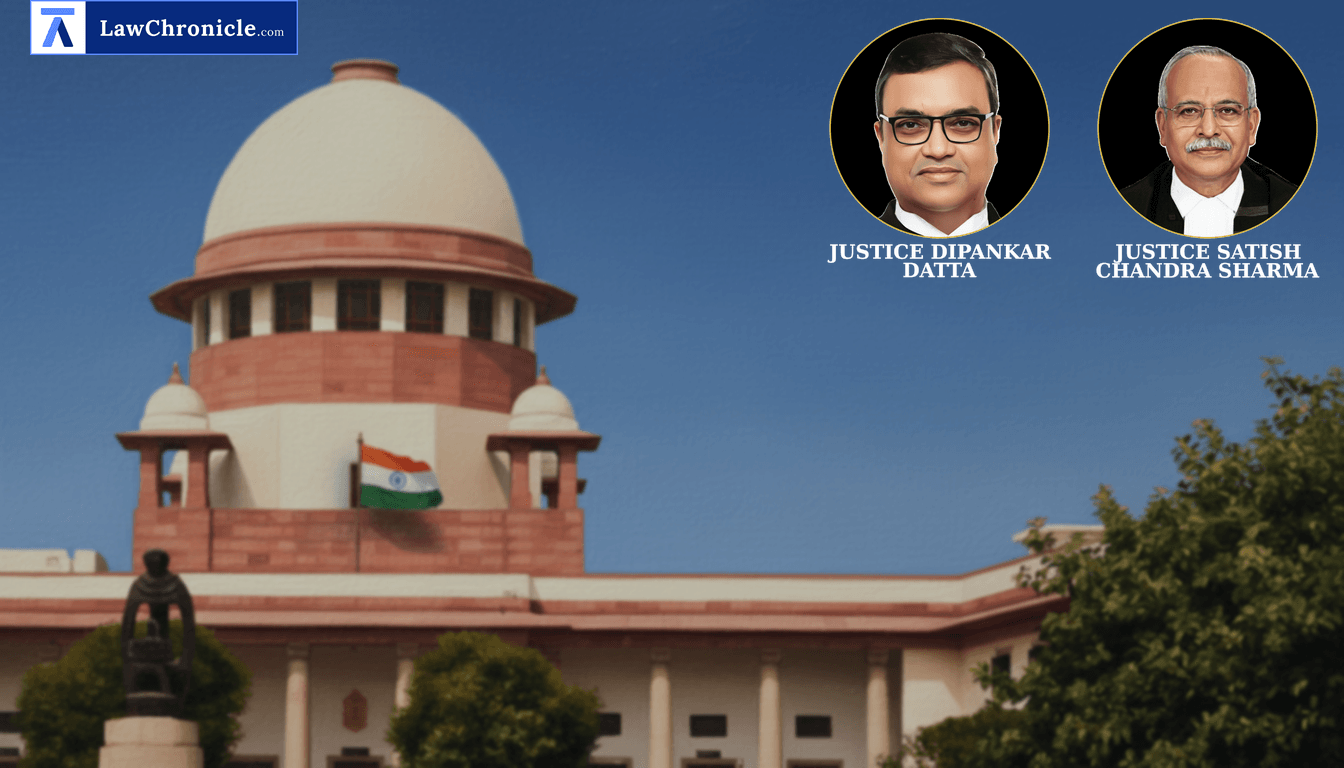
The Supreme Court has delivered a landmark ruling clarifying that railway servants do not lose their status as Central Government employees merely because they are governed by distinct service rules. In a significant relief for employees transitioning from the Railways to other state bodies, the Court held that previous service in the Railways must be reckoned as 'Central Government Service' for pay weightage and other benefits.
A bench of Justice Dipankar Datta and Justice Satish Chandra Sharma set aside the Kerala High Court's decision, which had erroneously classified Railway service as distinct from Central Government civil service. The Court emphasized that the Railways is an integral department of the Union, and its personnel hold civil posts protected under the Constitution of India.
Legal Status of Railway Employees
The Court, in its reasoning, observed: "A railway servant though appointed in a Government Railway under rules made exclusively for the Railways in exercise of powers under the proviso to Article 309 of the Constitution remains a person holding a civil post in connection with the affairs of the Union under the administrative control of the Central Government. The Railway Board functions as the Government of India itself for railway administration; consequently, service under the Railway Board in the broader sense is service under the Central Government, and a railway servant does not cease to be a member of the civil service of the Central Government merely because his conditions of service are regulated by rules specific to the Railways."
Supreme Court Overturns Kerala High Court Verdict
Background:
The dispute originated when the appellant, who served in the Indian Railways for over ten years, joined the Kerala State Electricity Board (KSEB). While the Board initially accepted pro-rata pension liability and counted his railway service for pay weightage, it later withdrew these benefits, claiming that 'Railway Service' does not qualify as 'Central Government Service'. The Board relied on the fact that Central Civil Services (Conduct) Rules, 1964 and Central Civil Services (Classification, Control and Appeal) Rules, 1965 do not apply to railway servants.
The Supreme Court rejected this narrow interpretation. It noted that the Railways Act, 1989 explicitly defines a "railway servant" as a person employed by the Central Government. Furthermore, the Administrative Tribunals Act, 1985 establishes the jurisdiction of the Central Administrative Tribunal over railway servants, treating them as members of a civil service of the Union.
The Court relied on the constitutional protection afforded to such employees under Article 311. Citing the seven-judge bench decision in Moti Ram Deka v. North East Frontier Railway, the Court reiterated that railway employees are holders of civil posts under the Union. It also referenced State of Assam v. Kanak Chandra Dutta to explain that the master-servant relationship between the State and a person holding a civil post defines the status of a government servant.
Ultimately, the Court ruled that KSEB was estopped from withdrawing benefits after having accepted the pension contribution and acting upon its own settlements under the Industrial Disputes Act, 1947. The judgment of the Single Judge was restored, ensuring the appellant receives his full entitlements.
Case Details:
Case No.: Civil Appeal Nos. of 2026 [Arising out of SLP (C) Nos. 1377-1380 of 2021]
NeutralCitation: 2026 INSC 562
Case Title: Bency John v. Kerala State Electricity Board Ltd & Ors.
Source: 2026 CaseBase(SC) 484
 Breaking News