RBI's Power to Supersede Multi-State Co-operative Bank Boards Not Bound by 6-Month Limit: SC
 Copy Link
 Share
Share Save
Save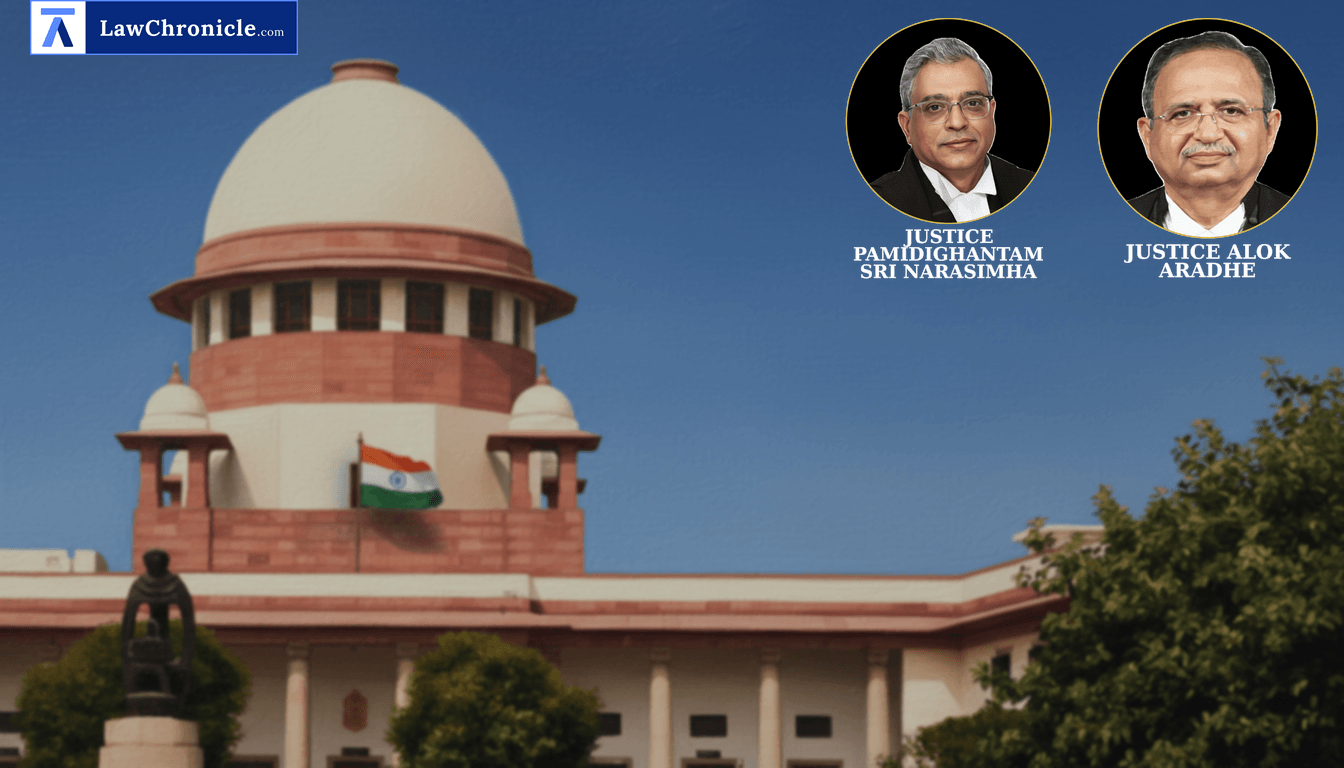
In a major verdict reinforcing banking regulatory oversight over co-operative institutions, the Supreme Court ruled that the Reserve Bank of India's authority to supersede the board of directors of a multi-State co-operative bank under Section 36AAA of the Banking Regulation Act, 1949 is not restricted by the six-month ceiling prescribed under Article 243ZL(1) of the Constitution of India.
A bench comprising Justice Pamidighantam Sri Narasimha and Justice Alok Aradhe dismissed the appeals challenging an order of the High Court of Judicature at Bombay, which had upheld the RBI's decision to supersede the Board of Directors of Abhyudaya Co-operative Bank Limited and appoint an Administrator.
Key Takeaways
Unfettered Regulatory Reach: RBI retains statutory powers under Section 36AAA of the Banking Regulation Act, 1949 to supersede multi-State co-operative bank boards up to an aggregate period of five years, unhindered by the six-month constitutional limit in Article 243ZL(1).
Post-Tenure Extension Validated: Orders extending supersession can be validly passed even after the original statutory tenure of the superseded Board of Directors has expired.
State Consultation Excluded: The requirement of consulting the State Government under the proviso to Section 36AAA(1) applies solely to uni-State co-operative banks and has no application to multi-State co-operative banks.
The Court analyzed the interplay between the Constitution of India and the Banking Regulation Act, 1949, noting that banking activities carry a paramount public interest aimed at protecting depositors. The bench highlighted that the third proviso to Article 243ZL(1) explicitly incorporates the Banking Regulation Act, 1949 into Part IXB of the Constitution of India in an additive and non-restrictive manner.
The Court, in its reasoning, observed: "To read the third proviso to Article 243ZL(1) as excluding multi-State co-operative banks from the reach of the BR Act and thereby confining the RBI’s regulatory hand to a rigid six-month period, ill-suited to the time genuinely required to nurse a distressed bank back to health, would be to subordinate the protection of depositors and the discipline of the banking system to a truncated and overly technical reading of a constitutional proviso."
Addressing the validity of extending supersession beyond the board's elected tenure, the bench noted that once a board is superseded, its powers vest in the Administrator, and the tenure of the erstwhile board holds no bearing on the continuation of regulatory control up to the statutory cap of five years. Placing reliance on Pandurang Ganapati Chaugule v. Vishwasrao Patil Murgud Sahakari Bank Ltd. ( "(2020) 9 SCC 215": 2020 CaseBase(SC) 515), the Court reiterated that the provisions of the Banking Regulation Act, 1949 apply to multi-State co-operative societies carrying on banking business.
The Court issued no specific programmatic directions to lower authorities, holding: "For the foregoing reasons, we find no infirmity in the impugned judgment warranting interference in these appeals. The appeals are, accordingly, dismissed, with no order as to costs."
Ratio
The regulatory power of the Reserve Bank of India under Section 36AAA of the Banking Regulation Act, 1949 to supersede and continue the supersession of the Board of Directors of a multi-State co-operative bank for a cumulative period up to five years is an independent provision not circumscribed by the six-month limit under Article 243ZL(1) of the Constitution of India, and such supersession can be extended beyond the original tenure of the elected Board.
Background
The appellants were elected to the Board of Directors of Abhyudaya Co-operative Bank Limited in May 2019 for a statutory term of five years. On November 24, 2023, the RBI passed an order under Section 36AAA of the Banking Regulation Act, 1949 superseding the Board for one year and appointing an Administrator due to deteriorating financial health. The appellants challenged this order before the Bombay High Court. During the pendency of the proceedings, their statutory term expired on May 24, 2024.
Subsequent extension orders were issued by the RBI on November 18, 2024, and November 7, 2025. The High Court dismissed the writ petitions, rejecting the argument that Section 36AAA was rendered otiose by Articles 243ZL and 243ZT of the Constitution of India or that prior consultation with the Central/State Government was mandatory for multi-State entities. The appellants cited rulings including Kishansing Tomar v. Municipal Corporation of the City of Ahmedabad & Ors. and Union of India v. Rajendra N. Shah and Anr. ( "(2022) 19 SCC 520": 2021 CaseBase(SC) 652) to argue against executive overreach, whereas the respondents relied on Pandurang Ganapati Chaugule v. Vishwasrao Patil Murgud Sahakari Bank Ltd. ( "(2020) 9 SCC 215": 2020 CaseBase(SC) 515) and Commissioner of Commercial Taxes & Ors. v. Ramkishan Shrikishan Jhaver & Ors.. The Supreme Court affirmed the High Court's judgment and dismissed the civil appeals.
Case Details:
Case No.: Civil Appeal Nos. 5351 – 5352 of 2025
Neutral Citation: 2026 INSC 955
Case Title: Sandeep S. Ghandat & Ors. v. Reserve Bank of India & Ors.
Appearances:
For the Petitioner(s): Mr. Devadatt Kamat, Senior Advocate
For the Respondent(s): Mr. Jaideep Gupta, Senior Advocate; Mr. Ninad Laud, Advocate
Source: 2026 CaseBase(SC) 2580
 Breaking News