Registered Office Not Exclusive Ground for Suit When Business Center and Cause of Action Lie Elsewhere: Bombay HC
 Copy Link
 Share
Share Save
Save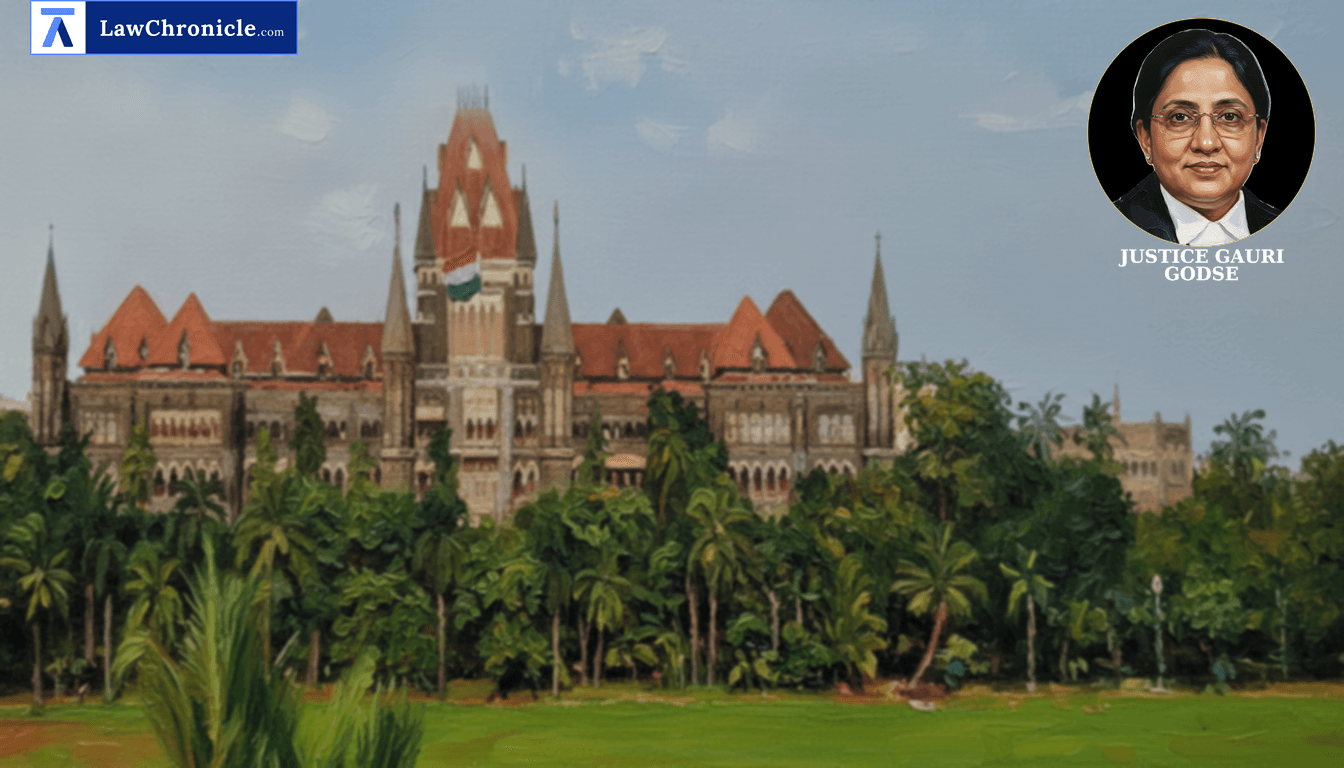
The Bombay High Court has checked the potential for forum shopping in trademark disputes, ruling that a plaintiff cannot drag a defendant to a distant forum solely based on a registered office address when the cause of action and significant business activities are centered in another state. In a significant blow to jurisdictional overreach, the court dismissed a petition to join causes of action, emphasizing that the discretionary power under the Letters Patent must be exercised to serve convenience and justice, not to facilitate procedural maneuvering.
A single-judge bench of Justice Gauri Godse heard the leave petition arising from a commercial IPR suit. The legal battle involved a prominent footwear brand seeking to restrain a Kerala-based entity from using a deceptively similar mark, attempting to consolidate an infringement claim with a passing-off action in Mumbai despite the defendant's lack of presence in Maharashtra.
Key Takeaways
Discretionary Nature of Clause 14
Granting leave to join causes of action is not a matter of right but a discretionary judicial power that requires reasonable justification beyond mere avoidance of multiplicity.
Principal Place of Business Over Registered Office
A company's registered office is not always its principal place of business; jurisdiction is determined by where the entity actually controls its business activities.
Curbing Forum Shopping
Plaintiffs with multiple offices must choose a forum that aligns with the location of the cause of action or the defendant's residence to prevent undue hardship to smaller entities.
Nexus Requirement for Passing Off
For claims of passing off governed by Bombay High Court Letters Patent and Trade Marks Act, 1999, the court must strictly examine the territorial nexus of the tortious act.
Court Observations on Jurisdictional Choice
The court observed that while Trade Marks Act, 1999 provides an additional forum for infringement, it does not oust the general principles of Code of Civil Procedure, 1908. The bench noted that the plaintiff had a massive presence in Kerala, the same state where the defendant operated and where the alleged passing off occurred. The Court, in its reasoning, observed: "The place where the cause of action arises is convenient for conducting a trial as relevant witnesses, documents, transactions and other evidence are likely to be available within that jurisdiction. Hence, a choice available to the plaintiff under Section 134 (2) of the Trade Marks Act must be exercised reasonably and must be justified. Whether hardship is caused or not to the defendant cannot be the only criterion to grant or refuse leave under Clause 14."
The Court has following directions:
"The Leave Petition is therefore dismissed. The plaintiff is therefore at liberty to take appropriate steps in accordance with law."
Ratio
The principal place of business of a corporation, for the purposes of determining jurisdiction in intellectual property suits, is the location from which the company controls its business activities. When a plaintiff has multiple offices and the cause of action arises in a jurisdiction where both parties have a significant presence, invoking the jurisdiction of a different court solely based on a registered office address constitutes an unjustifiable exercise of choice that does not warrant the grant of leave under Clause 14 of the Letters Patent.
Background
The Petitioner, Metro Brands Limited, filed a suit for trademark infringement and passing off against Met Brands Private Limited. While the Petitioner's registered office is in Mumbai, the Respondent is based in Kerala. The Petitioner sought leave under Clause 14 of the Bombay High Court Letters Patent to join the cause of action for passing off (which occurred in Kerala) with the infringement suit filed in Mumbai under Section 134 of the Trade Marks Act, 1999.
The Petitioner relied on Food Corporation of India vs. Evdomen Corporation ( "(1999) 2 SCC 446": 1999 CaseBase(SC) 945) and Jagdish Gopal Kamath and Others vs. Lime and Chilli Hospitality Services P. Ltd. ( "2013 (4) Mah. L.J.": 2013 CaseBase(BOM) 554) to argue that the registered office serves as the principal place of business. However, the Respondent contended that the Petitioner operates 18 stores in Kerala and that dragging a small Kerala-based entity to Mumbai would cause extreme hardship. The court examined the principles laid down in Indian Performing Rights Society Limited vs. Sanjay Dalia and Another ( "(2015) 10 SCC 161": 2015 CaseBase(SC) 114) and Manugraph India Limited vs. Simarq Technologies Pvt. Ltd. and Others, noting that since the cause of action arose in Kerala and the plaintiff had a substantial business presence there, Mumbai was not the most convenient forum. The court followed the logic in Shree Sai Plast Pvt. Ltd. IN Prince Pipes & Fittings Ltd. vs. Shree Sai Plast Pvt. Ltd, concluding that the center of power and the cause of action did not justify a trial in Mumbai. Consequently, the Leave Petition was dismissed.
Case Details:
Case No.: LEAVE PETITION (L) NO. 12067 OF 2025 IN COMMERCIAL IPR SUIT (L) NO. 12028 OF 2025
Neutral Citation: 2026:BHC-OS:19660
Case Title: Metro Brands Limited Vs. Met Brands Private Limited
Appearances:
For the Petitioner(s): Mr. Rashmin Khandekar a/w. Mr. Prateek Pansare, Mr. Alhan Kayser, Ms. Varsha Vasave, Ms. Gauri Sansare i/b. Mr. Avesh Kayser
For the Respondent(s): Mr. Manas Hameed (Through VC) i/b. Ms. Hemali Kurne
Source: 2026 CaseBase(BOM) 5633
 Breaking News