


Regularization Date Controls Pension Scheme Eligibility: Supreme Court
 Copy Link
 Share
 Save
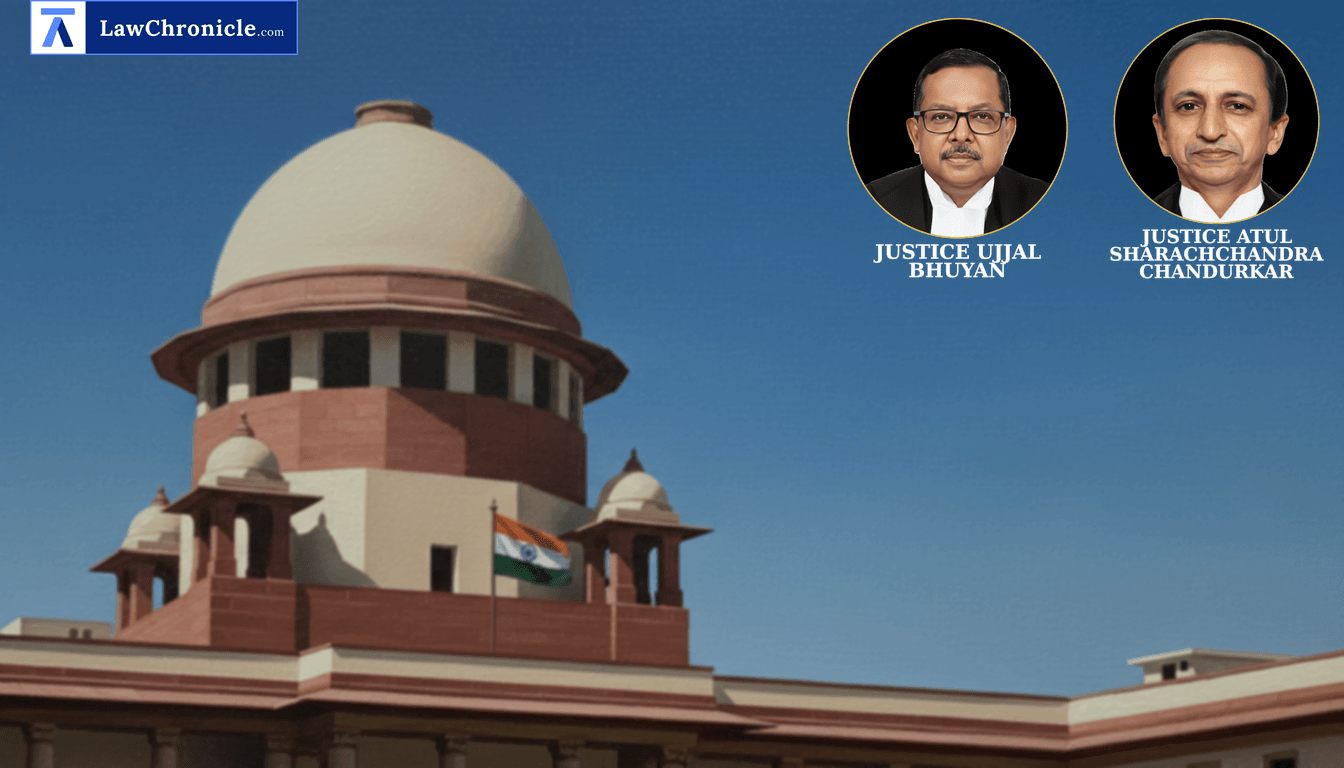
Employees who accept the terms of a regularization order taking prospective effect cannot later demand retroactive benefits under a pension scheme after retirement. Reaffirming its earlier precedent, the Supreme Court held that post-retirement challenges to contractual regularization conditions after receiving Contributory Provident Fund benefits are impermissible.
In a dismissal of a Special Leave Petition, a bench of Justice Ujjal Bhuyan and Justice Atul S. Chandurkar upheld the Telangana High Court decision denying General Provident Fund benefits to a retired Professor of the National Institute of Rural Development.
Key Takeaways
Prospective Regularization Binding: Conditions stating regularization takes effect from the date of the order govern pension entitlements.
Post-Retirement Challenges Impermissible: Employees cannot challenge regularization terms after receiving full retiral benefits under the CPF scheme.
Precedential Uniformity Upheld: Identically situated employees under a common regularization order are bound by earlier Supreme Court adjudications.
Evaluating the grievance of the retired Professor, the Court noted that the terms of the regularization order specifically governed the service conditions and pension benefits. The Court has following directions:
"The Special Leave Petition is, thus, dismissed."
The Court, in its reasoning, observed: "Having accepted the terms and conditions for regularisation of services on the post of Professor and the grievance in this regard having been raised post-retirement after accepting benefits under the CPF Scheme, the petitioner was rightly non-suited by the High Court."
Ratio
When a service regularization order explicitly stipulates that it takes prospective effect and maintains coverage under an existing pension or provident fund scheme, an employee who accepts those terms without contemporaneous challenge cannot post-retirement claim retrospective regularization to seek entry into a different pension scheme.
Background
The petitioner was initially appointed as a Research Associate on a contractual basis at NIRD on November 12, 1984, under the Central Pension Fund Scheme. After serving in various capacities, his services on the post of Professor were regularized alongside Mr. Shyam Sunder Prasad Sharma through Office Order No. 98 dated May 4, 2012. The order explicitly stipulated that regularization took effect from the date of issuance and that services would continue under the existing CPF Scheme.
Following his retirement on January 31, 2017, and receipt of his retiral benefits under the CPF Scheme, the petitioner approached the Central Administrative Tribunal seeking coverage under the GPF Scheme. While the Tribunal initially allowed the application relying on an earlier favorable order in National Institute of Rural Development Vs. Shyam Sunder Prasad Sharma and Others ( "Civil Appeal No.542 of 2023 decided on 28.02.2023": 2023 CaseBase(SC) 743), the Supreme Court subsequently reversed that ruling in National Institute of Rural Development Vs. Shyam Sunder Prasad Sharma and Others ( "Civil Appeal No.542 of 2023 decided on 28.02.2023": 2023 CaseBase(SC) 743), holding that regularization operated prospectively from May 4, 2012.
Following the ruling in National Institute of Rural Development Vs. Shyam Sunder Prasad Sharma and Others ( "Civil Appeal No.542 of 2023 decided on 28.02.2023": 2023 CaseBase(SC) 743), the High Court of Telangana set aside the Tribunal's order. The Supreme Court declined to interfere under Article 136 of the Constitution of India, holding the petitioner to be identically situated.
Case Details:
Case No.: Special Leave Petition (Civil) No. of 2026 (@ Diary No.5679 of 2024)
Neutral Citation: 2026 INSC 893
Case Title: K. Suman Chandra v. Union of India and Others
Appearances:
For the Petitioner(s): Mr. Manish Kumar Saran, Advocate
For the Respondent(s): Ms. Ruchi Kohli, Senior Advocate; Ms. Vishakha, Advocate
Source: 2026 CaseBase(SC) 811
Similar Articles
 Breaking News


