


Revenue Officers Responsible for Property Record Accountable for Fraud: Bombay HC
 Copy Link
 Share
 Save
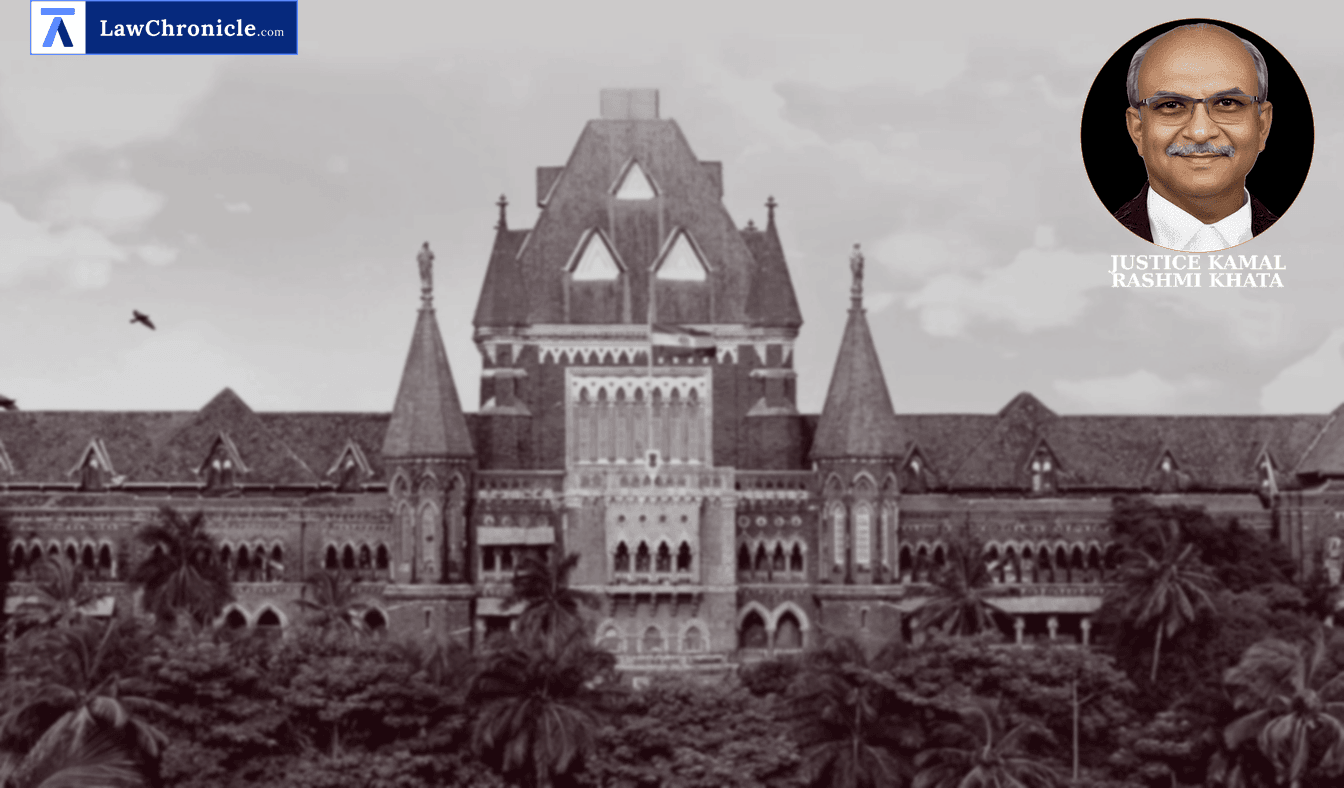
The Bombay High Court has sounded a clarion call against 'elite extortion' by unscrupulous legal heirs, mandating a rigorous new verification protocol for revenue authorities to prevent the fraudulent mutation of property records after valid sales. In a landmark directive aimed at curbing systemic corruption within the Tahsildar and Talathi offices, the Bench ruled that the state must hold officers personally accountable for lapses that drag legitimate property owners into decades of meritless litigation.
Justice Kamal Khata heard the matter concerning a cooperative housing society's decade-long struggle to update revenue records following a 1979 registered sale deed. The Bombay High Court expressed grave concern over the 'core point of mischief' where revenue authorities allow legal heirs to mutate their names on 7/12 extracts despite previous registered transfers, often to extract money from redevelopment projects.
Key Takeaways
Curbing 'Elite Extortion'
Legal heirs of former landowners are strictly prohibited from misusing the mutation process to claim title over properties already sold via registered deeds.
Strict Verification Mandate
Revenue officers must now conduct site visits, verify utilities, and obtain 'no-objection' certificates from all legal heirs before altering any mutation entry.
Officer Accountability
The State of Maharashtra is directed to implement a system where Revenue Officers are held accountable for failing to perform duties within stipulated timelines.
Heavy Exemplary Costs
A cost of ₹7,00,000 was imposed on the respondents for causing a seven-year delay in the Petitioner’s redevelopment process through 'unscrupulous' litigation.
Guidelines for Revenue Authorities and Mutation Entries
The Bombay High Court observed that while mutation entries are primarily for fiscal purposes, the process is being widely abused. To mitigate this, the Court laid down comprehensive guidelines for Tahsildars and Talathis:
"(i) A death certificate of the deceased must be obtained, together with a Will, Probate, Letters of Administration, a No Objection from the other legal heirs and representative, and an Affidavit-cum-undertaking from the concerned Applicant as to the existence of legal heirs and representatives of the deceased;
(ii) Proof of payment of property taxes, water bills, electricity bills and/ or any other payments made to any of the authorities for a period of at least previous three years thereby enabling the Revenue Authorities to verify the details of erstwhile owners;
(iii) A letter from the Sub Registrar’s office confirming that no document has been registered for the sale or purchase of the property in question;
(iv) A site visit to the property, duly recorded in a report along with photographs stamped with day, date and time of the visit;
(v) To confirm the site visit and the authenticity of report, the report should also contain a statement of persons present on the property on the date of inspection, and, if anyone who claims title through a legal document is found on the property, a notice should be duly served on them to raise objections, if any, to the proposed mutation entries;
(vi) Apart from the bank statements evincing payments or receipts from the assessment department, a written confirmation must be obtained from the Revenue and Assessment Department, Building Department, Water Department, verifying the payments made by the Applicant who seeks a change of name in the records;
(vii) The entire procedure ought to be completed within a period of 6 weeks from the receipt of the Application."
The Bombay High Court observed that "This Court has noted a series of such Petitions, filed because the process of mutation is being abused by several unscrupulous legal heirs of land-owners... These unscrupulous legal heirs have their names mutated in the 7/12 extracts because their predecessors’ names have not been substituted by the names of those who purchased the property by a registered Sale Deed in these records. This is the core point of mischief."
Ratio
Revenue authorities are not empowered to adjudicate upon the title and rights of parties to immovable properties. A presumption operates in favour of a mutation sought on the basis of a registered instrument; unless an objector has obtained injunctive orders from a civil court, the revenue officer cannot refuse mutation based on a registered deed. Failure to discharge the bounden duty to update records following a registered sale constitutes an unpardonable lapse making the State liable for costs.
Background
The dispute involved Dahisar Shree Avdhoot CHS. Ltd., which purchased agricultural land in 1979 via a registered sale deed. Despite full compliance and the construction of buildings housing 289 families, the names of the original owners' legal heirs were mutated on the 7/12 extracts in 1990. The Society discovered this only in 2018 when attempting redevelopment.
When the Society challenged this before the Sub-Divisional Officer (SDO), the Revenue Minister's office (Respondent No. 1) passed an ex-parte stay order under Section 257 of the Maharashtra Land Revenue Code, 1966, halting the SDO proceedings without notice to the Society. The Society approached the High Court under Article 227 of the Constitution of India.
While the Respondents eventually consented to setting aside the stay order, Justice Khata noted that the Society was dragged into nine years of litigation due to the authorities' failure to mutate the Society's name in 1979. Invoking the principles in Meena Rizvi v State of Maharashtra, the Bombay High Court issued statewide directions to the Additional Chief Secretary (Revenue) to ensure these guidelines are implemented to prevent future 'mischief'.
Case Details:
Case No.: WRIT PETITION NO.2631 OF 2026
Case Title: Dahisar Shree Avdhoot CHS. Ltd. v. State of Maharashtra & Ors.
Appearances:
For the Petitioner(s): Mr. Mayur Khandeparkar a/w. Mr. Devansh Shah and Ms. Roshni Naik i/b. Roshni Naik
For the Respondent(s): Mr. Dipesh Siroya, AGP, for the Respondent Nos.1 and 19; Mr. Bhavesh Joshi i/by Adv. Prasad Apte for Respondent Nos.2 to 18
Source: 2026 CaseBase(BOM) 6537
Similar Articles




 Breaking News


