


Review Jurisdiction Cannot Be Exercised On Mistaken Premise of Sole Ground: SC
 Copy Link
 Share
 Save
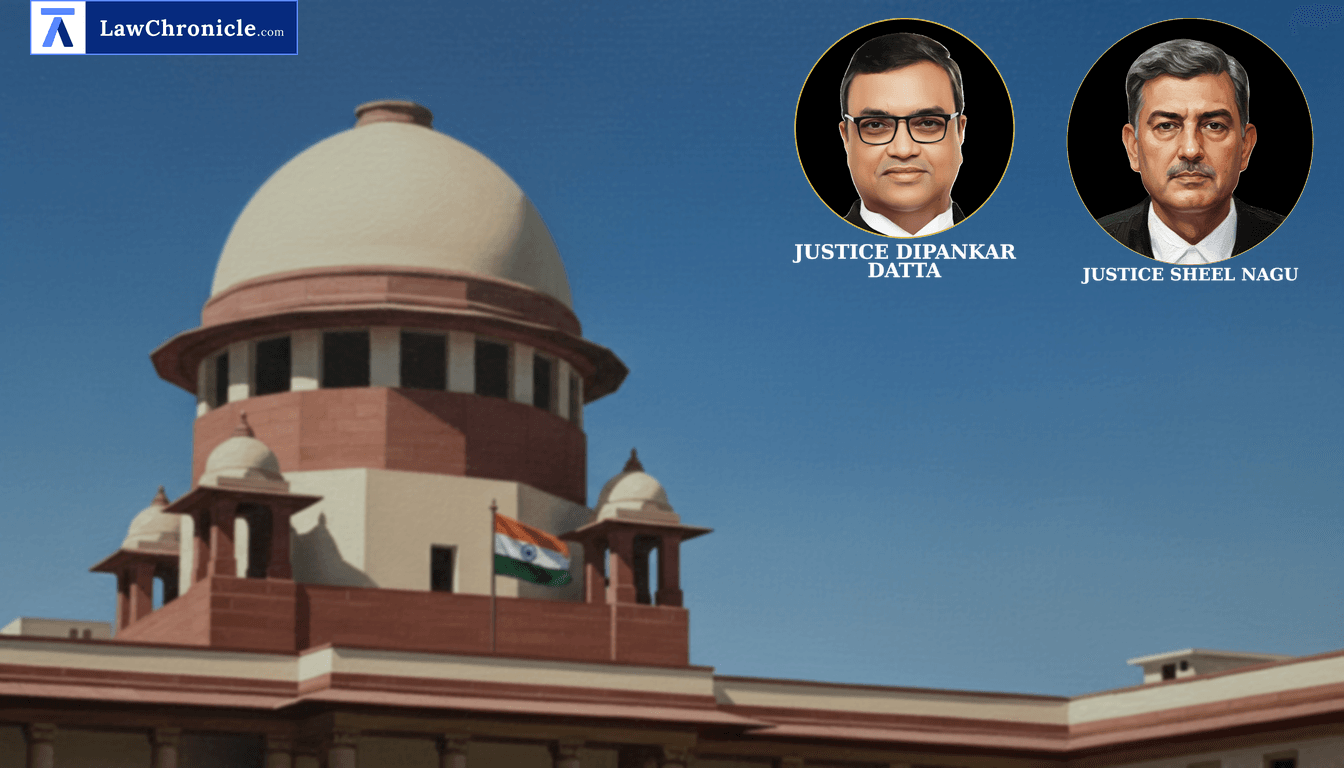
Setting aside a review order of the Calcutta High Court, the Supreme Court held that exercising review jurisdiction based on a mistaken assumption that a writ petition was dismissed solely on grounds of parity constitutes an error apparent on the face of the record.
A two-judge bench comprising Justice Dipankar Datta and Justice Sheel Nagu restored the High Court's original order dismissing the employer's writ petition, emphasizing that judicial findings accepting fresh appointment status and career progression benefits cannot be ignored in review proceedings.
Key Takeaways
· Limits of Review Jurisdiction
Review power cannot be exercised by erroneously treating an additional ground of parity as the sole basis of an earlier decision.
· Finality of Unchallenged Findings
Core findings regarding service status and benefit entitlement remain binding if left unchallenged in a review application.
· Time-Bound Compliance Mandated
Employers must implement tribunal orders granting service benefits within the stipulated timeframe.
High Court Erred In Review Exercise
The Supreme Court observed that the High Court's Division Bench proceeded on an entirely mistaken notion regarding its initial dismissal order. The bench noted that parity had merely been an additional ground and not the primary basis of the decision.
The Court has following directions:
"Respondents are directed to give effect to the order of the Tribunal, within three months from date. No costs."
The Court, in its reasoning, observed:
"Upon perusal of the impugned order, we are satisfied that the Division Bench committed serious error in exercising its review jurisdiction. It is revealed that the Division Bench proceeded on a mistaken notion that it had dismissed the writ petition of the respondents solely on the ground of parity."
Ratio
An order passed in exercise of review jurisdiction that recalls a prior judgment based on the erroneous premise that parity was the sole ground of dismissal, while ignoring independent factual and legal findings, suffers from an error apparent on the face of the record and is legally unsustainable.
Background
The appellant, M. Ganeshan, successfully moved the Central Administrative Tribunal, Calcutta, seeking benefits under the Assured Career Progression (ACP) scheme. The Tribunal held that his appointment to Group 'C' from Group 'D' was a case of direct recruitment, entitling him to ACP benefits. The respondents challenged this order before a Division Bench of the High Court at Calcutta (Circuit Bench at Port Blair), which dismissed the writ petition on March 16, 2010.
Subsequently, the respondents filed a review application claiming that the benefit extended to six other similarly circumstanced employees had been recalled by a review DPC. Accepting this argument, the Division Bench allowed the review application on July 19, 2013, on the premise that parity was the sole ground for its earlier order. The appellant approached the Supreme Court by special leave against this review order.
Allowing the appeal, the Supreme Court set aside the review order dated July 19, 2013, and restored the Division Bench's original dismissal order dated March 16, 2010, directing the respondents to implement the Tribunal's directions within three months.
Case Details:
Case No.: Civil Appeal No. 12201 OF 2016
Neutral Citation: 2026 INSC 823
Case Title: M. Ganeshan v. Union of India and Ors.
Source: 2026 CaseBase(SC) 846
Similar Articles
 Breaking News


