Sajjan Kumar Death: When Delhi High Court Convicted him in 1984 Anti-Sikh Riots Case
 Copy Link
 Share
Share Save
Save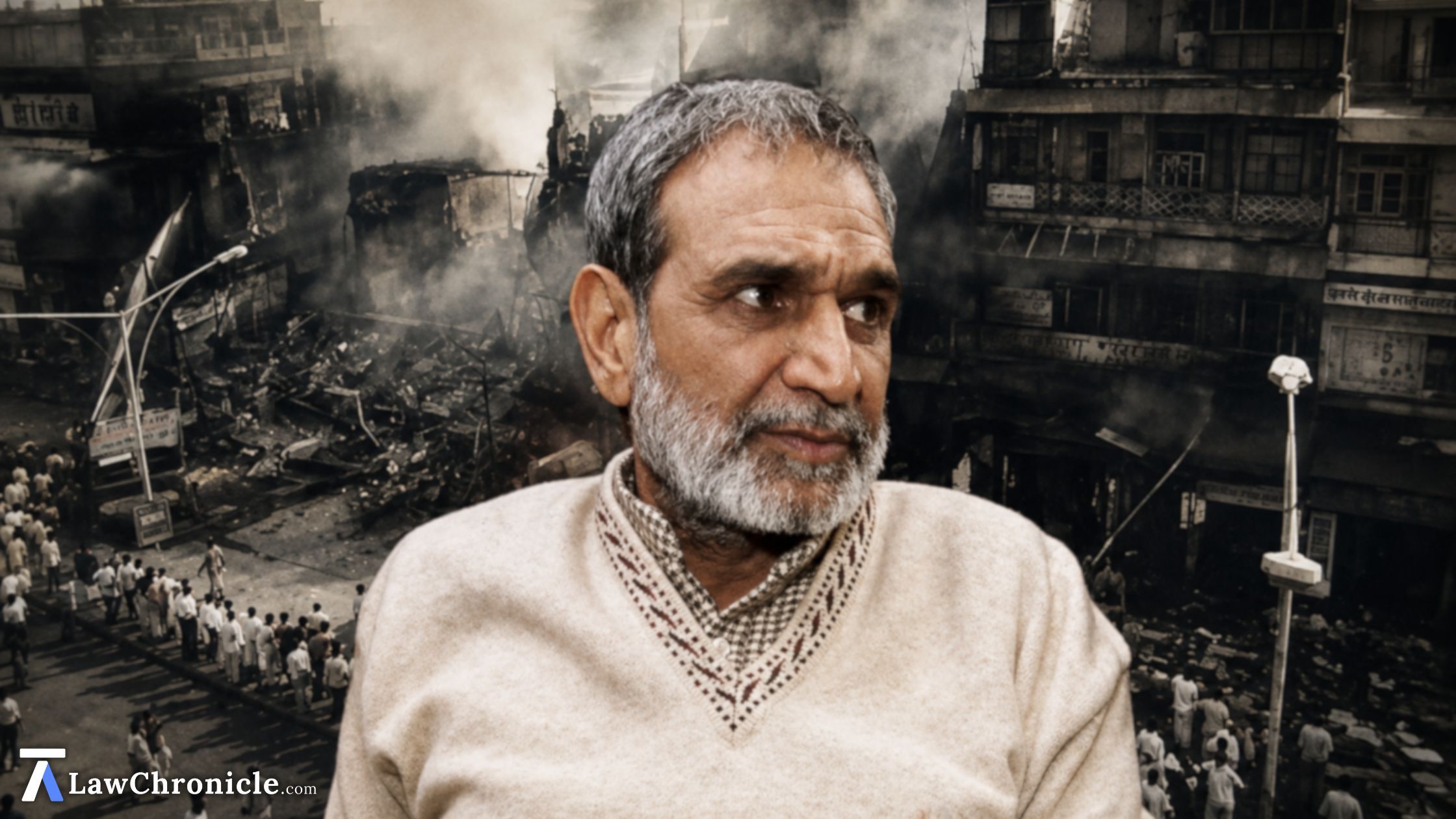
Former Congress MP Sajjan Kumar, one of the most prominent convicts in cases arising from the 1984 anti-Sikh riots in Delhi, died on 20th August 2026 at the age of 80 years. He was brought dead to Safdarjung Hospital in Delhi from Tihar Jail. As per reports, prolonged medical ailments resulted in his death while serving concurrent life sentences.
With Sajjan Kumar's death now making headlines nationally, this piece revisits the Delhi High Court's CBI vs Sajjan Kumar judgment that first sent him to prison for life. It seeks to explain with this judgment, the role played by Sajjan Kumar as a sitting Member of Parliament during the anti-Sikh riots in Delhi, and why the Delhi High Court reversed his acquittal by the trial court.
Background: Anti Sikh Riots 1984
The judgment arose out of criminal appeals before the Delhi High Court, heard by a bench of Justice S. Muralidhar and Justice Vinod Goel. The case concerned the killing of five Sikhs of one family in South-West Delhi, on 1st and 2nd November 1984, along with the burning of the Raj Nagar Gurudwara. The violence followed the assassination of Prime Minister Indira Gandhi on 31st October 1984.
Six persons, including Sajjan Kumar, were sent up for trial in 2010 following an investigation by the Central Bureau of Investigation (CBI). In 2013, the trial court convicted five of the accused of armed rioting and murder, or armed rioting, but acquitted Sajjan Kumar MP of all charges. Both the CBI and the convicted accused appealed to the Delhi High Court.
Sajjan Kumar's Role as per Judgment
The Delhi High Court's Sajjan Kumar judgment records specific findings, based on the testimony of eyewitnesses, about Sajjan Kumar's conduct as an MP during the riots:
- Leading the mob and addressing gatherings: A witness whose husband and son were killed, testified that on the morning of 2nd November 1984, near a police post at Manglapuri, she saw Sajjan Kumar addressing a public meeting and declaring that no Sikh should be left alive, and that any Hindu who had sheltered a Sikh should also be burnt and killed. She stated she could identify him as the leader of the mob because he had visited her locality a few days earlier over a sewerage issue.
- Visiting the scene and instructing the mob: Another Sikh witness testified that around 10-11 pm on 1st November 1984, an Ambassador car stopped near his house, from which Sajjan Kumar emerged, enquired of the mob whether "they have done the work," inspected the witness's house, and on being told that the Hindu neighbours were sheltering Sikhs, instructed the mob to burn the houses of Hindus giving shelter to Sikhs, before leaving in his car.
- Addressing another mob meeting: Another witness, who was daughter of one of the Sikhs killed, testified that on the morning of 1st November 1984, she saw Sajjan Kumar standing and addressing a mob at Manglapuri, declaring that not a single Sikh should survive and that anyone sheltering Sikhs should also be burnt.
Based on this evidence, the Court found that Sajjan Kumar had delivered "fiery/provocative speeches" to mobs gathered in the Raj Nagar area on 1st and 2nd November 1984, instigating and promoting enmity against the Sikh community, and had exhorted the mob not to spare Sikhs or the Hindus sheltering them.
Why the Trial Court's Acquittal Was Reversed
The trial court had acquitted Sajjan Kumar mainly on the ground that the three eyewitnesses did not name him at the earliest opportunity. Some of the witnesses did not name him at the earliest but only before the Justice Nanavati Commission in 2000.
The High Court disagreed with the Trial Court’s reasoning on several grounds:
- It found that the omission of Sajjan Kumar's name in the earlier affidavit before the Justice Ranganath Misra Commission was explainable by "crude, erroneous and perhaps motivated translation" of the witness's original Punjabi statement into English, and that the witness had consistently maintained she had in fact named him.
- The Court held it was inconsistent for the trial court to treat the same witnesses as reliable regarding the roles of the other five accused, while disbelieving their testimony only as it concerned Sajjan Kumar.
- The judgment traced what it described as decades of failure by the Delhi Police and subsequent "Riot Cell" investigations to properly probe complaints naming Sajjan Kumar, including cases wherein a charge sheet naming him was reportedly prepared but never filed in court. The Delhi High Court held that Sajjan Kumar could not benefit from this failure of investigation, and that it was only after the CBI took over the probe that witnesses came forward.
- The Court found there was sufficient evidence to establish that Sajjan Kumar had entered into a criminal conspiracy, along with the other accused, for offences including rioting, murder, promoting enmity between communities, and defiling a place of worship.
Sajjan Kumar’s Conviction and Sentence
The Delhi High Court set aside Sajjan Kumar's acquittal and convicted him of:
- Criminal conspiracy punishable under Section 120B read with Sections 302, 436, 153A(1)(a) and (b), and 295 of the Indian Penal Code (IPC);
- Abetting the commission of these offences, punishable under Section 109 IPC read with the same provisions; and
- Delivering provocative speeches instigating communal violence, punishable under Section 153A(1)(a) and (b) IPC.
He was sentenced to imprisonment for life, "the remainder of his natural life”, for the offence under Section 302 IPC (murder) read with the conspiracy charge, along with rigorous imprisonment terms for the other offences, all directed to run concurrently. The judgment also affirmed and enhanced the convictions of the five other accused persons for related offences, including criminal conspiracy.
Post Sajjan Kumar 2018 Verdict
Sajjan Kumar surrendered to serve his sentence following the 2018 judgment and remained in custody thereafter. He was subsequently convicted a second time, by a trial court in February 2025, and sentenced to another life term in a separate 1984 anti-Sikh riots case concerning the killing of two other men. In January 2026, he was acquitted by a Delhi court in a third case linked to violence in the Janakpuri and Vikaspuri areas. As one of the most senior political figures among the anti-Sikh riots convicts, his case had remained closely watched through multiple rounds of litigation, including bail applications on health grounds before the Supreme Court.
Sajjan Kumar's death in custody on 20 August 2026 brings to a close his personal legal journey, though it does not affect the findings already recorded against him in the Delhi High Court's 2018 judgment.
 Breaking News