Sale Between Two Licensed Manufacturers Does Not Constitute Offence Under Drugs Act, Supreme Court Rules
 Copy Link
 Share
Share Save
Save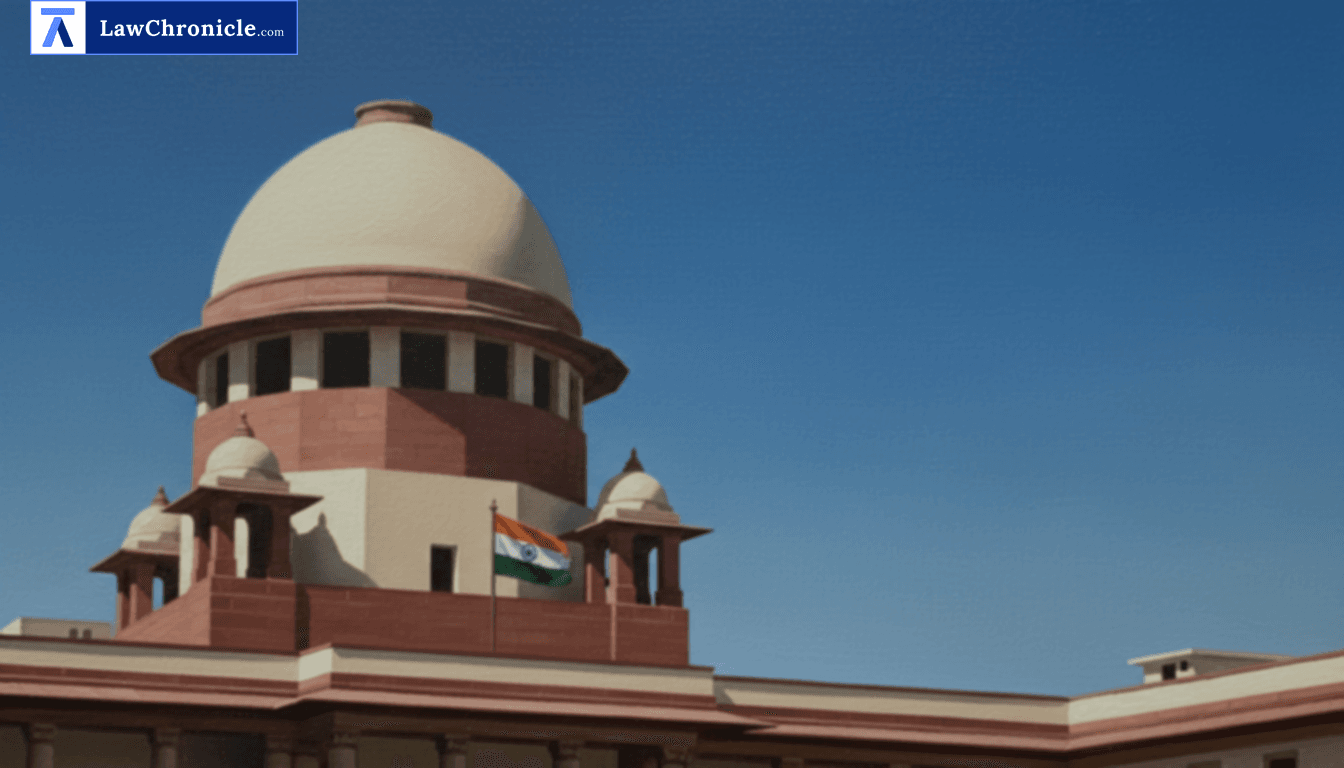
A bench of Justices B.R. Gavai and Augustine George Masih heard an appeal by manufacturers challenging a High Court order which had dismissed their Section 482 CrPC petition seeking quashing of criminal proceedings arising from allegations of unlawful sale of Nitrous Oxide IP. The appeal arose from a complaint by the Drugs Inspector, Kadapa, and the question before the Court was whether sale by a holder of a Form 25 manufacturing licence to another Form 25 holder, who repacked and sold in smaller cylinders, amounted to an offence under Section 18(a)(vi) read with Section 27(d) of the Drugs and Cosmetics Act, 1940.
The Court allowed the appeal, quashed the High Court judgment dated 12 January 2024 and set aside the Trial Court's summoning order dated 20 January 2018 and the proceedings in C.C. No. 71 of 2018. The Court held that the statutory definition of "manufacture" was inclusive and wide enough to cover processes such as breaking up, repacking and relabelling undertaken with a view to sale or distribution, and that where both parties held licences under Form 25 the sale did not, on the face of the complaint, constitute an offence under Section 18(a)(vi) and Section 27(d). The Court further found that the Magistrate's order issuing process did not record reasons and thus was a non‑speaking order. The Court, in its reasoning, observed: “For appreciating the rival contention, it will be apposite to explain the nature of processes that are undertaken by appellant No.1 and accused No.3. Appellant No.1 purchases Nitrous Oxide I.P. in bulk and after storing them in bulk containers sells them for further sale. Accused No.3 purchases the large containers from appellant No.1, opens the seal and stores them in smaller containers and reseals them for further distribution and sale. Since both accused No.3 and appellant No.1 are holding the licence for manufacture, they will be entitled to carry out any process or part of process which includes altering or breaking up with a view to its further sale or distribution. . . . Only in the absence of any licence with accused No.3 which permitted it to further sell and distribute the product received from appellant No.1, sale of the product by appellant No.1 to it would have contravened the provisions of Section 18(a)(vi) and constituted an offence punishable under Section 27(d) of the said Act.” The Court also reiterated that “the order of the Magistrate summoning the accused must reflect that he has applied his mind to the facts of the case and the law applicable thereto.”
Background The dispute arose from a complaint dated 22 December 2017 by the Drugs Inspector, Kadapa, after inspection of RIMS General Hospital purchase records revealed 72 bills for Nitrous Oxide I.P. and no physical stock at the hospital. The Inspector traced supply through a chain: the hospital purchased from M/s. Varasi Oxygen (Accused No.1), which in turn purchased from M/s. R.S. Gas Products (Accused No.3), which said it purchased from INOX Air Products (Appellant No.1, Accused No.5). The complaint alleged that Accused Nos.5 and 6 sold Nitrous Oxide I.P. to an unlicensed firm in contravention of Section 18(a)(vi) read with conditions in Form 26 and Rule 65(5)(1)(b), attracting punishment under Section 27(d).
Appellants contended that Form 25 manufacturing licences authorised both manufacture and sale by way of wholesale dealing and that the term “manufacture” under Section 3(f) included breaking up and repacking. They argued that accused No.3 held a Form 25 licence and therefore the transaction was between two licensed manufacturers and not a proscribed sale to an unlicensed dealer. The State relied on the submission that Form 25 was “subject to” Form 20B (licence to sell by wholesale) and that absence of Form 20B for the intermediate purchaser rendered the transaction illegal.
The High Court dismissed the appellants’ criminal petition, but the Supreme Court found this approach unsustainable. The Court analysed statutory definitions and licence conditions (Forms 20B and 25 and Rule 65), reasoned that Form 25 authorised repacking and subsequent sale where the recipient also held a Form 25 licence, and noted that the State had not pointed to any specific breach of Form 20B conditions by the appellants. Separately, the Court relied on settled precedents (including Pepsi Foods and Lalankumar Singh) to hold that the Magistrate’s non‑speaking order issuing summons showed lack of application of mind and justified quashing the proceedings. The appeal was allowed and pending applications were disposed of.
Case Details: Case No.: 2025 INSC 128; Criminal Appeal No. __ of 2025 (Arising out of SLP (Crl.) No. 2345 of 2024) Case Title: INOX Air Products Limited (Now known as INOX Air Products Private Limited) and Another v. The State of Andhra Pradesh Appearances: For the Petitioner(s): Dr. A.M. Singhvi, Senior Counsel; Shri S. Niranjan Reddy, Senior Counsel For the Respondent(s): Smt. Prerna Singh, Counsel
 Breaking News