Sambhal Violence | Police Confession cannot be sole basis for Preventive Detention under NSA: SC
 Copy Link
 Share
 Save
Quashing the detention under National Security Act, 1980 of the accused in Sambhal Violence case, the Supreme Court has ruled that a confessional statement made to a police officer under threat or coercion cannot form the sole basis for an order of preventive detention. The Bench affirmed that relying on inherently suspect police confessions violates the constitutional right against self-incrimination.
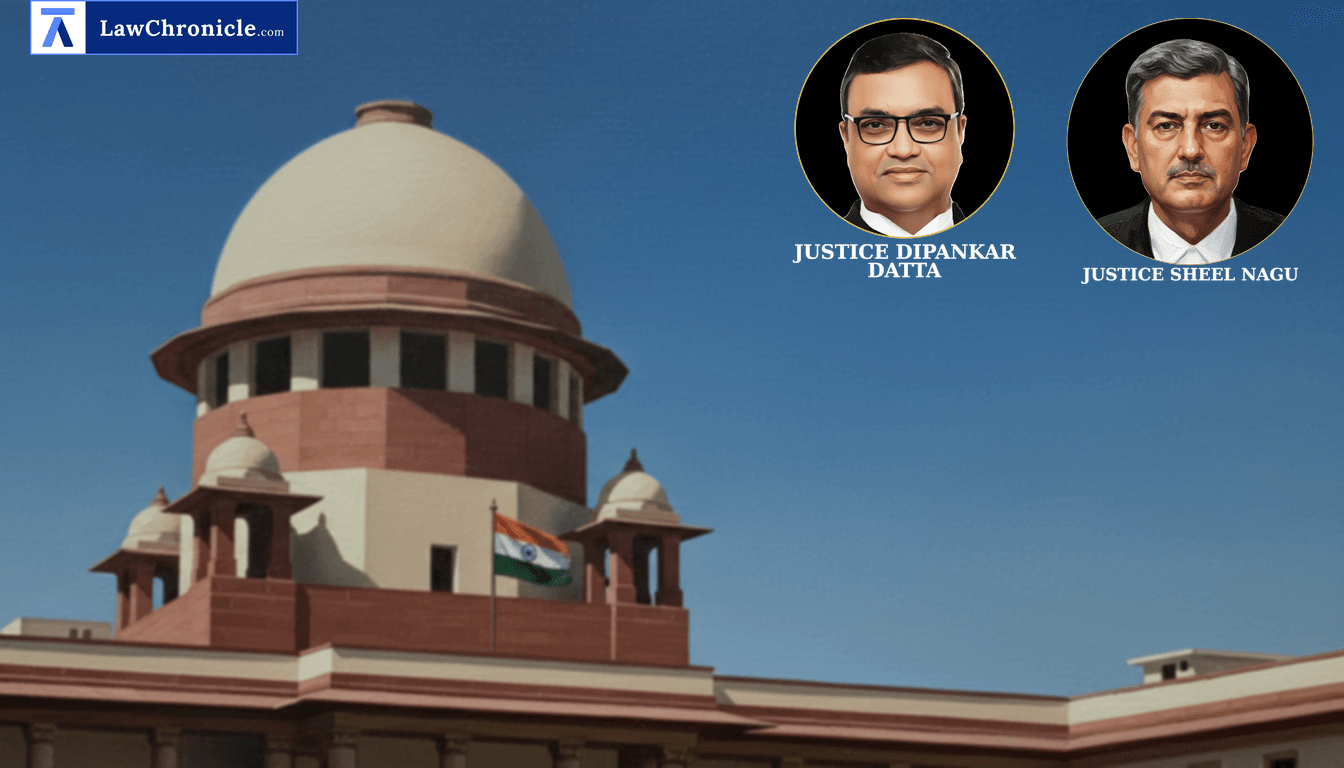
A Division Bench comprising Justice Dipankar Datta and Justice Sheel Nagu set aside the Allahabad High Court judgment that upheld the preventive detention of an accused involved in the Sambhal mosque survey violence. The Bench noted that the executive machinery cannot bypass judicial orders granting bail by resorting to extraordinary preventive detention measures without independent and credible material.
Key Takeaways
- Police Confession Invalid as Sole Basis: Extra-judicial confessions made to police officers cannot solely justify subjective satisfaction for preventive detention.
- Bail Subversion Disallowed: Preventive detention cannot be invoked merely to frustrate court orders granting bail in criminal proceedings.
- Higher Scrutiny for Personal Liberty: Extraordinary powers under the National Security Act, 1980 must strictly adhere to procedural safeguards enshrined under Article 22(5) of the Constitution of India, 1950.
- Costs Imposed on State: The Supreme Court ordered the State to pay Rs. 10 lakh in costs to the detenu for turning the judicial process into punishment.
Court Observations and Directions
The Supreme Court thoroughly scrutinised the detaining authority's reliance on unverified CCTV recordings, deleted mobile phone data, and uncorroborated police confessions. Referring to the constitutional protection against self-incrimination under Section 23 of the Bharatiya Sakshya Adhiniyam, 2023 and Article 20(3) of the Constitution of India, 1950, the Apex Court ruled that uncorroborated statements taken in police custody lack probative value. The Bench explained that "...a confessional statement made before a police officer cannot, by itself, and in the absence of any independent material lending support thereto, constitute a basis for forming the subjective satisfaction necessary to sustain an order of preventive detention. To permit such a course would be to allow a detention order to rest upon a foundation which the law itself regards with suspicion and excludes from evidentiary consideration."
The Court accordingly quashed the preventive detention of Sambhal Violence accused and also imposed a cost of Rs 10 lakhs upon the Uttar Pradesh government.
Ratio
A confessional statement made before a police officer cannot, by itself and without independent corroborative material, form the basis of the subjective satisfaction required to sustain a preventive detention order. Where preventive detention is invoked against an individual already granted bail, the detaining authority must establish an objective and live link between the material relied upon and the necessity of preventing future prejudicial acts.
Background
The case stems from an incident of violence on November 24, 2024, during a mosque survey in Sambhal, Uttar Pradesh. Although the appellant was not named in the initial FIR, he was arrested 54 days later and implicated in multiple cases. While in judicial custody, his confessional statement was recorded, leading to the alleged recovery of a .32 bore pistol. Although he obtained bail in various cases, the District Magistrate, Sambhal, issued a preventive detention order on October 13, 2025, under Section 3(2) of the National Security Act, 1980.
The detenu challenged the detention and confirmation orders before the Allahabad High Court via a habeas corpus petition. The High Court dismissed the petition, observing that preventive detention relies on the subjective satisfaction of the detaining authority and administrative action is subjected to limited judicial review. Aggrieved, the appellant approached the Supreme Court.
During arguments, the counsel for the appellant relied on Ameena Begum v. State of Telangana ( "(2023) 9 SCC 587": 2023 CaseBase(SC) 606), Annu @ Aniket v. Union of India, Rekha v. State of Tamil Nadu ( "(2011) 5 SCC 244": 2011 CaseBase(SC) 259), Pebam Ningol Mikoi Devi v. State of Manipur ( "(2010) 9 SCC 618": 2010 CaseBase(SC) 178), and Suman v. State of Tamil Nadu to argue that multiple cases and coercive confessions do not satisfy the criteria for disturbing public order. Conversely, the State relied on Arun Ghosh v. State of West Bengal, Haradhan Saha v. State of West Bengal, Kamarunnisa v. Union of India, and Aruna Kumari v. Govt. of A.P to defend the subjective satisfaction of the authority. The Supreme Court also referenced precedents such as K.T.M.T.M. Abdul Kayoom v. CIT, Regional Manager, Food Corporation of India v. Pawan Kumar Dubey, Goodyear India Limited v. State of Haryana ( "(1990) 2 SCC 71": 1989 CaseBase(SC) 236), Kartar Singh v. State of Punjab ( "(1994) 3 SCC 569": 1994 CaseBase(SC) 672), and Vijay Narain Singh v. State of Bihar ( "(1984) 3 SCC 14": 1984 CaseBase(SC) 238), distinguishing obiter observations from binding ratio decidendi. The Court overruled the Madras High Court decision in Suman v. State of Tamil Nadu to the extent that it permitted police confessions as valid material for preventive detention.
Case Details:
Case No.: Criminal Appeal No. 4310 of 2026
Neutral Citation: 2026 INSC 1067
Case Title: Mulla Afroz v. Union of India and Ors.
Appearances:
For the Petitioner(s): Mr. Divyesh Pratap Singh, Advocate
For the Respondent(s): Mr. Nataraj, Additional Solicitor General
Source: 2026 CaseBase(SC) 8121
 Breaking News