SC: Administrative Authorities Cannot Reopen Closed Externment Proceedings Without Statutory Authority
 Copy Link
 Share
Share Save
Save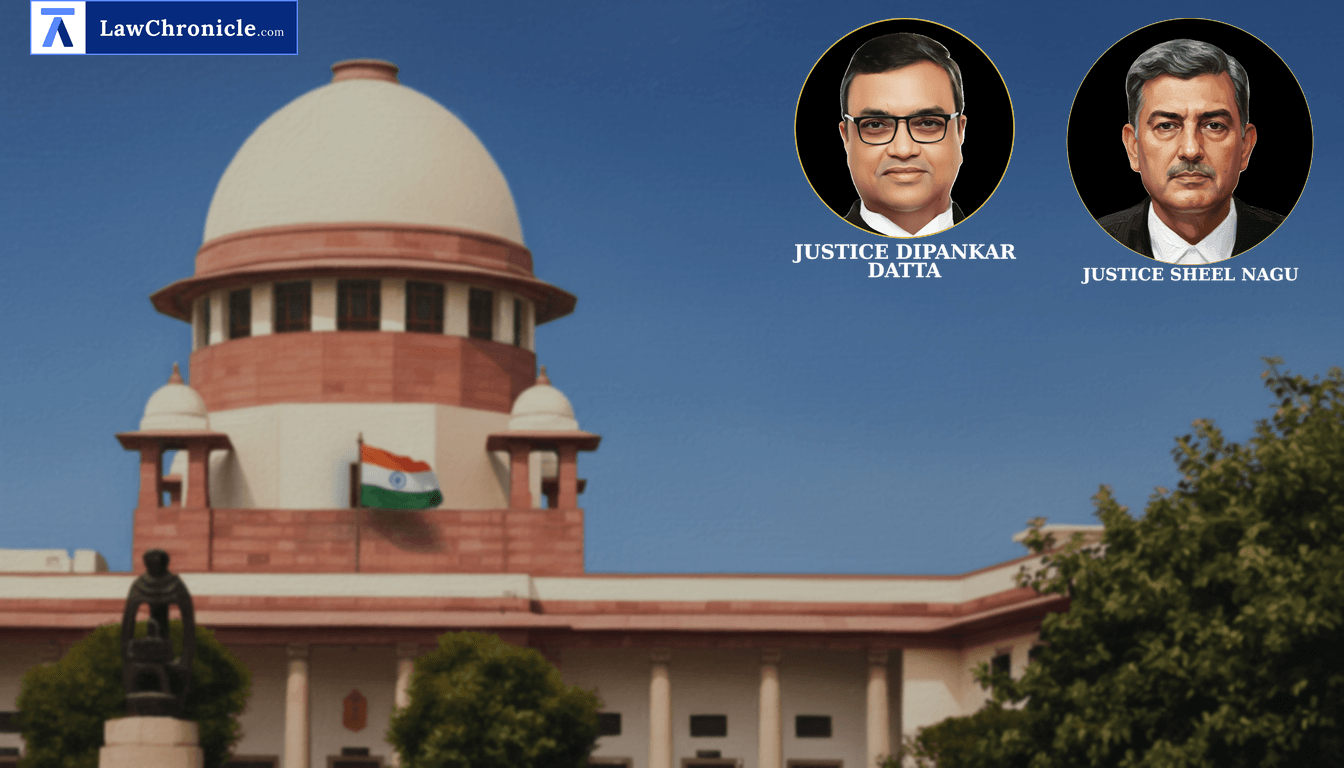
In a decisive blow against executive overreach, the Supreme Court has ruled that administrative authorities cannot arbitrarily review or reopen closed externment proceedings without explicit statutory authorization and mandatory hearing notices.
A bench of Justice Dipankar Datta and Justice Sheel Nagu set aside an order of the High Court of Chhattisgarh which had refused to entertain a writ petition under Constitution of India, 1950 against an ex-parte externment order, wrongly relegating the petitioner to an alternative statutory appeal.
Key Takeaways
No Inherent Review Power: Administrative authorities like District Magistrates possess no inherent jurisdiction to review, recall, or reopen closed externment proceedings unless expressly empowered by statute.
Mandatory Pre-Order Hearing: Serving prior notice and offering a reasonable opportunity of hearing under Section 8 of the Chhattisgarh Rajya Suraksha Adhiniyam, 1990 is a non-negotiable condition precedent before passing any externment order.
High Court Writ Jurisdiction: High Courts cannot maintain a hands-off approach under Constitution of India, 1950 when an administrative order suffers from an abject lack of jurisdiction and blatant violation of natural justice principles.
Strict Proof of Offence Categories: Externment orders grounded on preventive provisions require explicit nexus with specified offences involving force or violence, rather than generic religious or municipal law allegations.
Court Observations and Directions
The Supreme Court held that the District Magistrate lacked statutory jurisdiction to reopen a closed externment case based on supervening events without initiating a fresh procedural inquiry. The Court emphasized that an order restricting fundamental freedoms under Constitution of India, 1950 cannot be passed as a matter of routine or on mere ipse dixit without objective material.
The Court, in its reasoning, observed: "The duty to hear manacles his jurisdictional exercise and any act is, in its inception, void except when performed in accordance with the conditions laid down in regard to hearing... Where hearing is obligated by a statute which affects the fundamental right of a citizen, the duty to give the hearing sounds in constitutional requirement and failure to comply with such a duty is fatal."
The Court issued the following directions:
"Therefore, in our considered opinion, the impugned order of the High Court as well as the externment order is liable to be quashed for the foregoing reasons. It is ordered accordingly. Appellant is free to enter the districts from where his externment was ordered."
Ratio
An administrative authority charged with statutory duties affecting fundamental rights under Constitution of India, 1950 has no inherent power to review or reopen closed proceedings without statutory backing. Compliance with mandatory statutory procedural safeguards, including issuance of notice and reasonable opportunity of hearing, is an indispensable condition precedent, the violation of which renders any resulting order void ab initio for lack of jurisdiction.
Background
The case arose when the District Magistrate, Raigarh closed an externment proceeding against the appellant in October 2025 with a warning, noting his acquittal in previous criminal cases. However, following subsequent registration of fresh FIRs including allegations under the Chhattisgarh Municipal Corporation Act, 1956, the Bharatiya Nyaya Sanhita, 2023, and the Scheduled Castes and Scheduled Tribes (Prevention of Atrocities) Act, 1989 the District Magistrate recalled the closure order and passed an ex-parte externment order for one year without issuing fresh notice or affording a hearing to the appellant, who was then in judicial custody.
The appellant challenged this order before the Chhattisgarh High Court, which dismissed the writ petition on the ground that an alternative statutory remedy of appeal was available under Section 9 of the Chhattisgarh Rajya Suraksha Adhiniyam, 1990. Relying on settled precedents including Nawabkhan Abbaskhan v. State of Gujarat ( "(1974) 2 SCC 121": 1974 CaseBase(SC) 307), Godrej Sarah Lee Ltd. v. The Excise and Taxation Officer-cum-Assessing Authority, and Deepak v. State of Maharashtra, the Supreme Court allowed the appeal, holding that the High Court failed to exercise its jurisdiction despite clear violations of natural justice and jurisdictional defects.
Case Details:
Case No.: Criminal Appeal No. 4083 of 2026
Neutral Citation: 2026 INSC 926
Case Title: Vijay Kumar Rajpoot Alias Vijju v. State of Chhattisgarh & Ors.
Appearances:
For the Petitioner(s): Mr. Pallav Mongia, Advocate
For the Respondent(s): Ms. Ankita Sharma, Advocate
Source: 2026 CaseBase(SC) 831
 Breaking News