


SC Affirms Landlord’s Legal Heirs’ Right To Amend Plaint On Bona Fide Need
 Copy Link
 Share
 Save
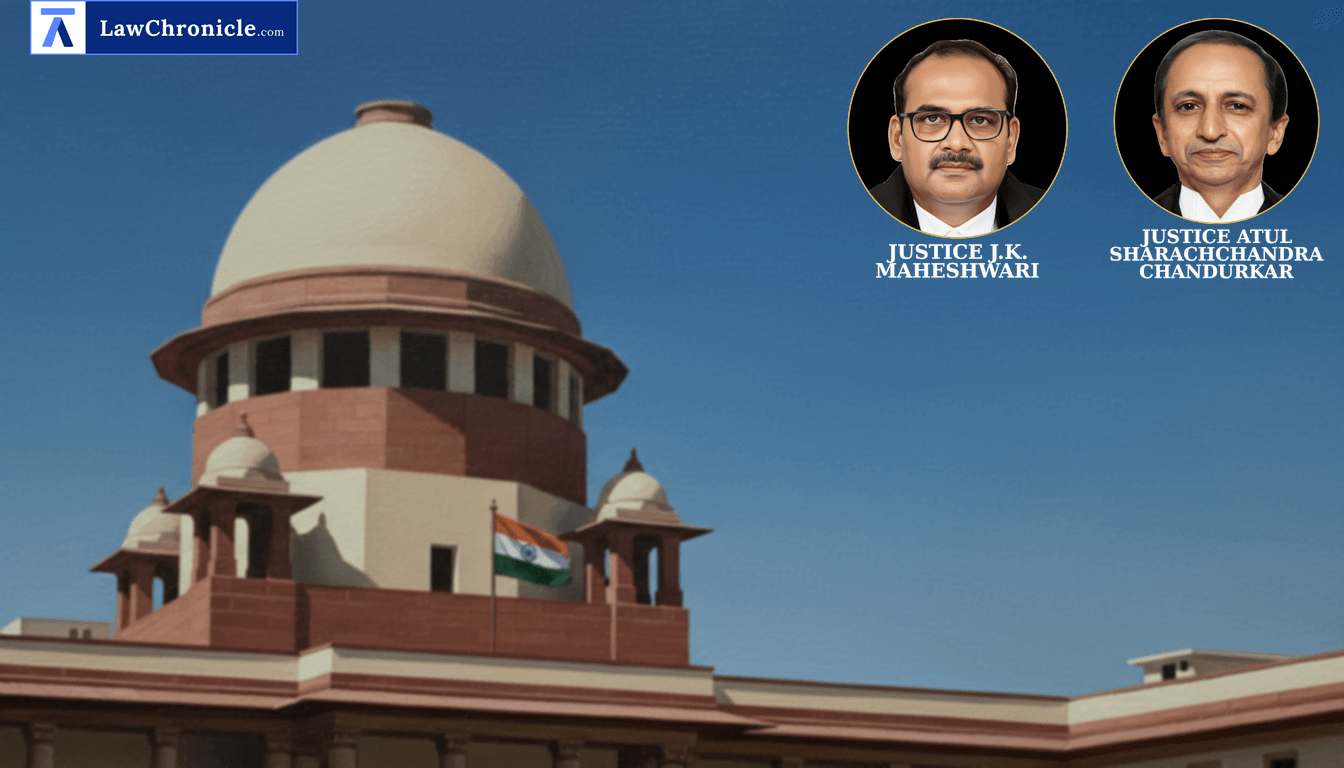
The Supreme Court of India affirmed the Appellate Bench’s decision, holding that when a landlord who instituted an eviction suit on the ground of bona fide need for himself and his family dies during the pendency of the proceedings, his legal heirs are entitled to amend the pleadings to include additional grounds of bona fide need. It also granted liberty to the tenant to amend the written statement.
A bench of Justice J K Maheshwari and Justice Atul S. Chandurkar heard an appeal that questioned whether a court could examine the merits of a dispute while entertaining an application for leave to amend a plaint and whether the legal heirs of a deceased landlord could be denied permission to amend on the ground that the bonafide need did not survive the landlord's death.
The Court allowed the appeal, held that the High Court erred in interfering with the discretion exercised by the Appellate Bench under Article 227 of the Constitution of India, 1950, and restored the order of the Appellate Bench permitting amendment of the plaint and remanding the matter to the Trial Court. The Court emphasised restraint in supervisory jurisdiction and noted that the Appellate Bench had acted within its powers under Order XLI Rule 25 of the Code of Civil Procedure, 1908.
The Court, in its reasoning, observed: “According to the High Court, the Trial Court had neither omitted to frame such issue nor had failed to try the same when it decided the suit. Hence, exercise of power by the Appellate Bench under provisions of Order XLI Rule 25 of the Code of Civil Procedure, 1908 was uncalled for. While it is true that the Trial Court did not omit to frame or try the issue with regard to bonafide requirement of the landlord, the Appellate Court could always exercise power under Order XLI Rule 25 of the Code and frame an issue so as to “determine any question of fact which appears to the Appellate Court essential to the right decision of the suit upon the merits.” Such power can be exercised by the Appellate Court if it appears to it essential to the right decision of the suit on merits. It has to be exercised in the facts and circumstances of the case when found necessary by the Appellate Court for arriving at a right decision in the suit.”
Background
The dispute arose from a suit for eviction filed in 2005 by the original landlord seeking possession of a ground-floor shop on the grounds of arrears, unauthorised alterations, subletting and, centrally, bonafide need for occupation by the landlord and his family. The Trial Court framed an issue on bonafide requirement and, after evidence, held that the landlord failed to prove the need and dismissed the suit. The landlord appealed and died during the pendency of the appeal. His legal heirs were impleaded and they sought leave to amend the plaint to plead the heirs' own bonafide requirement: the landlord's wife, an advocate, intended to shift practice to the more prominent premises and the son intended to begin medical practice. The Appellate Bench allowed amendment subject to costs, directed that the issue of bonafide requirement be referred to the Trial Court under Order XLI Rule 25 of the Code of Civil Procedure, 1908, and granted liberty to the respondents to amend their written statement and adduce evidence.
The tenants challenged that order before the Bombay High Court under Article 227 of the Constitution of India, 1950. The High Court held that the original landlord had not deposed about his family's need and that allowing the amendment would introduce a new case contrary to the earlier pleadings and evidence; it set aside the Appellate Bench order and granted liberty to the heirs to file a fresh suit. On appeal to this Court, the Supreme Court found that the High Court had gone into merits and misread the pleadings, and that it had thereby transgressed the limits of supervisory jurisdiction. The Court relied on Raj Kumar Bhatia Vs. Subhash Chander Bhatia ( "2017 INSC 1240": 2017 CaseBase(SC) 833) to underline that the High Court could not reassess evidence while exercising Article 227 jurisdiction, and applied Pasupuleti Venkateswarlu Vs. The Motor & General Traders ( "1975 INSC 75": 1975 CaseBase(SC) 330) to recognise that courts may, where appropriate and fair, take cognisance of subsequent events that materially affect remedies. The Court also noted the discussion in Sadhna Lodh v National Insurance Company on the limits of supervisory interference.
The Supreme Court set aside the High Court judgment dated 07.08.2024, restored the Appellate Bench order dated 05.04.2024, and directed the parties to appear before the Trial Court on 08.06.2026 for further proceedings. The Court clarified in its order that "It is clarified that this Court has not examined the merits of the claim of either party and the proceedings be decided on their own merits in accordance with law." The Court left the parties to bear their own costs.
Case Details:
Case No.: SLP (C) NO.8991 OF 2025
NeutralCitation: 2026 INSC 416
Case Title: VINAY RAGHUNATH DESHMUKH v NATWARLAL SHAMJI GADA AND ANOTHER
Appearances: (List advocates if available, for both sides using the format)
For the Petitioner(s): Mr. Aniruddha Joshi, learned Senior Advocate
For the Respondent(s): Mr. Ravindra Kumar Raizada, learned Senior Advocate
Source: 2026 CaseBase(SC) 364
Similar Articles

 Breaking News


