


SC: Cheque Dishonour Case Not Dismissed at Pre-Trial; Complaint Restored
 Copy Link
 Share
 Save
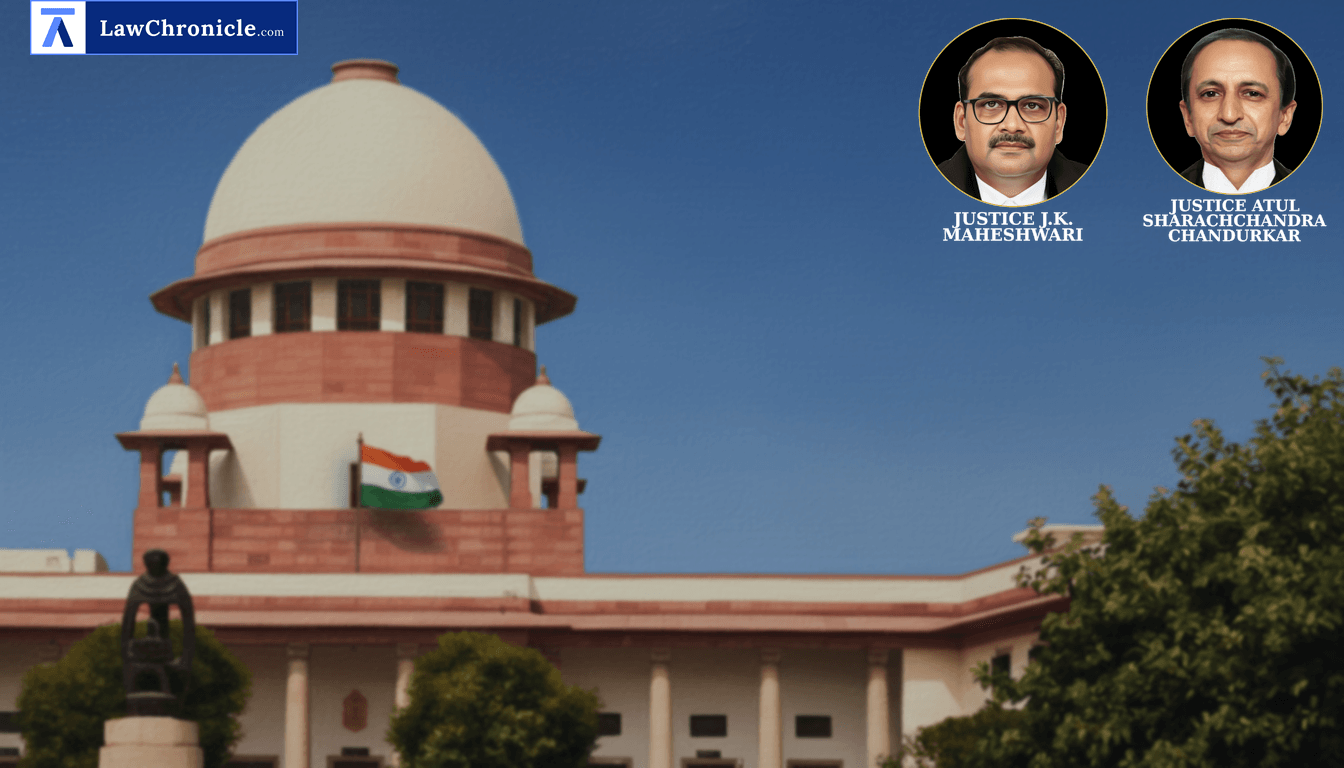
A bench of Justice J.K. Maheshwari and Justice Atul S. Chandurkar heard an appeal against orders of the Sessions Court and the Bombay High Court that had set aside a magistrate's order issuing process under Section 138 of the Negotiable Instruments Act. The question before the Supreme Court was whether the revisional court and the High Court were justified in dismissing the complaint at the pre‑trial stage on the ground that the dishonoured cheque was not issued for any legally enforceable debt.
The Supreme Court allowed the criminal appeal, set aside the orders of the Sessions Judge and the High Court, and restored the complaint for adjudication on merits. The Court held that when the basic ingredients of Section [138](Madras HC: Bail Granted, Charge Sheet Beyond 180 Days and Filed in Wrong Forum) were prima facie established issuance of the cheque, its presentation and dishonour, service of the statutory notice and filing within time the statutory presumption under Section 139 was triggered and could not be displaced summarily at the stage of issuance of process.
The Court, in its reasoning, observed: “It is to be borne in mind that at the stage of issuance of process by the learned Metropolitan Magistrate, what is prima facie required to be seen is the issuance of cheque by the drawer in favour of the complainant, its dishonour on presentation by the payee, issuance of statutory notice under Section 138 of the N.I. Act and filing of the complaint within the prescribed statutory period. If the drawer does not dispute the issuance of such a cheque nor does he deny his signature on the dishonoured cheque, the statutory presumption as contemplated under Section 139 of the N.I. Act comes into play. As a result, the burden would shift to the drawer of the cheque to prove that the cheque was not issued for any legally enforceable debt or liability. This exercise has to be undertaken during the trial either by relying upon the material brought on record by the complainant or by the drawer leading evidence in rebuttal. At the stage of issuance of the process, the statutory presumption under Section 139 of the N.I. Act cannot be dislodged in a summary manner merely by contending that the cheque issued was not for any legally enforceable debt or liability.” The Court further noted that disputed questions regarding the existence of liability were questions of fact to be decided at trial and that dismissal at the pre‑trial stage would amount to ignoring the statutory presumption.
Background
The appellant, Renuka, had alleged disputes with her husband over the alleged fraudulent transfer of shares. Pursuant to negotiations, a settlement draft dated 12 January 2022 was drawn; one term provided that the husband would pay Rs. 50 crores on execution of a Declaration‑cum‑Indemnity and gift certain properties. The husband's friend (the second respondent) agreed to act as mediator and issued Cheque No. 080261 for Rs. 50 crores in favour of the appellant on 12 January 2022. The appellant signed the Declaration‑cum‑Indemnity on 13 January 2022. After she learned of the alleged sale of shares contrary to the settlement, she presented the cheque; it was dishonoured on 6 April 2022 with the remark “payment stopped by drawer”. She served a statutory notice on 20 April 2022, received a denial of liability on 4 May 2022, and filed a complaint under Section 138 on 16 June 2022. The Metropolitan Magistrate issued a process on 17 June 2022.
The Sessions Court, exercising revisional jurisdiction, set aside the issuance of process on 30 December 2022, concluding that there was no legally enforceable debt because the second respondent did not sign the settlement document. The appellant approached the Bombay High Court under Article 227; the Single Judge dismissed the writ petition. The Supreme Court examined the record and precedents, including Rangappa v. Sri Mohan 2010 CaseBase(SC) 1271 and Rajesh Jain v. Ajay Singh 2023 CaseBase(SC) 1056 (both recognising the evidential presumption under Section 139 and its rebuttable character) and observed that the Second respondent had not placed material before the revisional court to rebut the statutory presumption at the pre‑trial stage. The Court said that the decision in Sunil Todi was not required to be dealt with in detail and reiterated that questions of fact on the enforceability of liability must be resolved at trial. The Court restored the complaint CC1831/SC/2022 for adjudication on merits and clarified that “the complaint shall be decided on its own merits and in accordance with law after giving due opportunity to all parties concerned.” It also cautioned that “Any observations made in this judgment shall not be construed as an expression of opinion on the merits of the said case.”
Case Details:
Case No.: CRIMINAL APPEAL NO. OF 2026 (@ SLP (CRL.) NO.7829 OF 2023)
NeutralCitation: 2026 INSC 327
Case Title: RENUKA v. THE STATE OF MAHARASHTRA AND ANOTHER
Appearances:
For the Petitioner(s): Mr. Mukul Rohatgi, Senior Advocate
For the Respondent(s): Dr. A. M. Singhvi, Senior Advocate
Source: 2026 CaseBase(SC) 289
Similar Articles


 Breaking News


