SC Dissolves Marriage on Irretrievable Breakdown Grounds via Article 142
 Copy Link
 Share
Share Save
Save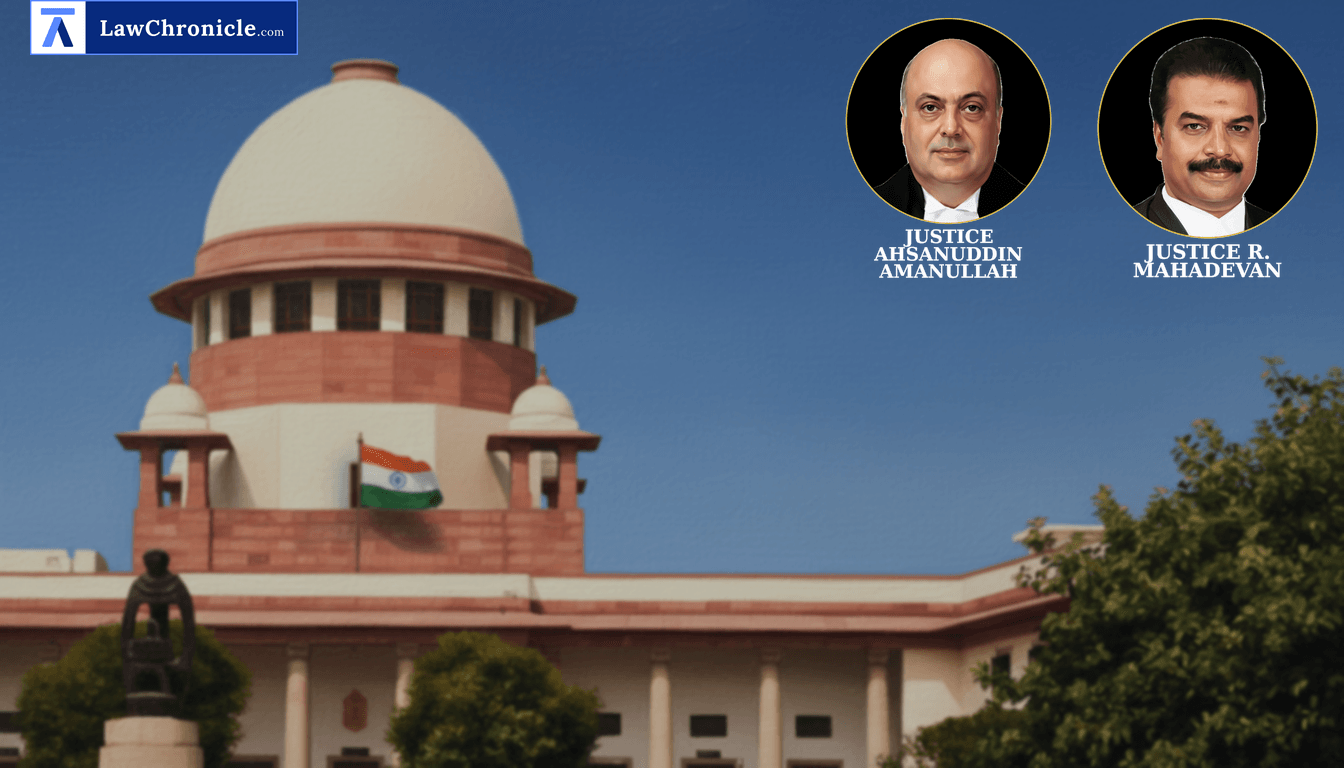
The Supreme Court dissolved a marriage that had been 'dead for all practical purposes' for over two decades, emphasizing that judicial proceedings cannot force an unwilling couple to remain in a relationship.
A bench of Justice Ahsanuddin Amanullah and Justice R. Mahadevan exercised their extraordinary jurisdiction to grant relief to an appellant-husband who had been living separately from his wife since 2003. The Court observed that in situations where the parties' stances are 'hard and totally inflexible,' an objective judicial decision becomes necessary for them to move forward with their lives.
The Irretrievable Breakdown of Marriage
While hearing the appeals against a High Court order that had upheld the dismissal of the husband’s divorce petition by the Family Court, the bench noted the persistent nature of the conflict. The appellant alleged years of harassment and scandalous allegations that led to the loss of his career abroad. Conversely, the respondent-wife opposed the divorce primarily citing societal pressure, yet failed to provide a satisfactory explanation for how the relationship could be restored.
The Court, in its reasoning, observed: "However, the Court has to look at the matter objectively, more so, for the reason that both the parties have a life ahead which it is for them to choose how they want to spend and forcing a relationship, that too of husband and wife, cannot be done by judicial proceedings. The Court thus has taken a very realistic view in the matter and going by what has been stated above, has come to the conclusion that the marriage between the parties being dead for all practical purposes has to be nullified."
Invoking Powers Under Article 142
Recognizing that the marriage had irretrievably broken down, the bench invoked its powers under Article 142 of the Constitution of India to grant a decree of divorce, bypassing the traditional grounds found in personal laws. This decision was contingent upon a significant financial settlement to ensure the wife's future security.
Court Directions
The Court has the following directions:
"(i) Accordingly, exercising our power/jurisdiction under Article 142 of the Constitution of India, we grant a decree of divorce to the parties on the ground of irretrievable breakdown of marriage. Registry to prepare the decree accordingly.
(ii) However, the said grant of divorce is subject to the appellant paying/transferring an amount of Rs. 60,00,000/- (Rupees Sixty Lakhs) in favour of the respondent-wife within two months from today, as has been undertaken before the Court and proof thereof be filed before this Court.
(iii) The amount lying with the Registry of Rs. 68,00,000/- (Rupees Sixty Eight Lakhs) along with whatever interest may have accrued in the interregnum be paid to the respondent by the Registry upon completion of the required formalities within two weeks from today.
(iv) We also record that their daughter, who is not before us, shall not be denuded of her rights which are crystallized due to her being the biological daughter of the appellant.
(v) Further, we also record that the appellant has agreed that he would also contribute his share in the marriage of the daughter whenever the same takes place.
(vi) As we have been informed that there is one case filed by the appellant which is pending at Hyderabad being FCA No.93 of 2019, the same stands quashed."
Background:
The dispute originated from a separation in 2003. The appellant-husband contended that scandalous allegations made by the respondent while they were living abroad led to his unemployment and subsequent relocation to India. Over the years, the husband claimed to have provided over Rs. 40 lakhs for the upkeep of the wife and their daughter. During the Supreme Court proceedings, he agreed to pay an additional one-time settlement of Rs. 60 lakhs, on top of Rs. 68 lakhs already deposited in the Court Registry.
The respondent-wife vehemently opposed the divorce, citing societal pressures and denying the husband's allegations of harassment. However, the Court found that the marriage was functionally dead and that forcing the parties to remain legally wedded served no practical purpose. The Court also secured the daughter’s future rights, ensuring her status as a biological heir remains intact and obtaining an undertaking from the father to contribute to her marriage expenses. Consequently, the appeals were allowed, and the pending litigation at Hyderabad was quashed.
Case Details:
Case No.: Civil Appeal No(s). 8212-8213 OF 2026
NeutralCitation: 2026 INSC 623
Case Title: GOPALAKRISHNA SURAPANENI v. ANURADHA SURPANENI MAIDEN
Source: 2026 CaseBase(SC) 587
 Breaking News