


SC: Final Decree Proceedings Unnecessary if Preliminary Decree Settles Partition
 Copy Link
 Share
Share Save
Save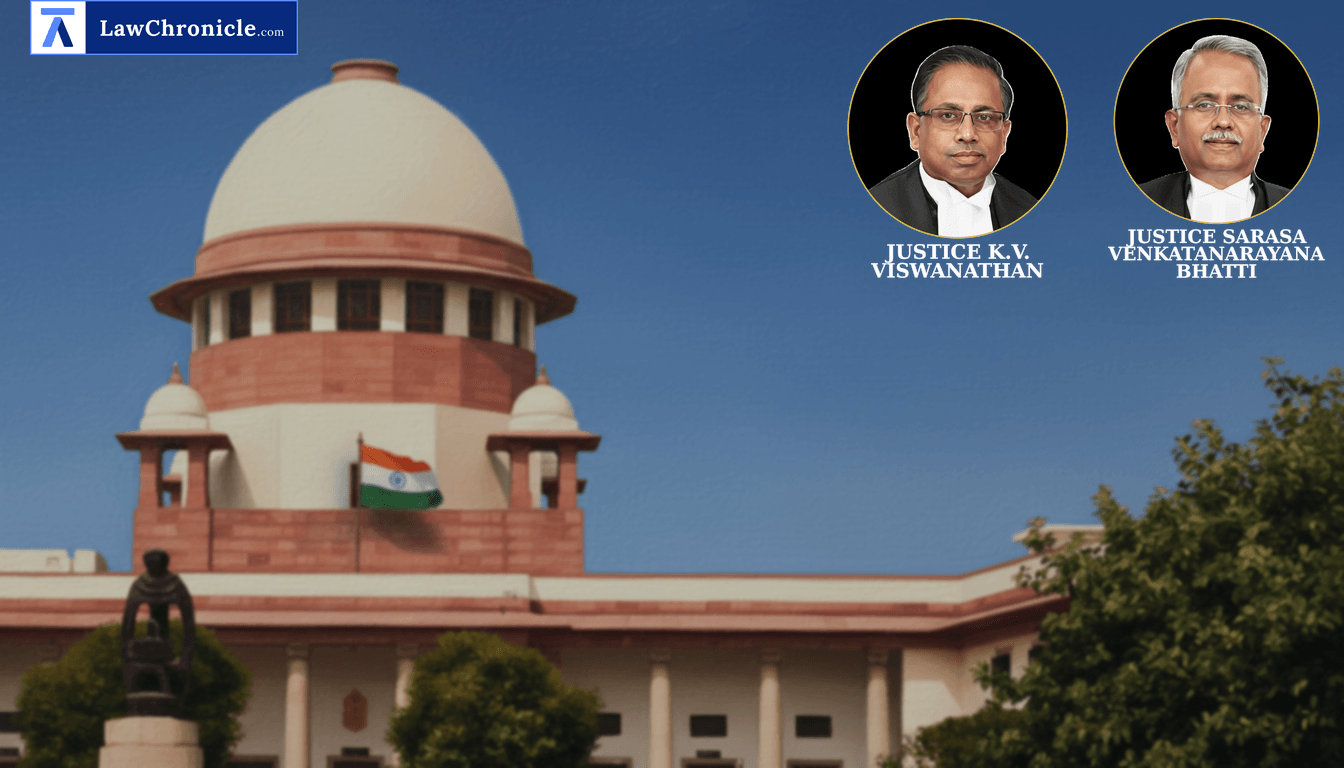
The Supreme Court of India, in Jennifer Messias v. Leonard G. Lobo, underscored the procedural hurdles faced by decree-holders in India and set aside the orders of the High Court that had stalled execution proceedings in a partition suit for over a decade.
A bench comprising Justice K.V. Viswanathan and Justice S.V.N. Bhatti observed that the appellant's struggle exemplified the unfortunate reality that "the difficulties of a litigant in India begin when he has obtained a decree."
The Myth of the 'Pure' Preliminary Decree
The core controversy revolved around whether a decree dated 13.04.2012 was merely a preliminary decree or possessed characteristics of a final decree that could be executed. While the High Court had interdicted the proceedings, insisting that a final decree must be drawn before execution, the Supreme Court clarified that a decree can be partly preliminary and partly final. The bench noted that the Trial Court had the foresight to include conditions for the sale of property if physical division was impossible, making the decree executable in those circumstances.
The Court, in its reasoning, observed: "The Decree dated 13.04.2012, for all purposes, determined the entitlement or right to possession, mesne profits, and the first option regarding the mode and manner of working out the shares, in the event of default in the sale of the Subject Matter. The direction to file a fresh application after the passing of a Final Decree is completely unwanted. In the facts and circumstances of this case, for the ends of justice to be met, the Decree should be construed as indicated above."
Directions Issued to the Trial Court
The Court has following directions:
"Hence, we restore the Execution Case No. EX-A-1600007/14 to file, and the Court is directed to entrust the warrant to the same Advocate Commissioner who filed the Report dated 17.04.2019, and if not possible, appoint another Advocate Commissioner for conducting the auction and apportioning the same between the parties. While apportioning, the Trial Court takes into account the condition of the mesne profits and disburses the balance to the Respondent. The parties are permitted to bid along with other participants in the course of the sale of the Subject Matter. We take note that the Appellant is a septuagenarian and direct the Trial Court to complete the proceedings within 2 months of receiving this Order."
Background: A Decade-Long Procedural Quagmire
The dispute began when the appellant filed for partition of a flat purchased with her late husband, Peter Messias. Following their judicial separation and Peter's subsequent death, a third party, the respondent, claimed interest through a will. Although the Trial Court passed a decree in 2012 declaring the appellant's half-share and entitlement to mesne profits, the execution was repeatedly stalled by multiple interventions from the High Court.
The Supreme Court analyzed the definitions under Section 2(2) of the Code of Civil Procedure, 1908 and the provisions of Order XX Rule 18 of the Code of Civil Procedure, 1908. It referred to the principles laid down in Shankar Balwant Lokhande v. Chandrakant Shankar Lokhande and Bimal Kumar v. Shakuntala Debi ( "(2012) 3 SCC 548": 2012 CaseBase(SC) 604) to distinguish between preliminary and final decrees. The Court also critiqued the High Court's reliance on Kattukandi Edathil Krishnan v. Kattukandi Edathil Valsan ( "(2022) 16 SCC 71": 2022 CaseBase(SC) 1131), stating that the High Court had erred in its interpretation of the procedural requirements for a final decree.
Case Details:
Case No.: CIVIL APPEAL NOS. 8716-8717 OF 2026
NeutralCitation: 2026 INSC 502
Case Title: JENNIFER MESSIAS v. LEONARD G LOBO
Appearances:
For the Petitioner(s): Advocate Abhishek Gulatee
For the Respondent(s): Advocate Siddharth R. Gupta
Source: 2026 CaseBase(SC) 435
 Breaking News