


SC Holds Naphtha Eligible for Fertiliser Exemption
 Copy Link
 Share
 Save
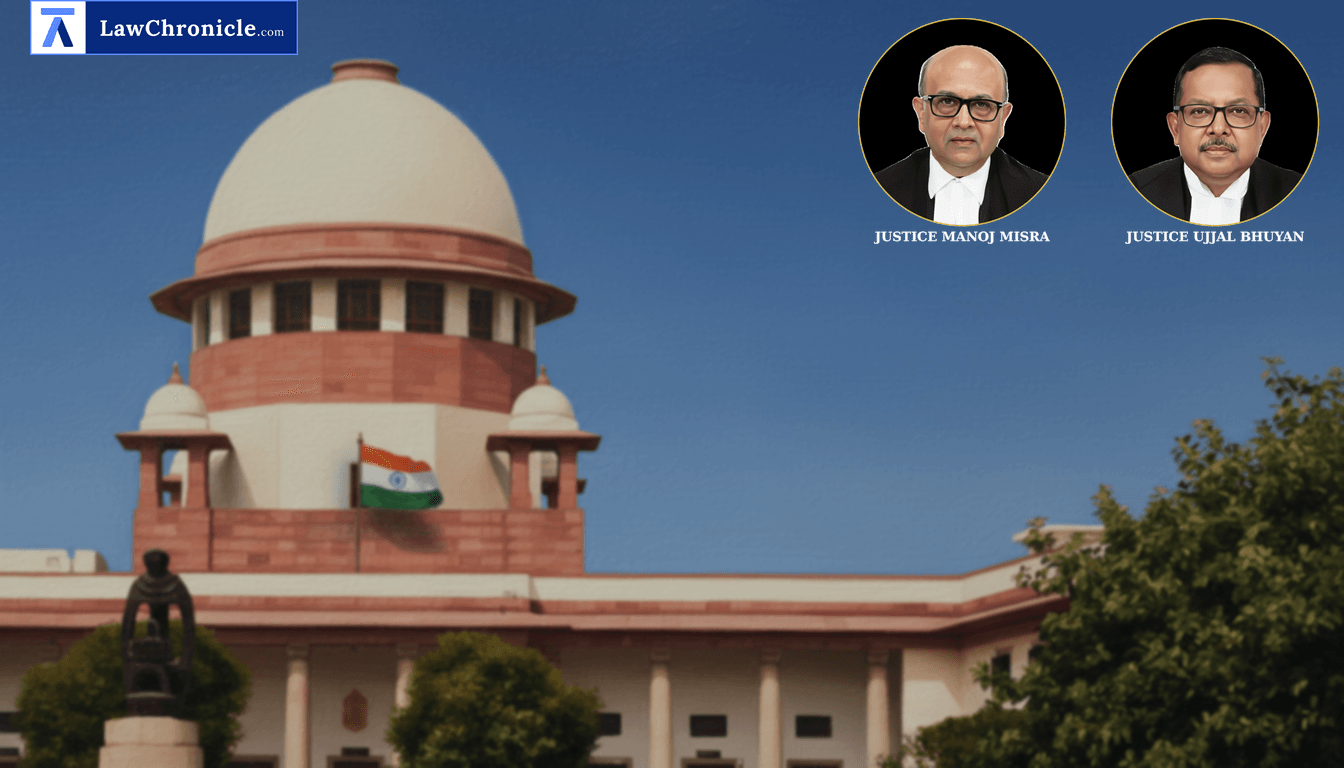
A bench of Justices Manoj Misra and Ujjal Bhuyan heard appeals by a public sector fertiliser manufacturer challenging demands of central excise duty and penalties arising from claims that naphtha procured at nil duty was diverted to non-fertiliser uses. The appeals arose from orders of the Commissioner (original adjudicating authority), the CESTAT and the Bombay High Court concerning exemption notifications and the invocation of an extended limitation period.
The Supreme Court allowed the appeals, set aside the orders-in-original dated 27.01.2010 and 04.02.2010 and the CESTAT order dated 27.03.2012, and held that the assessee was entitled to the benefit of the concessional rate of duty. The Court accepted that the naphtha procured from HPCL was “intended for use” in the manufacture of fertiliser and ammonia and noted that a portion used indirectly for generation of steam and electricity did not disentitle the appellant from the exemption. The Court, in its reasoning, observed: “Applying the above to the facts of the present case, it is quite evident that Naphtha which was procured from HPCL was intended for use by the appellant in the manufacture of fertilizer and ammonia. It is immaterial that a fraction of such procured Naphtha had to be used for generation of electricity which was also mostly used in the manufacture of fertilizer and ammonia but a portion of which had to be used in the chemical plant beside being supplied to the Maharashtra State Electricity Board. If that be the position, appellant would be entitled to avail the benefit of concessional rate of duty in terms of the exemption notifications alluded too hereinabove.” The Court further emphasised limitation principles, quoting the judgment that “the act must be deliberate,” and noting that the extended five‑year limitation under the proviso to Section 11A required an intention to evade duty which “is crucial and, therefore, must be discernible.”
Background
The dispute arose from departmental scrutiny in February 2001 which led to multiple show cause notices alleging that naphtha, procured at nil duty under notifications (notably No. 4/1997‑CE) via Chapter X/CT‑2 procedure, was not used exclusively in fertiliser manufacture but also in other plants and for generation of electricity. Revenue quantified alleged ineligible consumption and demanded approximately Rs 28.56 crore (for the period November 1996–March 2001), invoking the proviso to Section 11A to extend limitation and proposing penalties under Section 11AC. The Commissioner confirmed demands; CESTAT partly upheld duty and the Section 11AC penalty but set aside other rule‑based penalties; the High Court dismissed an appeal against CESTAT’s refusal to rectify its order. The company argued that exemption depended on “intended use” and that naphtha shortages and dual‑fuel boiler operations made precise apportionment impossible; it also contended that any duty would be revenue‑neutral and that there was no deliberate suppression warranting extended limitation or penalty. The Court reviewed the statutory scheme (Section 5A notifications, Chapter X procedure, Section 11A proviso, Rule 6 of the Concessional Rate Rules) and precedent (including Steel Authority of India and Pushpam Pharmaceuticals), found the assessee’s construction persuasive on “intended use,” and held that there was no discernible intent to evade duty and that revenue neutrality further negatived the proviso’s applicability. The appeals were allowed and an ancillary SLP was rendered academic; no costs were awarded.
Case Details:
Case No.: Civil Appeal Nos. 2219-2220 of 2013
NeutralCitation: 2026 INSC 285
Case Title: M/s Rashtriya Chemicals and Fertilizers Limited v. Commissioner of Central Excise and Service Tax (LTU)
Appearances:
For the Petitioner(s): Mr. Balbir Singh, Senior Counsel
For the Respondent(s): Mr. Vikramjit Banerjee, Additional Solicitor General of India
Source: 2026 CaseBase(SC) 249
Similar Articles




 Breaking News


