


SC: Hostile Witness Can Prove Bribe; Conviction Restored in Vigilance Trap Case
 Copy Link
 Share
Share Save
Save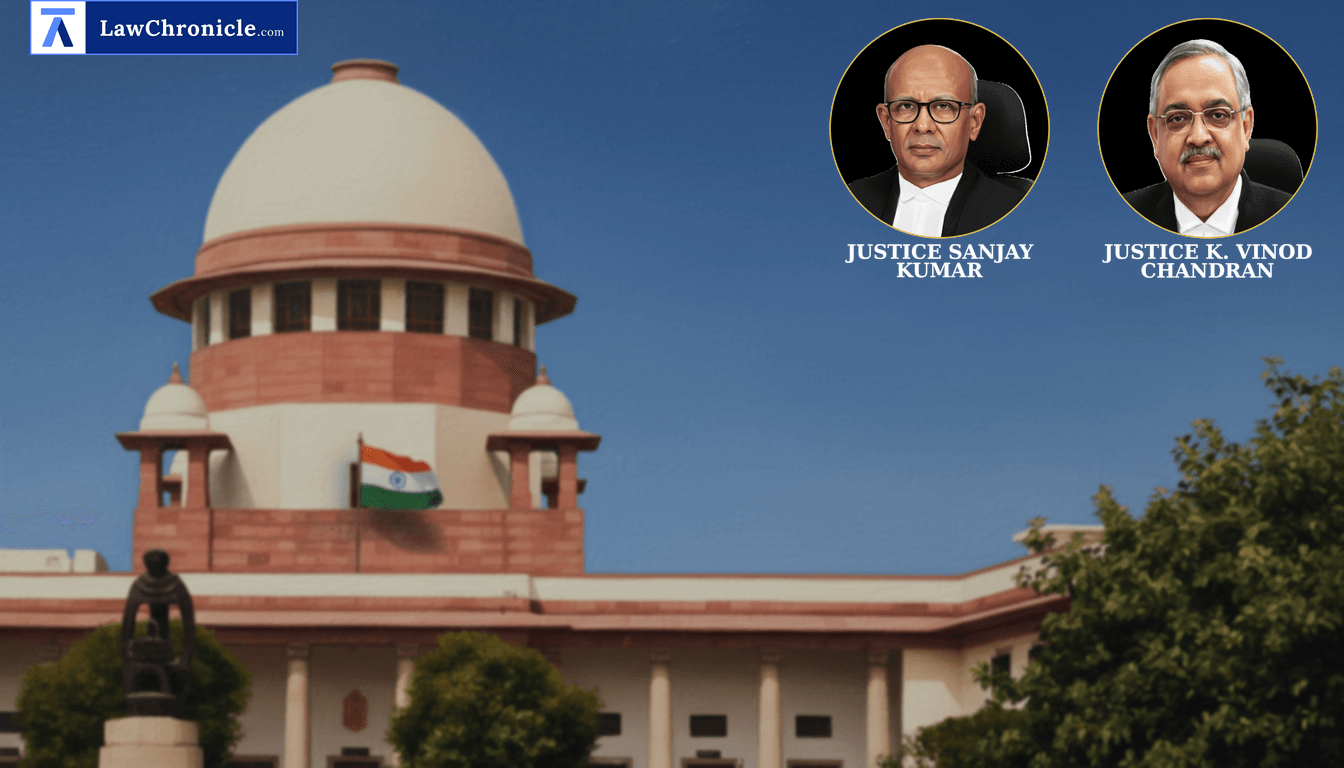
A bench of Justice Sanjay Kumar and Justice K. Vinod Chandran heard an appeal by the State of Kerala challenging the High Court's acquittal in a prosecution under Section 7 and Section 13(1)(d) read with Section 13(2) of the Prevention of Corruption Act, 1988, arising from allegations that a Taluk Supply Officer refused to countersign statutory abstracts unless a bribe was paid.
The Court allowed the appeal, set aside the High Court order of acquittal and restored the conviction and sentence imposed by the trial court, finding that acceptance of the marked currency note was proved beyond a reasonable doubt and that the complainant's pre trap and trap evidence, though containing inconsistencies, contained creditworthy material.
The Court, in its reasoning, observed: Neeraj Dutta2 in fact arose from a reference made with respect to divergent opinions of three Judge Benches, one of which as per the reference order was in Jayaraj B3. Jayaraj B3 was eventually approved, but on distinct facts as we found earlier. Neeraj Dutta2 having considered the various decisions found that in establishing illegal gratification by a public servant, an offence under Section 7 is made out if there is an offer to pay, by the bribe giver, without there being any demand by the public servant who is proved to have accepted and received the illegal gratification. This ingredient on facts is absent in the present case and so was the demand at the time of handing over denied by PW1. Neeraj Dutta2 held that proof of demand and acceptance of illegal gratification by a public servant as a fact in issue is a sine qua non to establish the guilt of the public servant under Section 7 and 13(1)(d) of the Prevention of Corruption Act, 1988. Hence our enquiry is confined as to whether the demand has been made, since the complaint, laying of the trap and what transpired at the trap including the acceptance of the bribe is proved beyond reasonable doubt.
The Court also relied on principles governing hostile witnesses as approved in Neeraj Dutta v. State (NCT of Delhi) and cited the approved guidance from Sat Paul v. Delhi Administration (1975 CaseBase(SC) 30), observing that even when a witness is prevaricating the tribunal must assess which parts of testimony remained creditworthy. It recorded that the marked note was identified in the custody of the accused, the post trap tests corroborated handling, and an independent witness and the lead trap officer corroborated the pre and post trap events, which collectively supported conviction.
Background
The dispute arose when an Authorized Ration Dealer alleged that the Taluk Supply Officer repeatedly refused to countersign the shop's abstract and, on information from other dealers, demanded Rs.500 for doing so. The complainant reported the matter to vigilance, recorded an oral complaint and participated in a marked note trap. During the trap the complainant handed a marked Rs.500 note to the officer, the trap team recovered the marked note from the accused, and a chemical test produced corroborative results. At trial the accused was convicted and sentenced to the statutory minimum; the High Court, placing reliance on Neeraj Dutta v. State (NCT of Delhi), accepted that the complainant had prevaricated and acquitted the accused on the view that demand at the time of handing over was not proved. The State appealed.
The Supreme Court examined the evidence afresh, noted that the complainant had affirmed his written complaint before the independent witnesses and the vigilance officer, and held that despite evasions, the credible portions of PW1's testimony, together with the evidence of PW2 and PW17 established both the complaint and acceptance. The Court distinguished the facts of Jayaraj B. v. State of Andhra Pradesh relied on by the defence and applied the requirement articulated in Neeraj Dutta v. State (NCT of Delhi) concerning demand and acceptance, while applying the guidance on hostile witnesses from Sat Paul v. Delhi Administration ( 1975 CaseBase(SC) 30). The Court found the accused's explanation inconsistent and the acceptance admitted and therefore restored the trial court's conviction and concurrent sentences without altering the statutory minimum term. Pending applications, if any, were disposed of.
Case Details:
Case No.: Special Leave Petition (Crl.) No. 1808 of 2026
NeutralCitation: 2026 INSC 365
Case Title: The State of Kerala v. K.A. Abdul Rasheed
Appearances:
For the Petitioner(s): Shri Raghenth Basant, learned Senior Counsel
For the Respondent(s): Shri P.B. Suresh Kumar, learned Senior Counsel
Source: 2026 CaseBase(SC) 324
 Breaking News