SC Issues Holistic Victim Protection Plan to Combat Sex Trafficking
 Copy Link
 Share
Share Save
Save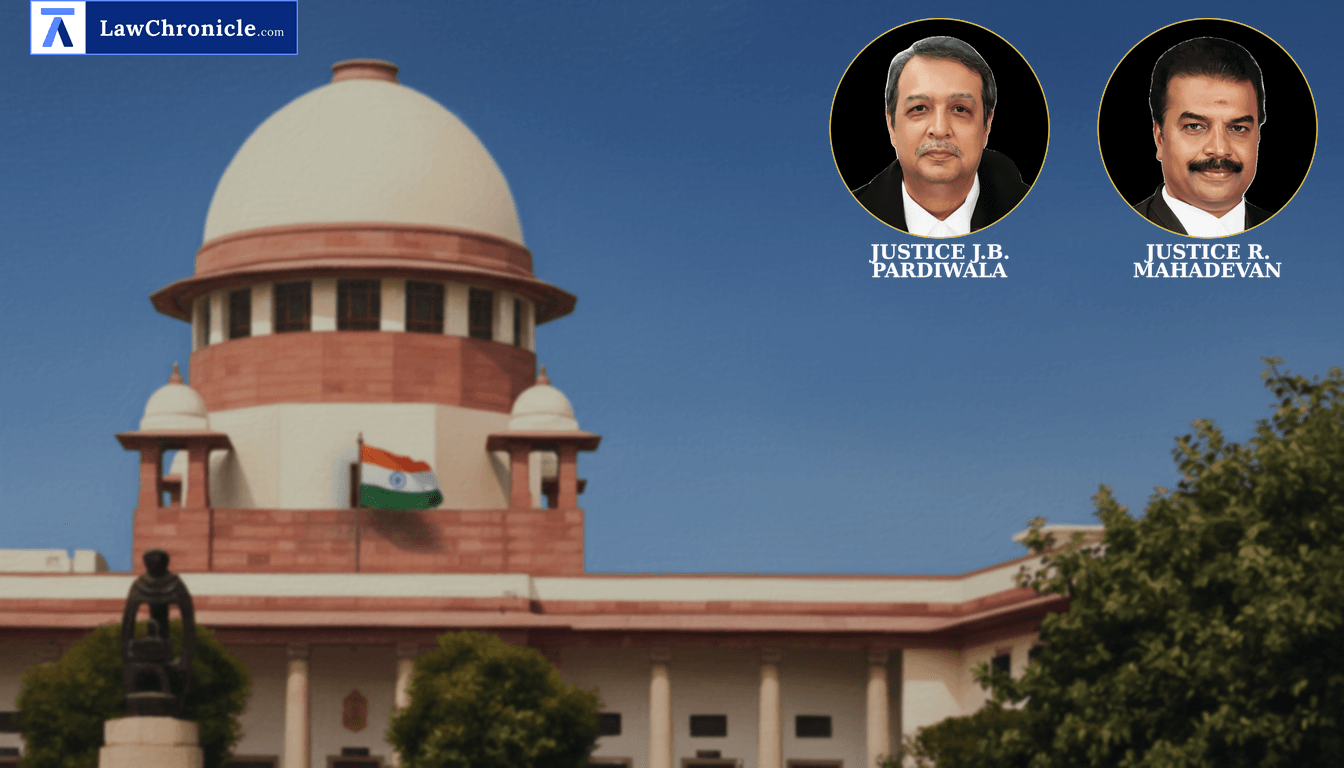
The Supreme Court, in Prajwala v. Union of India & Ors., held that victims of trafficking for commercial sexual exploitation have a fundamental right to rehabilitation, rooted in Articles 21 and 23 of the Constitution of India, 1950. In a comprehensive judgment, the Court laid down a detailed "Victim Protection Plan" to bridge existing legislative gaps and ensure that victims are treated with dignity and agency, rather than as passive objects of State intervention.
A bench comprising Justice J.B. Pardiwala and Justice R. Mahadevan passed these directions while hearing a miscellaneous application arising from a long-standing litigation. The Court expressed concern over the State's failure to implement a robust protective framework despite previous undertakings.
Defining the Right to Rehabilitation
The Court, in its reasoning, observed: "A combined reading of Articles 21 and 23 respectively establishes that victims of trafficking for CSE have a right to rehabilitation. In recognising this right, the Constitution adopts, in the clearest possible terms, a human rights approach to trafficking, i.e., one that places the victim at its centre, and measures the adequacy of the response to trafficking not only by the convictions secured but also by the rehabilitation that is afforded."
The Court emphasized that rescue without rehabilitation is often counterproductive, as it returns victims to the same conditions of vulnerability that led to their exploitation. Relying on precedents like People’s Union for Democratic Rights v. Union of India ( "(1982) 3 SCC 235": 1982 CaseBase(SC) 123), Bandhua Mukti Morcha v. Union of India ( "(1984) 3 SCC 161": 1983 CaseBase(SC) 23), and Neeraja Chaudhary v. State of M.P ( "(1984) 3 SCC 243": 1984 CaseBase(SC) 211), the bench noted that the State's obligation extends to ensuring physical safety, psychological recovery, and economic empowerment.
The Mandatory Victim Protection Plan
The Court has the following directions:
"a. That all the States/UTs notify “recognised welfare institutions or organisations” in accordance with the explanation to Section 15(6A) Immoral Traffic (Prevention) Act, 1956.
b. That all States/UTs prepare a State-wide list of social welfare workers, with sufficient representation from all districts, who may be eligible to form a part of the non-official advisory body under Section 13(3)(b) Immoral Traffic (Prevention) Act, 1956.
c. That all States/UTs designate the ADGP level police officer heading the Anti-Trafficking Bureau in their respective States/UTs as the Police Nodal Officers for the purpose of performing the functions as delineated by us in the Victim Protection Plan.
d. That all States/UTs shall designate the Secretary, Department of Women and Child Development in their respective States/UTs as the Government Nodal Officers for the purpose of performing the functions as delineated by us in the Victim Protection Plan."
The 'Victim Protection Plan' also mandates the strengthening of Anti-Human Trafficking Units (AHTUs), ensuring that every district-level AHTU includes women police officers and child welfare officers.
Threshold Inquiry and the Primacy of Consent
Addressing the heterogeneity of those involved in prostitution, the Court mandated a threshold inquiry for adult victims. The bench noted that adult voluntary sex workers should not be victimized or subjected to coercive rescue. For victims of trafficking, the Court held that consent must be the driving factor in determining whether they are placed in protective homes or restored to their families.
The bench cited Budhadev Karmaskar v. State of W.B. to reiterate that police must refrain from interfering when an adult is participating in the trade with consent, as voluntary sex work itself is not illegal.
Background:
The litigation began in 2004 through a writ petition filed by an anti-trafficking organization, Prajwala, highlighting the gross inadequacy of laws relating to the rescue and rehabilitation of sex workers. Although the Union of India had previously committed to establishing an Organized Crime Investigation Agency (OCIA) and a comprehensive legislation, these promises were later side-tracked. The State argued that the enactment of the Bharatiya Nyaya Sanhita, 2023 and the Immoral Traffic (Prevention) Act, 1956, along with the empowerment of the National Investigation Agency to handle trafficking cases, was sufficient.
The Court disagreed, finding a persistent vacuum in victim care. It analyzed the framework of the Immoral Traffic (Prevention) Act, 1956, the Juvenile Justice (Care And Protection Of Children) Act, 2015, and the Protection Of Children From Sexual Offences Act, 2012, concluding that a unified protocol was necessary. While the Court declined to mandate the creation of the OCIA, citing parliamentary prerogative, it issued the 'Victim Protection Plan' to fill the immediate void and protect the fundamental rights of thousands of victims.
Case Details:
Case No.: MISCELLANEOUS APPLICATION NO. 530 OF 2022 IN WRIT PETITION (CIVIL) NO. 56 OF 2004
NeutralCitation: 2026 INSC 609
Case Title: PRAJWALA VERSUS UNION OF INDIA & ORS.
Appearances:
For the Petitioner(s): Ms. Aparna Bhat, Senior Counsel
For the Respondent(s): Ms. Aishwarya Bhati, ASG
Source: 2026 CaseBase(SC) 522
 Breaking News