

SC: Medical Negligence Claims Survive a Doctor’s Death; Legal Heirs Liable
 Copy Link
 Share
Share Save
Save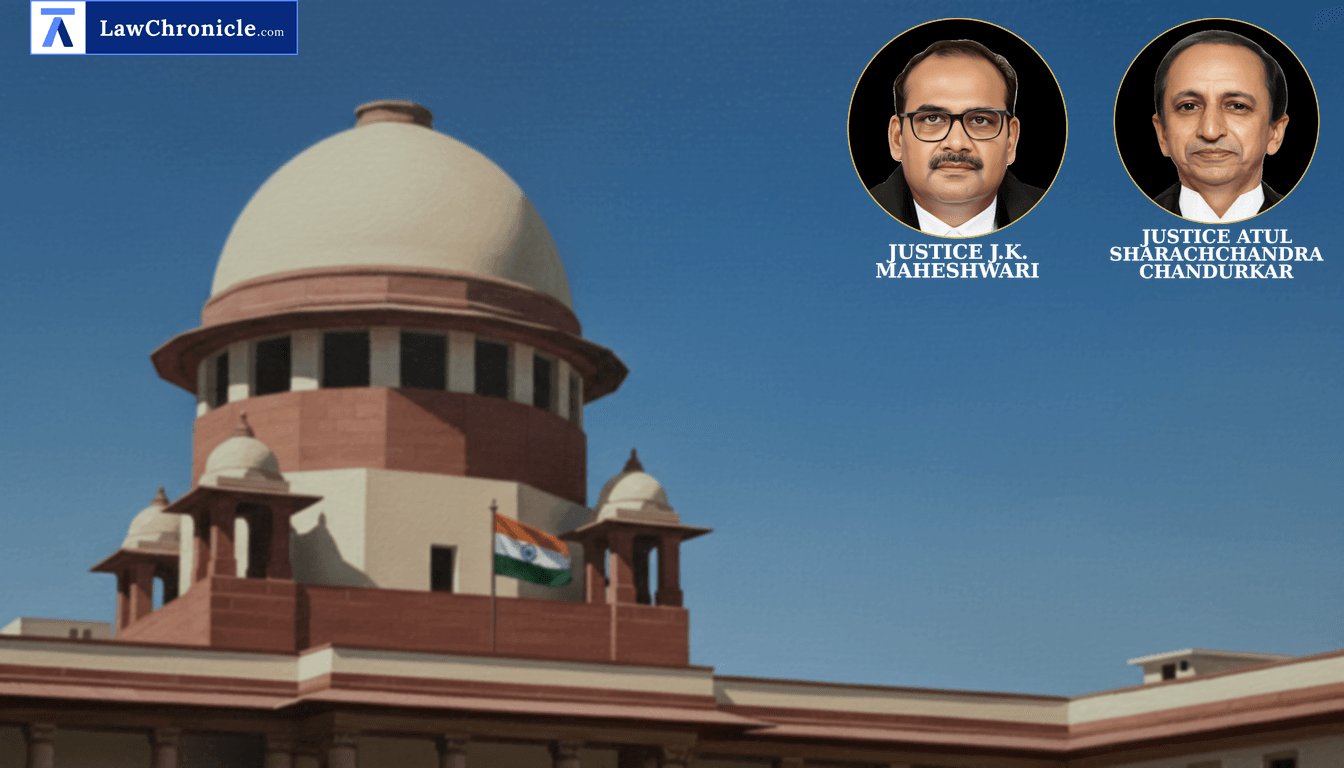
The Supreme Court of India held that the death of a doctor facing allegations of medical negligence does not terminate the proceedings. The Court clarified that the legal heirs of such a deceased doctor may be impleaded and brought on record; however, only the pecuniary claim survives, which shall be satisfied from the estate of the deceased.
A bench of Justice J.K. Maheshwari and Justice Atul S. Chandurkar heard appeals by the legal heirs of a deceased doctor challenging orders of the National Consumer Disputes Redressal Commission that had allowed substitution of the heirs in a pending revision arising from a consumer complaint alleging medical negligence by the doctor and directing they be brought on record.
The Court held that the central question was whether, on the death of a medical professional during the pendency of proceedings at the appellate stage, the right to sue or be sued survived and to what extent the legal heirs could be impleaded and held liable. The Court explained that procedural rules under Order XXII of the Code of Civil Procedure, 1908 and the procedural provision contained in Section 13(7) of the Consumer Protection Act, 1986 required harmonisation with substantive survivability under Section 306 of the Indian Succession Act, 1925. The Court observed that the common law maxim "actio personalis moritur cum persona" had been modified by statute in India and that estate claims could survive even where purely personal claims abated.
The Court, in its reasoning, observed: "What falls from the above discussion are as under –
i. The common law maxim ‘actio personalis moritur cum persona’ in India has been statutorily modified by various statutory instruments such as Fatal Accidents’ Act of 1855, Legal representatives’ Suits Act of 1855, Indian Succession Act of 1925, etc.;
ii. That the legal representative of the deceased can institute a fresh suit or be sued afresh in terms Legal Representatives Suits Act, 1855 or in terms of Section 306 of Indian Succession Act, 1925;
iii. Continuation of suit by or against the legal representative of the deceased has to be in terms of Section 306 of Indian Succession Act, 1925 (substantive law);
iv. Procedural prescription under Order XXII of CPC, concerning substitution of legal representative of the deceased party should be harmoniously construed with Section 306 of Indian Succession Act.
v. The continuation of ‘right to sue’ under Order XXII Rule 2 read with Rule 4 is to be seen on the date of death.
vi. Generally, all rights and liabilities to maintain a suit are carried to the legal representative under Section 306 of Indian Succession Act, 1925. However, when adjudicating claims under 1st exception to Section 306 of the Indian Succession Act, 1925, personal injury claims abate, while claims for or against the estate of the deceased survive."
The Court further explained that it relied on the principles applied in M. Veerappa Vs. Evelyn Sequeira ( "(1988) 1 SCC 556": 1988 CaseBase(SC) 78) and recorded that a prior NCDRC view in Balbir Singh Makol Vs. Chairman, M/s Gangaram Hospital and Others was erroneous insofar as it extended the first exception under Section 306 of the Indian Succession Act, 1925 to bar claims to the estate; the Court therefore did not follow the broader proposition in Balbir Singh Makol Vs. Chairman, M/s Gangaram Hospital and Others and treated M. Veerappa Vs. Evelyn Sequeira ( "(1988) 1 SCC 556": 1988 CaseBase(SC) 78) as a guiding precedent on survivability and substitution in suits involving personal and estate claims. The Court directed that only claims maintainable against the deceased’s estate, and proved to have resulted in an accretion to that estate, could be pursued against legal heirs while purely personal claims abated.
Background
The appeals arose from a consumer complaint filed under the Consumer Protection Act, 1986 alleging negligent treatment and loss of vision. The District Forum awarded compensation but the State Commission set aside that award; a revision before the NCDRC was pending when the opposite party doctor died. The complainant had earlier succeeded at the District Forum but the doctor had succeeded in the appeal before the State Commission, and the question was whether substitution of the doctor’s legal heirs in the revision was permissible and, if so, to what extent they could be made liable. The National Commission allowed substitution and later dismissed review applications, prompting the present challenge. The Court analysed the interaction of Order XXII of the Code of Civil Procedure, 1908 (applied via Section 13(7) of the Consumer Protection Act, 1986), the substantive bar and transmissibility under Section 306 of the Indian Succession Act, 1925, and the historical remedial rule in the Legal Representatives' Suits Act, 1855, holding that procedural substitution must be harmonised with the substantive survivability rules. The Court remitted the matter to the NCDRC to adjudicate the merits limited to claims maintainable against the deceased’s estate and directed the Registry to decide the matter within six months; it set aside the impugned orders of substitution and review and restored the revision petition to its original number. The Court observed that the claimant bore the burden to establish negligence and any accrual to the deceased doctor’s estate before recovery from the estate could be ordered.
Case Details:
NeutralCitation: 2026 INSC 443
Case Title: Kumud Lall v. Suresh Chandra Roy (Dead) Through LRs and Others; Amit Kumar v. Suresh Chandra Roy (Dead) Through LRs and Others
Appearances:
For the Petitioner(s): Ms. Sarvshree (learned counsel)
For the Respondent(s): Mr. Umesh Sinha (learned counsel)
Source: 2026 CaseBase(SC) 379
 Breaking News